Winnebago and Boone Counties Genealogy Society

1875 winnebago and boone

The Winnebago and Boone Counties Genealogical Society has archived a wealth of historic genealogical records previously available on the Cherry Valley Public Library District website. Although these indices and manuscripts for Boone, Cook, McHenry, and Winnebago counties were removed, they are still accessible as downloadable PDFs. The collection includes vital records, city directories, church histories, and historical maps, providing invaluable resources for researchers and family historians exploring their ancestry in the region.
Charles Montezuma

The story of Charles Montezuma illustrates the intellectual potential and moral integrity present among North American Indians. Rescued from an Apache camp and adopted by a Chicago photographer, Montezuma thrived as a scholar and gentleman, graduating high school with distinction. He is pursuing a medical career, showcasing a rejection of savage stereotypes imposed by white society. The post emphasizes that Native Americans have produced notable figures in history, challenging the perception of their inferiority with examples of their capability and resilience.

The Meeting in 1811 of Tecumseh and Apushamatahah

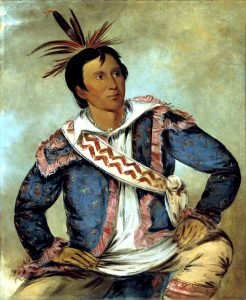
Peter Perkins Pitchlynn was the Choctaw Principal Chief from 1864-1866

In 1811, Tecumseh, the Shawnee leader, met with Apushamatahah, a prominent Choctaw chief, to rally southern tribes against American encroachment amidst looming war between the U.S. and England. Tecumseh passionately urged unity against their common foe, warning of the dire consequences of inaction. Apushamatahah countered with a call for prudence, advocating for peaceful measures. Ultimately, the council resulted in favoring American alliance, thwarting Tecumseh’s ambitions. This pivotal meeting highlighted the contrasting strategies of the two influential leaders, shaping tribal responses during a critical historical period.

The Tribes West of the Mississippi – Indian Wars

Numerous Indian tribes were relocated west of the Mississippi through treaties, leading to significant declines in their populations. The Sioux, Blackfeet, Crows, and Pawnees remain dominant western tribes, often engaged in conflict. A notable battle occurred in June 1845 between the Crows and Blackfeet, highlighting the ongoing dangers faced by settlers. While tribes like the Sacs and Foxes maintain their warlike heritage, others, such as the Choctaws and Cherokees, have embraced agriculture and peace, adapting to the changes brought by colonization.

The End of the Florida War, The Fate of the Seminoles – Indian Wars

The conclusion of the Florida War led to the Seminoles’ relocation to a distant reservation, significantly diminishing their tribal status, particularly after the death of their leader, Osceola. The conflict began in 1835 and involved numerous battles and failed truces, lasting nearly twelve years. After the war, Billy Bowlegs emerged as a notable leader, though lacking Osceola’s acclaim. Ultimately, few Seminoles remained in Florida, adapting to a more peaceful lifestyle and engaging in agriculture and artisan crafts.

Black Hawk’s War – Indian Wars

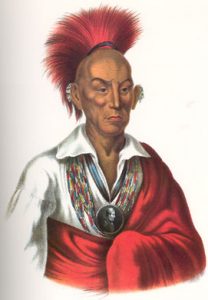
Black Hawk

The events of Black Hawk’s War brought the esteemed Sauk leader, Black Hawk, into the national spotlight. Born around 1767, he became a renowned warrior, leading successful campaigns against rival tribes. Tensions escalated after a controversial treaty in 1804 led to increased violence against the Sacs and Foxes. In 1832, after a series of conflicts following the death of several Indians, Black Hawk led his people in resistance, but ultimately faced defeat. Following his surrender, he was taken to Washington, gaining respect and recognition before his death in 1838.

Biography of Black Hawk

Black Hawk

Black Hawk, originally named Makataimeshekiakiah, was a prominent Sauk leader born in 1767 in Illinois. He gained military recognition from a young age, leading raids against Osage and Cherokee tribes. Black Hawk aligned with the British during the War of 1812, opposing the more conciliatory chief, Keokuk. His leadership was marked by significant military actions, including the infamous Black Hawk Wars of 1832, reflecting his commitment to his tribe amidst growing tensions with American settlers.

Major Dement’s Battle with the Indians

After crossing Rock River, Major Dement’s command camped at Kellogg’s Grove. When Indian traces were reported nearby, he sent out a volunteer reconnoitering party, which encountered a trap. Major Dement quickly mobilized to assist but was unable to prevent casualties among his men. The ensuing skirmish saw both sides suffer losses, with the whites ultimately holding their position until reinforcements arrived. Despite the chaos, Major Dement’s leadership was noted, while General Posey’s inaction allowed the conflict to escalate into further engagements in the war against the Indians.

Stillman’s Defeat

In May, General Whitesides authorized Major Stillman to lead a scouting mission of nearly 300 mounted militia to Black Hawk’s camp. Unaware of the encampment’s location, the troops inadvertently killed a flag bearer during parley, leading to a surprise attack by Black Hawk’s small force. The militia panicked and retreated to Dixons Ferry, despite their superior numbers. This chaotic engagement escalated tensions and prompted Illinois and federal authorities to mobilize for what became a significant conflict, marking the beginning of a war that could have been avoided.

Steamboat Warrior’s Fight

On August 2, 1832, the steamboat Warrior, commanded by Lieut. Kingsbury, intercepted Black Hawk’s forces near Prairie du Chien to prevent their passage across the river. Despite Black Hawk’s attempt to surrender under a white flag, miscommunication prevailed, leading to a skirmish that resulted in casualties among the Indians. After resupplying, Kingsbury continued operations, and Black Hawk ultimately surrendered after the conflict escalated due to a violation of truce protocols, marking the end of a conflict that began under ignoble circumstances.

Kilbourn’s Narrative, A Reminiscence of Black Hawk

Elijah Kilbourn provides an engaging account of his experiences during the conflicts with Black Hawk and his warriors. After being captured by Black Hawk, Kilbourn was adopted into the tribe but ultimately escaped after nearly three years. He reflected on Black Hawk’s noble character and the complexities of his situation, including the tensions that led to hostilities. Kilbourn recounts his observations of the war following Black Hawk’s return across the Mississippi and his encounters during the battles, highlighting the tragic outcomes for both sides.

Black Hawk Indian War

In April 1832, shortly after arriving at Rock Island, a steamboat delivered officers to Fort Armstrong to prepare supplies for a new brigade, which included miners eager to serve. Henry Dodge was chosen as Colonel by these volunteers, recognized for his valor and honor. Among the officers was Dr. A. K. Philleo, who needed a substitute to take up the surgeon’s role due to his newspaper commitments. He invited a correspondent to help with the Galenian, leading to their involvement in documenting the Black Hawk Indian War.

Fox Murderers Wanted

In April 1832, Brig. General Atkinson mobilized troops to Fort Armstrong to prevent war between the Menominee and Fox Indians, following a massacre by the Foxes. Upon arrival, he learned that Black Hawk’s band was preparing to invade Illinois, presenting a new threat. Atkinson sought intelligence from local officials, concluding that strong measures were necessary. Consequently, Illinois Governor Reynolds called up militia forces, which assembled in Beardstown, organized under Brig. Gen. Samuel Whitesides, and prepared for a campaign against the hostile tribes.

Black Hawk Reconsiders

Black Hawk

In early April 1832, Black Hawk and his band of Sacs departed Fort Madison, intent on heading up the Mississippi towards Rock River. Despite warnings from government representatives about violating a treaty, they pressed on, believing they would be joined by reinforcements. Upon reaching Rock River, Black Hawk encountered soldiers under Gen. Atkinson, who ordered his return. After discussions with local chiefs, who declined to support him, Black Hawk realized he had been misled and decided to seek a truce with the military.

Black Hawk’s Tower

Black Hawk

Atop a high bluff overlooking Rock River, our village thrived with fertile corn fields extending alongside the Foxes’ lands. For over a century, we enjoyed abundant resources, excellent fishing, and healthy living with minimal contact with white traders. Our customs included honoring the graves of our ancestors, a vital practice now threatened by future upheavals. With changing times, the happiness of our past starkly contrasts our present sorrow, as we face erasure from our lands and the loss of our traditional ways.

Black Hawk as a Young Brave

The spring following their French father’s return saw the Sacs establish trade, exchanging furs for goods. After the British forced the French out of Quebec, various tribes united against the Sacs. In their struggle, they formed an alliance with the Foxes, ultimately settling near Green Bay. Black Hawk emerged as a young brave, eager to prove his valor. He participated in multiple battles against the Osages, demonstrating bravery and leadership, ultimately earning recognition through his prowess in combat and defending his people.

Black Hawk’s Removal to the Des Moines River

After returning from Boston, Black Hawk relocated his family to the Des Moines River, where he cultivated his land and welcomed white visitors with hospitality. In 1838, he was honored as a guest during Fort Madison’s Fourth of July celebration, where he expressed a desire for friendship with the settlers and reflected on his past as a warrior. His later years were marked by a decline due to illness, leading to his death in October 1838. Black Hawk’s legacy as a noble leader and warrior remains significant.

Starts for a New Home

After completing his autobiography, Black Hawk expressed satisfaction with its truthful recounting of his treatment by white settlers. He relocated on October 10 to Skunk River with his family, hoping for a peaceful life. In 1834, he participated in a petition for a fairer distribution of annuities, advocating that each family receive their share directly. This change was eventually approved, reflecting his influence. During visits with old friends, Black Hawk noted his comfort and good fortune in his new surroundings, despite potential opposition from rival leaders.

Autobiography of Black Hawk or Ma-Ka-Tai-Me-She-Kia-Kiak

In his autobiography, Black Hawk recounts the trials and tribulations of his life, intertwined with the history of his people and their struggles against white settlers and government forces. He reflects on his military engagements, the Black Hawk War of 1832, and his subsequent surrender, emphasizing his desire to clarify his actions and defend his character against misrepresentation. As he nears the end of his life, he offers a poignant tribute to his nation’s past glory and his hopes for future generations.

Black Hawk’s Last Visit

In the fall of 1836, Black Hawk visited Yellow Banks, expressing joy that Oquawka retained its Indian name. He recounted the rapid settlement of the region by white settlers and reflected on the significance of Shokokon, where he had led councils and prepared for war against the Sioux. By 1837, he joined a delegation to Washington, aimed at establishing peace with Sioux tribes. During their visit, Black Hawk captivated audiences, receiving gifts from Governor Everett, marking a poignant moment in his intertwined legacy with the region.