
Atsina Indians

The Atsina Indians, possibly named from the Blackfoot term meaning “gut people,” are an Algonquian-speaking tribe historically located along the Milk River in Montana and extending into Canada. They were associated with the Arapaho and had various names reflecting their identity, including “fall people” and “belly men.” The Atsina faced significant challenges over the years, including alliances and conflicts with tribes such as the Blackfeet and Crow. Their population has fluctuated from an estimated 3,000 in 1780 to around 586 by 1923, indicating ongoing struggles through the years.
Houses of the Blackfoot Confederacy

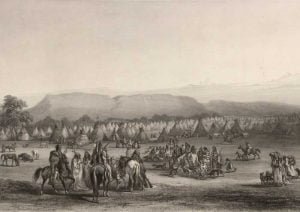
"Encampment of the Piekann Indians" Karl Bodmer 1833

The Piekann Indians, part of the Blackfoot Confederacy, comprised tribes like the Siksika, Piegan, and Kainah, among others. Early European traders’ journals reveal their nomadic lifestyle, characterized by buffalo hunting and skin-covered lodges, which were easily transportable. Reports from the 18th and 19th centuries highlight their social structures, ceremonial practices, and interactions with European traders. As they migrated across the plains, the Blackfeet maintained cultural traditions while adapting to external influences, remaining notable for their fierce reputation and elaborate encampments.

Atsina Tribe

The Atsina Indians, a subset of the Arapaho, are historically linked to the Blackfeet but currently reside with the Assiniboin in Montana. In 1904, their population was recorded at 535, with a declining trend. They refer to themselves as Aä´ninĕna, meaning “white clay people,” while other Arapaho call them Hitúnĕna, translating to “beggars.” The Atsina have played a minor role in history and are often mistaken for the Hidatsa, or Gros Ventres, of the Missouri River region.

Tribal Signs – Atsina to Comanche – Sign Language

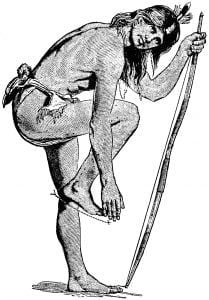
fig286

The post describes various tribal signs, focusing on the Atsina, Banak, Blackfeet, Caddo, and Comanche cultures. Each sign conveys specific meanings related to cultural practices, such as tattooing, throat cutting, and body markings. The Atsina’s signs illustrate actions like picking objects and tattooing, while Banak signs reflect historical practices of throat cutting. Blackfeet and Cheyenne signs depict symbolic gestures related to cutting or marking the body. Notably, the Comanche signs highlight their connection to nature and horsemanship, particularly through the imagery of a snake.