
Tuscarora Reservation Map and Occupants, 1890
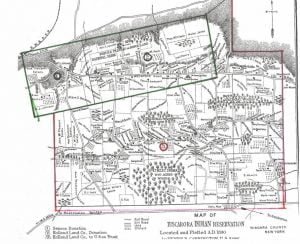
Tuscarora Reservation Map, 1890

The Tuscarora Reservation, established in 1890 in Niagara County, New York, was formed from three tracts acquired over time. The Tuscaroras, originally part of the Iroquois Confederacy, migrated from North Carolina to New York, facing numerous challenges along the way. They cultivated their land, developed extensive orchards, and maintained communal governance. Despite their rich ancestral lands, economic struggles led many to lease farmland to whites. The reservation’s structure and inhabitants are documented, alongside the political leadership of the Tuscarora Nation during that period.

Cattaraugus Indian Reservation Map and Occupants, 1890

Theodore F. Jimerson (De-hah-teh), Cattaraugus Seneca

The Cattaraugus Indian Reservation, established in 1890, spans parts of Cattaraugus, Chautauqua, and Erie Counties, New York. It is primarily occupied by the Seneca Nation, claiming rights over land where white settlers reside. The area, a result of treaties in the late 18th and early 19th centuries, is characterized by fertile land, waterways, and a network of roads connecting it to nearby towns. Despite rich resources, the region struggles with legal disputes regarding land ownership and infrastructure inadequacies affecting transport and communication.

Census of Cayuga Tribe of Indians of New York, 1896

A June 1896 census of the Cayuga Tribe of Indians of New York records 161 people, including those at Thomas Orphan Asylum and on the Tonawanda Reservation. It lists household heads, ages, and sex, along with totals for adult men, adult women, and children, offering a detailed snapshot of the community.

Carlisle Indian Industrial School Graduates 1906 – 1910

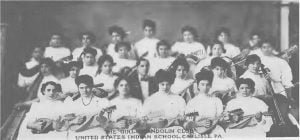
Girls Choir Carlisle Indian School

The Carlisle Indian Industrial School, located in Pennsylvania’s Cumberland Valley, served Indigenous students from 1889 to 1910. It transformed a former cavalry barrack into an educational institution where students were trained in various professions. Graduates from classes ranging from 1906 to 1910 pursued diverse careers such as housewives, teachers, and laborers. Notable alumni include law students, nurses, and mechanics, reflecting the school’s impact on Indigenous education and workforce integration during this period.

Carlisle Indian Industrial School Graduates 1896 – 1899

Carlisle School Hospital

The Carlisle Indian Industrial School, located in Pennsylvania’s Cumberland Valley, operated from 1889 to 1910, educating Native American students and producing graduates with diverse occupations. Between 1896 and 1899, notable graduates included farmers, housewives, teachers, and tradespeople from various tribes such as Chippewa, Oneida, and Cherokee. The school had a historical significance as it stood on land where treaties were made with Native tribes, highlighting its dual role in education and cultural history at a time of significant change for Indigenous peoples.