Stephenson County Illinois World War 1 Veterans
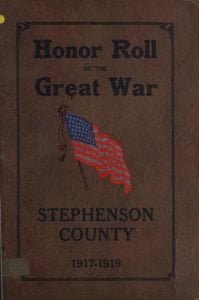
Honor roll of the Great War, Stephenson County, 1917-1919

This small booklet contains all the known men and women who participated in World War 1 and claimed their home of record as Stephenson County, Illinois. By participation, this record does not limit this to soldiers, but also contains the records of those men and women who served the Red Cross, Y.M.C.A., and other non-fighting positions. This book is free to read or download.

Kansas Registrations of Enemy Aliens, 1917 – 1921

Enemy Alien Registration Affidavit for Bernhardt Vick - Cropped Photo

The series contains original affidavits of registration that record personal information about each registrant, their photograph affixed to the majority of documents, and the registrants fingerprints. All of these are specific to Kansas, and most have the actual documents attached.

History of Kossuth, Hancock, and Winnebago Counties, Iowa

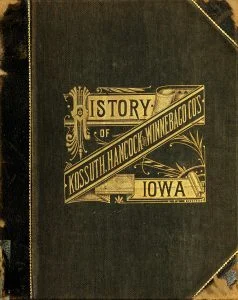
History of Kossuth, Hancock, and Winnebago counties, Iowa

History of Kossuth, Hancock, and Winnebago Counties, Iowa together with sketches of their cities, villages and townships, educational, civil, military and political history; portraits of prominent persons, and 638 biographies of representative citizens. Also included is a history of Iowa embracing accounts of the pre-historic races, and a brief review of its civil and military history.

Genealogy of Peter Spracklin

The name Spracklin, historically rendered as Spartling or Sprackling, translates from English or Welsh to refer to someone with crooked legs. Early records indicate the presence of Spracklins in Canterbury, Kent, with notable baptisms in the 17th century. The genealogy of Peter Spracklin begins in 1823 when he migrated to America from Somerset, England, along with his family. He was a tanner by trade and settled in Ohio after initially residing in Pennsylvania. The family lineage traces back to Peter’s marriage to Elizabeth Andrews and includes several descendants.

Biography of Frederick William Herman

Frederick William Herman, born on September 21, 1851, in Ohio, made significant contributions to Lincoln, Kansas, after moving there in 1873. A successful grain merchant and owner of a greenhouse, he actively promoted local agriculture. His early life involved farming until he pursued business ventures, including owning a telephone system. Married in 1871, he had eight children, contributing to his legacy. A Republican and active community member, he held positions in local organizations and remained a respected figure in Lincoln’s business landscape.

Perry E. Herman

Perry E. Herman, a 1st Class Private in the 30th Military Police Company, was born in Catawba County to A.D. Herman. He enlisted on April 15, 1917, in Statesville, North Carolina. After training at Camp Sevier, he sailed to France on May 29, 1918, and participated in all the 30th Division’s engagements. Herman returned to the United States on April 11, 1919, landing in Charleston, South Carolina, and later enlisted in Troop A of the North Carolina Cavalry in Lincolnton.

Herman, Richard Louis “Dick” – Obituary

Richard Louis “Dick” Herman, 61, passed away on May 22, 2005, in Baker City, surrounded by family. His funeral will be held at Grays West Co. Pioneer Chapel, followed by burial at Mount Hope Cemetery beside his daughter, Dr. Suzanne Farebrother. Born on December 13, 1943, in East Chicago, Indiana, Dick enjoyed a successful career as a mechanical engineer, earning multiple patents during his time at IBM. He is survived by his wife, Nancy, three children, and several siblings.

Carlisle Indian Industrial School Graduates 1889 – 1895

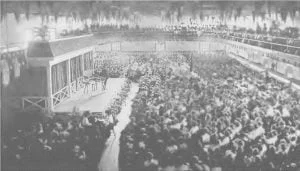
Carlisle School Gymnasium During Graduation Exercises

The Carlisle Indian School, located in Carlisle, Pennsylvania, served as an educational institution for Native American students from 1889 to 1895. Graduates from various tribes pursued diverse occupations, reflecting their adaptation to American society. Positions ranged from farmers and housewives to public service roles. Notable alumni include physicians, lawyers, and teachers, indicating a significant shift toward professional education. The school’s rich history is intertwined with its former military site, where Benjamin Franklin forged peace treaties with Native tribes in the 18th century.