The Chickasaws

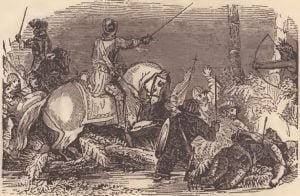
The history of the Chickasaw Indians, marked by conflict and resistance against European invaders, reflects the tragic narrative of many Native American tribes. Their initial encounter with Hernando De Soto in 1540 initiated a series of violent confrontations, highlighting their bravery amidst overwhelming odds. Despite being labeled “savages” by their conquerors, the Chickasaws showcased remarkable patriotism and valor. Their rich cultural legacy and the injustices they faced remain largely unchronicled, serving as a reminder of the complexities surrounding the interactions between Native Americans and European settlers.
North America Indian Names of Places in Mississippi, Alabama, Georgia, Florida, and Louisiana

The post examines the significance and origins of North American Indian place names in Mississippi, Alabama, Georgia, Florida, and Louisiana, particularly those derived from the Choctaw and Chickasaw languages. It highlights how these names reflect the rich cultural and linguistic heritage of the Native American tribes, while noting that many translations have become corrupted over time. The text provides numerous examples of place names alongside their original meanings, illustrating the deep historical connections embedded in the geography of the region.

Important Men of the Choctaw Indians

The Choctaw Nation has produced numerous significant figures throughout its history, notably Tush-ka Lu-sa, who valiantly defended his people against Spanish forces. While early documentation is scarce, many leaders have emerged from the 18th century onward, whose contributions to their community deserve recognition. This account aims to honor both the living and deceased Choctaw and Chickasaw men, emphasizing their dedication to improving their people’s welfare and the importance of preserving their legacies as examples for future generations.

The Choctaw Life & Warrior

The Choctaw people’s rich cultural heritage is reflected in their singing, hospitality, and social etiquette. They were known for their politeness, valuing kindness and generosity, especially toward travelers. The Choctaws exhibited remarkable decorum in conversations and councils, fostering a sense of community. Their artistry in song was limited to group settings, reflecting their cultural reluctance to perform alone. However, the profound changes over the past seventy-five years have led to a decline in their former independence and spirit, leaving the current generation feeling estranged and sorrowful.

Mound Builders

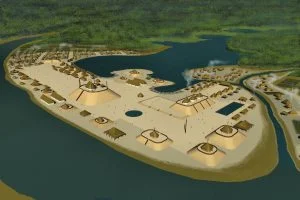
Bottle Creek Mounds

The post discusses the connection between ancient mounds in North America and the indigenous tribes, refuting the notion that these structures were built by a distinct race known as the Mound Builders. Evidence presented includes similarities in skull structure among various tribes and the fortified nature of their towns. Early European explorers observed these communities engaged in agriculture and crafting, challenging the idea of indigenous nomadism. The author argues that the mounds are the work of Native Americans, the true ancestors of today’s tribes, and emphasizes the importance of understanding their legacy.

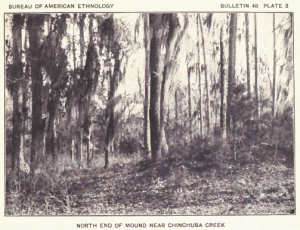
Choctaw Indian Mounds

Bayou Lacomb Choctaw Mound

H. F. Buckner references Mr. Maxwell’s historical address, discussing the advanced military engineering of the Mound Builders in Carthage, Alabama, contrasting it with the warfare strategies of tribes encountered by De Soto. The mounds are suggested to have served as sepulchers for ancient leaders, drawing connections to traditions of the Choctaw and other tribes. Buckner emphasizes the need for further archaeological investigation to establish the Mound Builders’ link to North American Indians, particularly the Choctaws, who practiced distinct burial customs.

Indian Mounds throughout North America

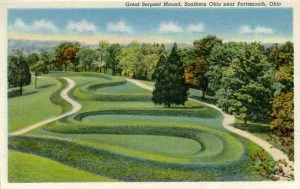
Great Serpent Mound Postcard

The region surrounding Lake Michigan was historically inhabited by skilled mound builders, including the Wyandots and Six Nations, who buried their deceased with treasures beneath earthen mounds. Excavations across North America, from Tennessee to Georgia, have uncovered European artifacts, suggesting cultural exchanges with early explorers. Similarities in mound structures and burial practices link the mound builders to contemporary Native American tribes. Mounds served varied purposes, including memorials and fortifications, reflecting the complex social practices of these ancient communities throughout the continent.

The Creation of an Indian Mound

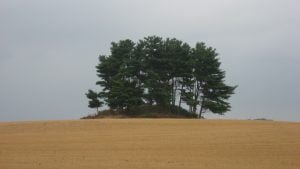
Luthor List Mound

Garcellasso de la Vega notes that American Indian communities began town planning with the construction of mounds for chiefs and warriors, creating a social hierarchy. Mounds served both as living quarters and defensive structures, with evidence of such constructions spanning centuries. The Natchez Indians, for example, built extensive mounds in Louisiana for protection against the French. Excavations of these mounds reveal human remains alongside artifacts, illustrating the cultural practices surrounding death and memorialization among Native American tribes, such as the Choctaws, who honored their deceased with intricate burial customs.

Choctaw Culture

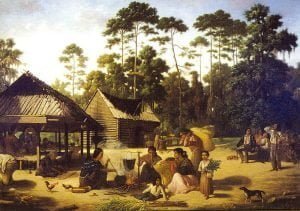
Choctaw Village near the Chefuncte, The women appear to be making dye to color the strips of cane beside them, by François Bernard, 1869

The Choctaw people historically relied on unwritten customs for governance, engaging in barter without contracts or money, resulting in a society free of lawyers and prisons. Their beliefs emphasized respect for the dead and a connection to nature. Despite a lack of written language, they conveyed knowledge through symbols and oral traditions. The Choctaws demonstrated remarkable advancements in agriculture and intellectual capacity, sustaining social equality without established hierarchies. Their governance reflected communal interests, prioritizing the well-being of their tribe above individual gain.

The Biloxi and Pascagoulas

In 1712, French explorer Iberville anchored near what is now Ship Island and discovered a peculiar island animal, naming it Cat Island. They then encountered the Biloxi tribe, a Choctaw clan, which led to the establishment of Biloxi, the oldest town in Mississippi. Eastward, they found the Pascagoulas, also a Choctaw clan. The name Pascagoula means “Bread People.” Local traditions among the Pascagoulas recount a legendary encounter with a mysterious white man who, alongside the tribe, was entranced by a siren, leading to their demise.

Chickasaw Religion

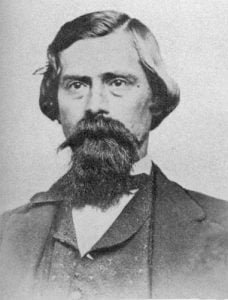
Holmes Colbert

The Chickasaws, unlike the Choctaws, approached natural phenomena like eclipses rationally, viewing them as “sun hidden” rather than omens. Their history includes the notable town of Pakitakohlih, where De Soto’s army wintered in 1540. The Chickasaws fiercely defended their land against French incursions but eventually faced forced removal, leaving behind cherished memories of their homeland. Despite hardships, they maintained their spiritual beliefs and rebuilt their society, demonstrating resilience and determination. Nevertheless, their struggles intensified with further encroachments on their territory and autonomy.

Early Exploration and Native Americans

Ferdinand de Soto’s interactions with Native American tribes, specifically the Choctaws and Chickasaws, exemplify early European attempts to impose their ideologies of civilization and Christianity upon Indigenous populations. This approach set a precedent for further exploitation and oppression of Native Americans, as European settlers sought to acquire land and resources. Throughout history, tribes like the Chickasaws, known for their valor, remained steadfast allies rather than adversaries. This enduring alliance contrasts sharply with the overarching narrative of dispossession and extermination faced by Indigenous nations in North America.

The Discovery Of This Continent: It’s Results To The Natives

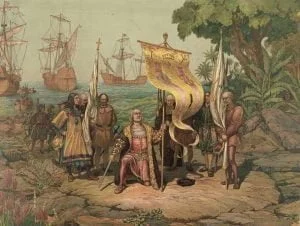
Columbus Landing on Hispaniola

In 1470, Christopher Columbus married Dona Felipa, daughter of a renowned navigator, and settled in Porto Santo, where they shared dreams of discovering lands to the West. Their ambitions fueled Columbus’s determination, leading to his 1492 voyage that resulted in the European discovery of the Americas. However, this event marked the beginning of devastation for native peoples, introducing warfare, disease, and colonization that would decimate their populations and cultures, ultimately transforming their rich, diverse societies into shadows of their former selves.