Wintergreen Cemetery, Port Gibson, Mississippi

Wintergreen Cemetery, Port Gibson, Mississippi
This survey of Wintergreen Cemetery, Port Gibson, Mississippi, was completed in 1956 by Mr. Gordon M. Wells and published by Joyce Bridges the same year. It contains the cemetery readings Mr. Wells was able to obtain at that date. It is highly likely that not all of the gravestones had survived up to that point, and it is even more likely that a large portion of interred individuals never had a gravestone.

Genealogy of the Lewis family in America

Genealogy of the Lewis family in America

Free: Genealogy of the Lewis family in America, from the middle of the seventeenth century down to the present time. Download the full manuscript. About the middle of the seventeenth century four brothers of the Lewis family left Wales, viz.: Samuel, went to Portugal; nothing more is known of him; William, married a Miss McClelland, and died in Ireland, leaving only one son, Andrew; General Robert, died in Gloucester county, Va. ; and John, died in Hanover county, Va. It is Andrews descendants who are featured in the manuscript.

1st Mississippi Light Artillery

The 1st Mississippi Light Artillery, also known as Withers’ Light Artillery, comprised several companies raised across Mississippi, participating in key battles during the Civil War. Initially assembled in May 1862, the regiment played a crucial role in the defense of Vicksburg against Union forces, with notable contributions at Chickasaw Bayou and the Vicksburg campaign. Throughout its service, the artillery faced significant casualties and challenges, ultimately surrendering at Vicksburg in July 1863. Afterward, surviving members regrouped as infantry before continuing their service in various capacities.

Natchez Trace

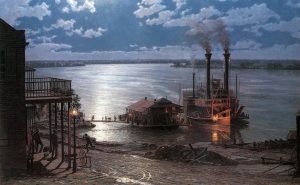
Natchez Under the Hill

In 1792, a treaty with the Chickasaw at Chickasaw Bluffs established the Natchez Trace, a significant route connecting Nashville to Natchez. Initially a thoroughfare for emigrants, it soon became infamous for outlaws like Mason and Murrell, who preyed on travelers. Despite efforts to capture these bandits, they eluded authorities until betrayal led to Mason’s demise. The Trace witnessed both lawlessness and camaraderie among its diverse users, ultimately fading from memory as it transformed into farmland, overshadowed by the bustling growth of nearby settlements.

Vaundreuil and the Chickasaws

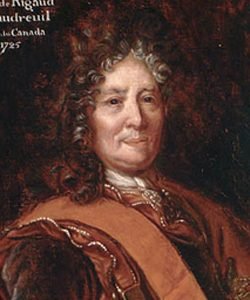
Philippe de Rigaud Vaudreuil

On May 10, 1743, the Marquis of Vaudreuil assumed control of French Louisiana, rejecting peace proposals from the Chickasaws unless they expelled English traders and coordinated with the Choctaws. Despite their attempts for peace, Vaudreuil sought to incite hostilities between the Chickasaws and Choctaws, ultimately igniting a civil war. The Choctaws, influenced by French and English manipulation, faced devastating losses. By 1750, they accepted humiliating peace terms while the Chickasaws continued to resist, indicating the destructive impact of colonial rivalries on Indigenous peoples.

The Meeting in 1811 of Tecumseh and Apushamatahah

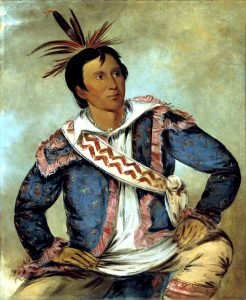
Peter Perkins Pitchlynn was the Choctaw Principal Chief from 1864-1866

In 1811, Tecumseh, the Shawnee leader, met with Apushamatahah, a prominent Choctaw chief, to rally southern tribes against American encroachment amidst looming war between the U.S. and England. Tecumseh passionately urged unity against their common foe, warning of the dire consequences of inaction. Apushamatahah countered with a call for prudence, advocating for peaceful measures. Ultimately, the council resulted in favoring American alliance, thwarting Tecumseh’s ambitions. This pivotal meeting highlighted the contrasting strategies of the two influential leaders, shaping tribal responses during a critical historical period.

Early Incidents in the Mississippi Territory

History of Alabama and incidentally of Georgia and Mississippi, from the earliest period

Napoleon Bonaparte’s ambitions for Louisiana prompted its cession from Spain to France, and ultimately to the United States for sixty million francs. Governor Claiborne formalized the U.S. occupation of New Orleans amid growing tensions with Spanish settlers. The establishment of a Superior Court and the appointment of Judge Harry Toulmin reflected administrative efforts in the Mississippi Territory, while border disputes with Spain over the Baton Rouge and Mobile districts fueled unrest. The region saw increased American migration as it opened for settlement, alongside notable legislative and educational advancements.

The British Invasion

In the midst of growing discord and a desperate defense situation, General Andrew Jackson rallied troops in Alabama to confront the British threat in Louisiana. Following a failed British assault on Fort Bowyer, Jackson led a successful attack on Pensacola, boosting morale among his forces. As British troops advanced, he declared martial law and organized the defense, gaining support from local militias, including the Baratarians. Their combined efforts marked a pivotal moment in the struggle against British invasion during the War of 1812.

Burr’s Conspiracy

In June 1805, Aaron Burr arrived in New Orleans, invited by Governor Claiborne amid political turmoil and personal losses. Burr, having recently vacated the vice-presidency and faced with failed ambitions, sought new opportunities in the West. Despite Claiborne’s efforts to unify the Creole population with American ideals, a cultural divide persisted, leading to questions of loyalty and governance. Burr’s presence incited tension, as internal threats from both Creole and American factions loomed large, further complicated by rising Spanish tensions. Claiborne grappled with this precarious situation while Burr’s intentions remained ambiguous.

The General in Natchitoches

In late September, General Wilkinson assumed command at Natchitoches to counter Spanish forces. Following a confidential letter from Colonel Burr, he alerted the President of Burr’s treasonous plans. As troops gathered in New Orleans, panic ensued amid rumors of an impending uprising. Wilkinson sought martial law, but Governor Claiborne refused, instead rallying support for defense. Meanwhile, Burr’s expedition faltered, leading to his arrest in January 1807. By mid-May, Wilkinson traveled to Virginia to testify in Burr’s trial, which ultimately quelled tensions and reaffirmed loyalty in the region.