Acton Massachusetts History

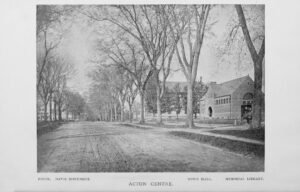
Acton Center,Acton Massachusetts

Acton in History traces the town’s development from its beginnings as Concord Village in the seventeenth century through its emergence as a modest industrial community. It gives particular attention to the religious life of the town, including the building of early meetinghouses and the long ministries of figures such as the Rev. John Swift and the Rev. James T. Woodbury. The work devotes substantial space to Acton’s role in the Revolution, especially the events at the North Bridge in 1775 and the loss of Captain Isaac Davis and his company of minute-men. It also follows the growth of local industries, from blacksmithing and cooperage to the far-reaching effects of the Fitchburg Railroad after its arrival in 1844. Later chapters include brief sketches of notable residents in the 1880s. Throughout, the narrative weaves in discussions of Acton’s everyday life, civic engagement, and social values.

History of Hampton New Hampshire vol 2

1892 Map of Hampton NH

The original version of this monumental work was published in 2 volumes. Volume 1 contains the history of the town of Hampton, New Hampshire from its settlement in 1638 to the autumn of 1892 and can be found here. Volume 2 featured the genealogical and biographical details of the early families of Hampton, NH up to the autumn of 1892 and this is the volume shown below. This manuscript was meticulously researched by Joseph Dow up until his death in 1889. Unfortunately his death preceded the final compilation of the genealogies and his daughter, Lucy Ellen Dow, took on the task after his decease. For genealogists this is an important fact. Lucy admits in her preface that she had difficulty bringing the genealogies down to date (1892) for lack of full understanding of Josiah Page’s notes and for the lack of accurate town records. As she laments about the town records “but whole decades are passed over with scarcely an entry of birth or marriage.” Indeed they are.

Essex County Massachusetts Probate Records 1665-1674

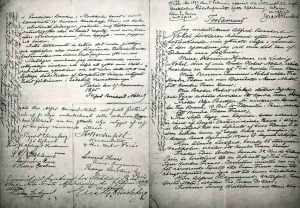
Sample Last Will and Testament

The “Governor and Company of Massachusetts Bay” established a judicial system in 1628, with a General Court in Boston and quarterly courts in major towns like Salem and Ipswich by 1635. These courts managed probate matters, and after Essex County’s formation in 1643, individual probate courts were later established in 1692. These are the probate records from 1665 to 1674, sourced from various original documents, including detailed wills and estate settlements.

Ancestors of William Mason of Taunton, Massachusetts

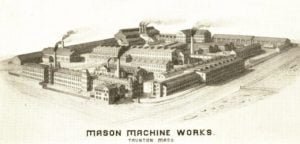
Mason Machine Works - Mason Machine Works, Taunton, Massachusetts, 1899 Catalog

The Mason family of Taunton, Massachusetts, has played a significant role in the area’s business life, particularly in machinery manufacturing. Notably, William Mason, a mechanical genius, made transformative contributions to machinery design, including the self-acting mule and advancements in cotton and woolen machinery. His lineage traces back to Major John Mason, a notable early settler and military leader. Following William’s death in 1883, his son, Frederick Mason, continued the legacy, managing the Mason Machine Works and contributing to the family’s enduring prominence.