
Biographical Sketch of Daniel Morrow

Daniel Morrow, a veteran of the War of 1812, originally settled in South Carolina with his wife Fanny Hall before relocating to Tennessee. They had four children: John, Fanny, Sarah, and Elizabeth. John Morrow, who married Sarah Hail, moved to Montgomery County, Missouri, in 1816, and their lineage expanded to include William, Bethel C., John H., David P., James A., Washington J., Lucinda, Elizabeth, and Sarah M.
The Native American Holocaust

Following the Spanish arrival in 1519, Mexico’s indigenous population faced devastating declines due to European diseases, particularly smallpox, which ravaged Tenochtitlan. Cocoliztli, a lethal hemorrhagic fever affecting highland populations, exacerbated this crisis, killing 85% of those in the Mexican highlands during the 1545 epidemic, with a second outbreak in the 1570s claiming half the remaining survivors. While evidence suggests a depopulation in the Southern Highlands, the exact cause remains uncertain, as diseases impacted these areas differently than others in Mexico. The cumulative effect left a drastically diminished indigenous gene pool.

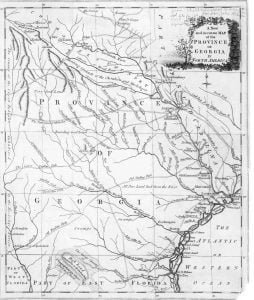
1779 Map of Georgia

1780 Georgia Map

The 1779 map of Georgia, though unattributed to a specific cartographer, shares similarities with a subsequent map by Bew. It serves as a vital source for studying Muskogee and Cherokee communities, highlighting various Indian towns and trails. The map indicates limited knowledge of Georgia’s interior, concentrating instead on known waterways. It marks two key settlement areas: one in the North Carolina mountains and another along the southern section of the Great Flint River, identified as the Chattahoochee River.

Biographical Sketch of M. L. Patterson

M. L. Patterson, born on December 21, 1856, in South Carolina, was the son of Thomas and Adeline Berry Patterson. He married Zonia Dawson on July 14, 1890, and they had several children, including Claude A. and Edgar Dawson, who both served in military roles during significant conflicts. Residing near Talala, Patterson exemplified the life of a farmer and a dedicated family man.

John Isaac Love – Notes on the Will

John Isaac Love, son of Thomas Dillard Love, passed away in Charleston, S.C. He left a will stipulating that his brother, R. Love, inherit his personal and landed estate, contingent upon the sale of the property. R. Love is obligated to pay his nephew, R.L. Dulaney, $500 at age 21, or the bequest becomes void. Additionally, he must contribute $500 to the American Bible Society when convenient. John I. Love was esteemed for his scholarly contributions and assisted historian Ramsey in compiling the Annals of Tennessee.

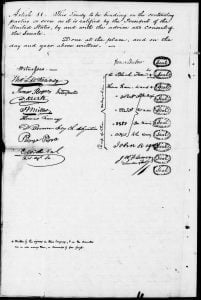
Treaty of May 6, 1828

Treaty of May 6, 1828, page 9

The Treaty of May 6, 1828, negotiated by Secretary of War James Barbour, resulted in the Western Cherokee ceding their Arkansas lands to the U.S. in exchange for new territory in present-day Oklahoma, guaranteed to remain theirs forever. Acknowledging the unfavorable conditions in Arkansas amid westward expansion, the treaty aimed to prevent conflict and improve their future. The Cherokee relocated quickly, leaving behind farms for white settlers. The treaty also included provisions for education and compensation for their losses, as the Cherokee sought stability amid increasing pressures.

16th Century French Exploration of North America

Arx Carolina

Between 1562 and 1763, France established the region known as Florida Françoise, encompassing parts of South Carolina and Georgia, although it notably excluded the St. Johns River Basin. Led by figures like Captain René Goulaine de Laudonniére and Admiral Gaspard de Coligny, French expeditions aimed to claim lands for King Charles IX and provide refuge for Huguenots amidst religious persecution in France. Their efforts included the construction of Charlesfort and Fort Caroline, but conflicts with indigenous tribes and the Spanish ultimately hindered their colonial ambitions.

1757, June 27, New Windsor So. Carolina

In a letter dated June 27, 1757, Daniel Pepper alerts Captain Ray Demere about a plot among the Cherokees to attack Fort Loudoun. The Cherokees plan to feign a need for shelter at the fort while secretly preparing to launch a coordinated assault with the Notiwagas. They aim to eliminate the fort’s garrison and drive away white settlers. Pepper urges vigilance, citing potential French involvement and warning of increasing tensions with the Cherokees and Creeks this summer.

Slave Narrative of Annie Groves Scott

Annie Groves Scott, born March 18, 1845, in Lyonsville, South Carolina, recounts her early life as a slave. Her father was sold when she was a baby, and she describes the painful separation and the longing for family. Raised by Mistress Emma Grant, Annie was educated and sheltered from the harsh realities of slavery. Throughout the Civil War, she witnessed the fears of her master and the arrival of Union soldiers. After emancipation, she worked hard on her own farm, eventually marrying Abraham Scott and raising a family in Muskogee.

The Eastern Cherokee Nation in 1890

The 1817 treaty between the Cherokee Nation and the United States resulted in the cession of land east of the Mississippi in exchange for an equivalent area along the Arkansas River, leading to the distinction between the Eastern and Western Cherokees. The Eastern Cherokees primarily reside in North Carolina, while those who moved west formed the Cherokee Nation in Indian Territory. Despite treaties guaranteeing their rights and lands, the forced removal during the 1830s caused significant strife, loss, and litigation surrounding the rights of both groups, which remains unresolved.

Slave Narrative of Rosaline Rogers

Rosaline Rogers, born in South Carolina in 1827, recounted her experiences as a slave under various masters, including a particularly harsh one, Dr. Rice Rogers. Sold at eleven, she faced severe conditions on plantations, with meager food and inadequate clothing. With fourteen children at the Civil War’s start, she chose to remain on the plantation post-war for her family’s unity. Mrs. Rogers, now 110, reflects on the painful separation from her family and attributes her longevity to her faith in God.

Biographical Sketch of Josiah Miller

Josiah Miller, born November 12, 1828, in South Carolina, was a notable figure in Kansas’s early history, championing free-soil ideals. After graduating from Indiana University and a law school, he moved to Kansas in 1854. He founded the Kansas Free State in 1855, which faced hostility from pro-slavery factions, leading to the destruction of his printing office. Miller served as probate judge and was a member of Kansas’s first State Senate. He passed away on July 7, 1870, leaving behind a legacy that includes the Kansas state motto, “Ad astra per aspera.

Slave Narrative of Mary Moriah Anne Susanna James

Mary James, interviewed in 1937, recounts her life as an enslaved person on the Randolph Manor plantation in Virginia. Her parents were owned by Silas Thornton Randolph, a relative of Patrick Henry. Mary describes harsh living conditions, with families housed in stable-like quarters, and the brutality of her master and overseer. She reflects on family separations, her work as a child, limited freedom, the absence of education, and the annual Christmas gifts. Mary also shares a haunting story about Union soldiers and the lingering presence of the overseer’s spirit.

Slave Narrative of James Calhart James

James Calhart James, an ex-slave born on August 23, 1846, on the Randolph plantation in South Carolina, recounts his upbringing as the son of Franklin Pearce Randolph and Lottie Virginia James. Raised in a privileged household, he was largely shielded from the harsh realities faced by other slaves. Despite his father’s kindness, the plantation operated under severe conditions for field workers. After emancipation in 1865, he pursued education at Howard University, eventually becoming a teacher and contributing to the A.M.E. educational board. James reflects on his experiences and the lives of those around him.

Slave Narrative of Henry Ryan

Henry Ryan, born around 1854 in Edgefield County, South Carolina, recounts his experiences as a slave under Judge Pickens Butler. He describes a relatively benign upbringing, with ample food and a prayer house for worship. Despite the harsh realities of slavery, Ryan recalls some good treatment and opportunities to work personal plots. He reflects on community life, including Sunday church, holiday celebrations, and traditional games. After emancipation, he married and raised a family, eventually appreciating the freedoms gained compared to his past.

Slave Narrative of Mary Veals

Mary Veals was born in Newberry, South Carolina, and, though she does not remember the era of slavery, she recounts her parents’ experiences as enslaved individuals under Judge J.B. ONeall. Veals highlights her family’s traditions, including fishing and hunting for food, and describes her journey to education. She recalls the founding of colored churches after the Civil War and shares insights into community life, games, and herbal medicine. Veals expresses respect for influential figures like Abraham Lincoln and Booker T. Washington and emphasizes her faith and commitment to the church.

Slave Narrative of Emoline Wilson

On May 21, 1937, Emoline Wilson, a former slave from Newberry, South Carolina, recounted her life under slavery on Lemuel Lane’s plantation. She described her family background, her mother’s sewing skills, and the harsh realities of slave life, including limited freedom and meager compensation. Despite occasional kindness from Lane, she faced strict control and physical punishment. Emoline spoke of church attendance, community activities, and traditional remedies. Reflections on the Civil War and notable figures like Abraham Lincoln were included, illustrating her understanding of history shaped by her experiences.

Slave Narrative of Emoline Wilson

Emoline Wilson, born in Newberry County, South Carolina, was enslaved by Lemuel Lane, who was killed shortly after emancipation. Following freedom, her mistress provided some food. Now elderly and unable to work much, she lives with her son in a rented cottage. Wilson notes that she never heard of former slaves receiving the promised 40 acres and a mule, and they had to seek work from others. She recalls no issues with the Ku Klux Klan or political involvement in her community.