
The Wars of the Five Nations – Indian Wars
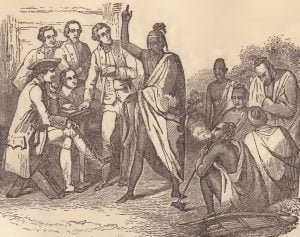
Treaty with Five Nations

The Five Nations, a confederacy of five Indian tribes, were significant allies of the English against the French during the Indian Wars. Their sophisticated governance and military strategies set them apart, allowing them to maintain supremacy over other tribes and engage effectively in war. Despite their initial defeats by the French and the Adirondacks, they rallied with Dutch support and eventually reclaimed power. Their engagements with the French exemplified both their valor and the complexities of colonial rivalries, culminating in fluctuating alliances and treaties that shaped their future interactions.
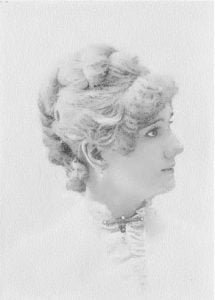
Nellie Hazeltine, Mrs. Frederick W. Paramore

Nellie Hazeltine

Nellie Hazeltine, later Mrs. Frederick W. Paramore, was a notable figure in St. Louis society, graduating from Mary Institute in 1873. Renowned for her physical beauty and charm, she captivated those around her, fostering positive connections without inciting envy. Educated and musically gifted, her accomplishments set her apart from her peers. Nellie married in 1881 but tragically passed away at twenty-seven, leaving behind a legacy celebrated by her community. Her beauty and character continue to be remembered, symbolizing an ideal of womanhood in her era.

Jessie Benton, Mrs. John C. Fremont

In 1868, St. Louis unveiled a monument to Thomas Hart Benton, a prominent advocate for Western expansion. His daughter, Jessie Benton Fremont, unveiled the statue alongside her husband, General John C. Fremont, a key figure in exploring and settling the West. Jessie’s life intertwined with the exploration and development of the American frontier, embodying both her father’s vision and her husband’s adventures. She supported Fremont in his expeditions and political career, advocating for anti-slavery principles in California while navigating societal challenges.

Treaty of July 19, 1820

On July 19, 1820, a treaty was concluded between U.S. Commissioners Auguste Chouteau and Benjamin Stephenson and the Kickapoo tribe, amending a prior agreement made in 1819. This treaty adjusted the terms of land cession, granting the Kickapoo tribe additional land in Missouri in exchange for three thousand dollars worth of merchandise. The document was signed in St. Louis, commemorating the ongoing negotiations and relationships between the United States and Native American nations.

Treaty of March 30, 1817

On March 30, 1817, a treaty was signed in St. Louis between the United States and the Menomenee tribe, represented by their chiefs. The treaty aimed to restore peace and friendship following past hostilities, with mutual forgiveness for injuries sustained. It confirmed earlier land cessions to the U.S. and established a commitment to return any prisoners held by either side. The Menomenee acknowledged their allegiance to the United States, signaling a significant moment in U.S.-Indigenous relations.

Treaty of June 2, 1825

On June 2, 1825, a treaty was signed in St. Louis between William Clark and the Great and Little Osage Tribes, resulting in the cession of significant land to the United States. The U.S. promised to provide annual payments, livestock, and agricultural support for the tribes while reserving specific lands for their use. The agreement also aimed to resolve debts and disputes with other tribes, ensuring the protection and education of the Osage people. It emphasized the importance of fostering friendship between the U.S. and the Osages.

Treaty of June 22, 1818

On June 22, 1818, a treaty was established between the United States, represented by William Clark and Auguste Chouteau, and the Pawnee Marhar tribe. The treaty aimed to foster peace and friendship, with provisions for mutual forgiveness of hostilities and the permanent protection of the tribe by the United States. The Pawnee leaders committed to ensure compliance with the treaty, including surrendering members who violated its terms. The agreement was signed in St. Louis, marking a significant diplomatic milestone.

Treaty of June 20, 1818

On June 20, 1818, William Clark and Auguste Chouteau, representing the United States, signed a treaty with the Pawnee Republic. The treaty established a framework for peace and friendship, emphasizing mutual forgiveness for past hostilities. The Pawnee chiefs acknowledged their allegiance to the United States and committed to delivering any tribe member who violated treaty terms for punishment. This agreement aimed to solidify a lasting relationship between the U.S. and the Pawnee, marking a significant step in their diplomatic interactions.

Treaty of August 24, 1818

On August 24, 1818, the United States, represented by William Clark and Auguste Chouteau, entered into a treaty with the Quapaw tribe. The treaty acknowledged the Quapaw’s protection under the U.S. and involved the cession of significant land while reserving certain territories for their use. It stipulated that the Quapaw could hunt on ceded lands peacefully and that the U.S. would provide goods worth $4,000 initially and $1,000 annually. The agreement aimed to preserve amicable relations and outlined procedures for handling disputes between individuals from both parties.

Treaty of June 1, 1816

On June 1, 1816, a treaty was signed in St. Louis between U.S. commissioners and Sioux tribal chiefs, aimed at restoring peace and friendship following the War of 1812. The agreement stipulated mutual forgiveness for past hostilities, reaffirmed existing relations, and recognized earlier land cessions to various European powers. The tribes acknowledged their allegiance solely to the United States, cementing their status under American protection. This treaty sought to re-establish harmonious relations and validate previous agreements between the U.S. and the Sioux.

Biographical Sketch of George Washington Schaffer

George Washington Schaffer, born on July 4, 1847, in St. Louis, Missouri, had a diverse career in the butcher business, working in various cities including Galesburg, Kansas City, and Chicago. He faced challenges, including a serious injury while handling cattle. Eventually, Schaffer settled in Jamesport, Missouri, where he established himself as a respected businessman in the meat market and confectionery industries. His strong reputation earned him the trust of the local community, aligning with his patriotic name reflecting American independence.

Biographical Sketch of Samuel T. Howell M.D.

Samuel T. Howell, born on February 22, 1843, in Gentry County, Missouri, was raised on a farm and received his education at local schools and Camden Point College. He began studying medicine at 24 with Dr. G. W. Stapleton, later graduating from Jefferson College in 1871, excelling in surgery. Practicing near his birthplace, he moved to a new county in 1874, focusing on surgical care. Howell married Julia A. Evans in 1869, and they had four children together.

Escape From The Robber Band

On November 8, 1819, the author and companions faced a night of dread while staying with strangers who displayed suspicious behavior. Armed and apprehensive, they prepared for a possible attack, realizing the danger posed by their hosts. After surviving the night, they departed the premises, eventually joining other travelers on the road to safety. Their journey continued through Illinois, revealing a landscape of both fertile land and dangerous inhabitants, leading the author to reflect on the challenges and characters of this new frontier.

In Possession Of The “Promised Land”

On November 22, 1819, the author bids farewell to new friends in Kaskaskia and embarks on a journey to the bounty lands, noting the fertile prairies and wildlife encountered. His travels take him through various settlements, including Edwardsville, which shows promise despite high labor costs. Disappointments arise as he parts from Dr. Hill, yet he finds camaraderie in traveling companions. Encounters with hospitable locals highlight both the beauty and challenges of settling in the region, echoing the allure of this land as a “Promised Land.

Biography of Rev. Samuel Parker

Rev. Samuel Parker, born on April 23, 1779, in Ashfield, Massachusetts, was a pivotal figure in early American missionary work. After graduating from Williams College and Andover Theological Seminary, he began his ministry in New York. In 1833, he offered to explore the West for the American Board of Commissioners for Foreign Missions. His significant journey in 1835 to the Oregon territory culminated in the publication of “Parker’s Exploring Tour,” which raised awareness about the region. Parker remained influential until his death on March 21, 1866, at nearly 87.

Biography of Hon. Peter Paquet

Hon. Peter Paquet, born in St. Louis, Missouri, in 1839, emigrated to Oregon with his family in 1852. After enduring a challenging journey marked by the hardships of prairie life, they settled in Portland before moving to Canemah and eventually to the Paquet Donation claim. A notable figure in Oregon’s political landscape, he served multiple terms in the legislature, city council, and as mayor of Oregon City. Paquet was also a successful contractor and builder, contributing significantly to the state’s infrastructure. He was married to Sarah E. Hamilton and had three children.

Biographical Sketch of George H. Moser

George H. Moser, a notable homeopathic physician from Arcola, Pennsylvania, was born on December 19, 1859. He graduated with honors from the Homeopathic Medical College of Missouri in 1890 and began practicing in Belleville, Illinois, before moving to Bond County and then Arcola in 1895. Known for his diagnostic skills and friendly demeanor, Dr. Moser quickly established a successful practice in Arcola. He married on December 10, 1881, and has three daughters: Lola, Viola, and Hattie.

Biographical Sketch of John McGhee

John McGhee, originally from Ireland, married English native Margaret Adams, and together they migrated to Shelby County, Kentucky, where they had several children: Lynch, Emily, Margaret, James, Washington, Nancy, and Rice. Lynch, a physician, later moved to St. Louis after remarrying. Washington, who died in 1828, left behind a widow, Julia Sibley, and four children. Margaret and her children relocated to Montgomery County, Missouri, in 1841, where she continued to live well into her later years.

Biographical Sketch of William S. Slavens

William S. Slavens, born on September 15, 1887, in Greenbriar County, Virginia, was married five times and had a total of twelve children. After settling in Montgomery in 1820, he moved near Middletown in 1829, where he contributed to the land development. He journeyed to Missouri with his brother Thomas and a companion, bringing along a cow he deemed more valuable than land offered to him. Despite a failed investment in potatoes, Slavens’ lineage continued through his children’s numerous descendants.

Biography of John Davis

John Davis, born on October 30, 1791, in Shenandoah County, Virginia, is a prominent figure of early Missouri history. After moving to Bourbon County, Kentucky, he served in the War of 1812 before relocating to Missouri in 1820. There, he witnessed the transformation of St. Louis and spent 46 years in Clarksville, where he recounted tales of pioneer life, including a memorable rattlesnake hunt. Despite early business failures, Davis persevered, valuing hard work and integrity, a testament to the resilience of his generation.