Samuel Lane’s Journal, 1739-1803

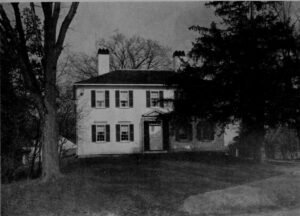
Jabez Lane House

Samuel Lane’s journal, covering 1739 to 1803, chronicles the life of a New Hampshire resident who experienced the colonial, Revolutionary, and early national periods. Lane transitioned from farming to various professions, including tanner and shoemaker, while actively participating in community roles. His meticulously kept journal captures local and national events, personal reflections, and societal changes. Edited by Charles Lane Hansen in 1937, it serves as a crucial primary source, offering insights into the daily life, hardships, and resilience of 18th-century New England.

Vital records of Stratham, New Hampshire, 1700-1867

Plan of the Town of Stratham

In 1934, Priscilla Hammond compiled vital records from Stratham, New Hampshire, covering the years 1700 to 1867, based on original town records. This compilation, transcribed with imperfect typing, was privately published and distributed to libraries and societies. The records are presented largely as found, with family members often grouped together. An index is included to assist in locating individual records. Users should be cautious with dates, especially those before 1752, as it is unclear if old dates were converted.

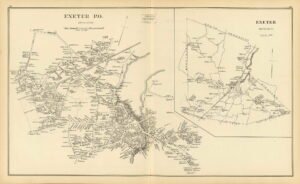
Men and Things of Exeter New Hampshire

1892 Map of Essex New Hampshire

Men and Things of Exeter New Hampshire provides a detailed record of the early settlement and social evolution of Exeter, New Hampshire, tracing its origins from the 1638 arrival of Rev. John Wheelwright. The text documents the town’s revolutionary spirit, highlighting its transition from a vulnerable frontier outpost to a patriot headquarters where citizens actively resisted British authority. A significant portion of the work is dedicated to the intellectual and religious landscape, cataloging the progression of the local printing press and the complex internal schisms of various ecclesiastical societies. By blending genealogical facts with anecdotes of popular uprisings and visits from figures like George Washington, the author preserves the material history of the community for future generations.

Supplement to The history of Windham in New Hampshire

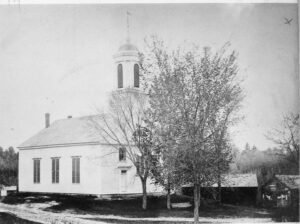
Presbyterian Church of Windham New Hampshire

The 1892 supplement to “The History of Windham in New Hampshire,” compiled by Leonard Allison Morrison, expands on the local history initially published in 1883. It documents the Presbyterian society’s organization from 1827 to 1892, detailing church records, civic matters, and the development of Canobie Lake. The volume includes genealogical data from Ireland, accounts of early settlers, and significant events like the fiftieth anniversary of the church dedication. Additionally, it provides vital records and concludes with obituaries and Columbus Day celebration proceedings.

History of Windham New Hampshire

Residence of William H Anderson of Windham, New Hampshire

Leonard A. Morrison’s *The History of Windham, New Hampshire*, published in 1883, chronicles the town’s evolution from early settlements in the 18th century to the late 19th century. It highlights Windham’s roots in the Scotch-Irish Londonderry community and examines various aspects of local life, including land grants, education, and political developments. The work also documents significant historical events and includes extensive genealogies of the area’s early settlers and their descendants, drawing from comprehensive local records and archives.

History of Hampton New Hampshire vol 2

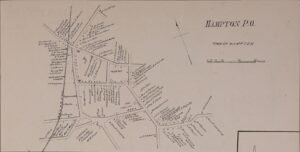
1892 Map of Hampton NH

The original version of this monumental work was published in 2 volumes. Volume 1 contains the history of the town of Hampton, New Hampshire from its settlement in 1638 to the autumn of 1892 and can be found here. Volume 2 featured the genealogical and biographical details of the early families of Hampton, NH up to the autumn of 1892 and this is the volume shown below. This manuscript was meticulously researched by Joseph Dow up until his death in 1889. Unfortunately his death preceded the final compilation of the genealogies and his daughter, Lucy Ellen Dow, took on the task after his decease. For genealogists this is an important fact. Lucy admits in her preface that she had difficulty bringing the genealogies down to date (1892) for lack of full understanding of Josiah Page’s notes and for the lack of accurate town records. As she laments about the town records “but whole decades are passed over with scarcely an entry of birth or marriage.” Indeed they are.

History of Hampton New Hampshire vol 1

1892 Map of the town of Hampton NH

The original version of this monumental work was published in 2 volumes. Volume 1, here presented, contains the history of the town of Hampton, New Hampshire from its settlement in 1638 to the autumn of 1892. Volume 2 features the genealogical and biographical details of the early families of Hampton, NH up to the autumn of 1892. There is every indication that Joseph Dow had completed the first volume before his death in 1889, and was compiling the material needed for the second volume which his daughter finished for him.

Early Records of Londonderry, Windham, and Derry, NH

Early Records of Londonderry, Windham, and Derry, N.H. 1719-1762, Vol. 1 title page

The sources from which the Early Records of Londonderry, Windham, and Derry, N.H. have been drawn are Volumes I and II of the old town books. These old town books include minutes, ear markings, surveyors and homestead records, tax lists, inventory lists, accounts, school records and other miscellaneous records.

History of Chester, New Hampshire, including Auburn

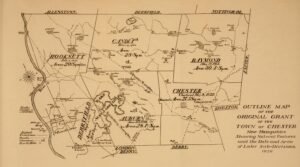
Outline map of the Original Grant of the town of Chester New Hampshire

The *History of Chester, New Hampshire, Including Auburn* by John Carroll Chase, published in 1926, serves as a supplement to the original 1869 *History of Old Chester*. This work was produced in response to a desire to document events that had occurred in the town since the previous publication, as well as to cover topics that were initially omitted. While Chester had seen a decline in population and industrial activity, the book highlights notable historical and social developments. It incorporates additions to military history, church records, and gravestone inscriptions, providing a comprehensive overview of Chester and Auburn’s past.

History of old Chester from 1719 to 1869

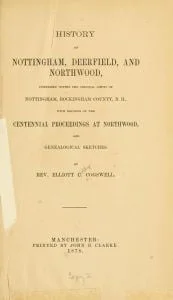
History of Old Chester title page

The *History of Old Chester from 1719 to 1869* by Benjamin Chase, published in 1869, offers a detailed account of the early settlement and development of Chester, New Hampshire. Compiled with the assistance of local historian Judge Samuel D. Bell, the book explores the town’s founding, genealogies, and significant events, using primary sources such as deeds, probate records, and personal diaries. Chase aimed to preserve the history and traditions of Chester’s early settlers while providing a comprehensive record for future generations. The work covers a broad range of topics, including religious, military, industrial, and genealogical history.

Descendants of Joseph Borden of Fall River MA

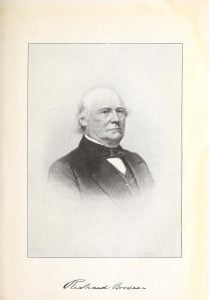
Richard Borden

The Borden family, descended from Joseph Borden of Fall River, MA, boasts a rich lineage extending back to Richard Borden, an English soldier settled in Portsmouth, R.I., in the 17th century. The Bordens became prominent landowners and industrialists, particularly during the rise of Fall River as a textile manufacturing hub. Nathaniel Briggs Borden, a notable descendant, served in various public offices, advocating for abolitionist causes and contributing significantly to local development. His legacy continues through his descendants, who maintained the family’s influence in Fall River’s civic and business arenas.

Manchester New Hampshire Directories 1840-1965

1889 Directory for Manchester New Hampshire

19 free digitized directories found online for the city of Manchester New Hampshire covering the years of 1860-1918 (incomplete). Directories can provide such information on an individual such as their employment and address during the year issued. They may also indicate whether they were renting or residing with somebody else at the time.

Bean and Bane Family Genealogy of Saco Valley Maine

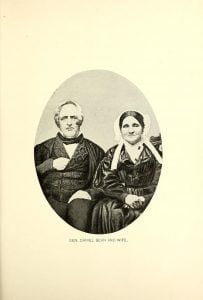
Gen. Daniel Bean and Wife

The Bean and Bane family genealogy traces origins to a supposed ancestor from the Isle of Jersey, though evidence suggests a Scottish lineage, with the surname derived from Gaelic meaning “fair.” Key figures include Lewis Bane, who settled in Boston around 1670, and his sons, who established roots in York, Maine. Captains Lewis and Joseph Bane played prominent roles in early settlements and conflicts with Native Americans. Generations of Beans and Banes contributed significantly to the region’s history, including military service and local governance.

Narrative of the Captivity of Frances Noble – Indian Captivities

Narrative of the captivity of Frances Noble, who was, among others, taken by the Indians from Swan Island, in Maine, about the year 1755; compiled by John Kelly, Esq. of Concord, New Hampshire, from the minutes and memoranda of Phinehas Merrill. Esq. of Stratham, in the same state; and by the Former Gen. Tleman communicated for publication to the editors of the Historical Collections of New Hampshire.

Narrative of the Captivity of Mrs. Isabella M’coy – Indian Captivities

In 1747, Mrs. Isabella M’Coy was captured by Indians near Epsom, New Hampshire. Initially taken by surprise, her family managed to escape to a garrison while she was held captive. Despite her fears, the Indians treated her with unexpected kindness during their journey to Canada, providing her food and care. Ultimately, she was sold to a French family, but her condition was surprisingly tolerable. After the war, she returned home, reflecting on her harsh yet paradoxically gentle captivity amidst the brutality of the times.

Narrative of the Captivity of Nehemiah How

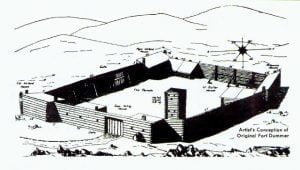
Fort Dummer

A Narrative of the captivity of Nehemiah How, who was taken by the Indians at the Great Meadow Fort above Fort Dummer, where he was an inhabitant, October 11th, 1745. Giving an account of what he met with in his traveling to Canada, and while he was in prison there. Together with an account of Mr. How’s death at Canada. Exceedingly valuable for the many items of exact intelligence therein recorded, relative to so many of the present inhabitants of New England, through those friends who endured the hardships of captivity in the mountain deserts and the damps of loathsome prisons. Had the author lived to have returned, and published his narrative himself, he doubtless would have made it far more valuable, but he was cut off while a prisoner, by the prison fever, in the fifty-fifth year of his age, after a captivity of one year, seven months, and fifteen days. He died May 25th, 1747, in the hospital at Quebec, after a sickness of about ten days. He was a husband and father, and greatly beloved by all who knew him.

King William’s War – Indian Wars

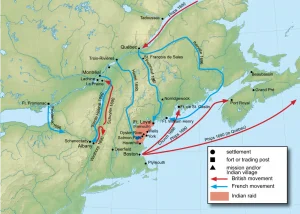
King Williams War Map

King William’s War (1688-1697) stemmed from territorial conflicts among the English, Spanish, and French, with Native American tribes often allying with the highest bidder. While the French aimed to expel the English from northern territories, the English targeted Canada. Initial hostilities began in Maine, escalating with brutal attacks, including the massacre at Schenectady. Despite military efforts, both sides suffered heavy losses, leading to a temporary peace in 1693. The war officially ended with the Treaty of Ryswick in 1697, restoring prior territorial claims and initiating a fragile peace.

Early Probate Records of Hampton, N.H.

1892 Map of Hampton NH

The early probate records of the Province of New Hampshire, from 1635 to 1771, have been published in nine volumes (vols. 31-39) of the set “New Hampshire State Papers” edited by Albert Stillman Batchellor, Henry Harrison Metcalf, and Otis G. Hammond. Originally published in the years 1907-1941 these books are available in many libraries throughout New Hampshire. The list included here contains transcriptions of some of the early probate records for Hampton, New Hampshire. It is not a complete list of the available probate records.