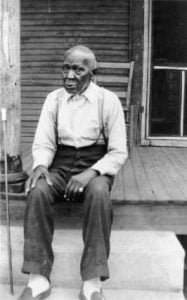
Slave Narrative of Walter Calloway

Walter Calloway

Walter Calloway, an 89-year-old former slave, reflects on his life during an interview in Birmingham, Alabama, in 1937. Born in Richmond, Virginia, in 1848, he recounts being sold to a plantation owner in Montgomery, where he faced hard work but relatively fair treatment. He describes witnessing the Civil War’s impact and the destruction caused by Union raiders. Although emancipation brought freedom, he notes that many former slaves, including himself, continued to work just as hard under difficult circumstances. Calloway’s narrative captures the resilience and hardships of ex-slaves.

Allen Genealogy of New Bedford Massachusetts

In March 1635, George Allen and his family sailed from England to New England with Rev. Joseph Hull, settling initially in Weymouth before moving to Sandwich, Massachusetts. As a yeoman farmer, he became involved in local governance, serving as constable and deputy to the General Court. George’s descendants include prominent figures in Old Dartmouth, with familial branches spreading throughout Massachusetts and beyond. The Allen family navigated challenges of religious intolerance while establishing their legacy, and their story reflects the broader historical tapestry of early New England settlements.

Descendants of Veranus Filoon of North Bridgewater, MA

v filoon

The Filoon family, with roots tracing back to James Filoon of County Armagh, Ireland, has made significant contributions to the communities of Abington and North Bridgewater (now Brockton). Notable members include Veranus Filoon, a successful businessman in the shoemaking industry, and his sons Fred and Henry, who continued the family’s legacy in commerce and dentistry, respectively. This family’s history intertwines with the influential Brett and Fullerton families, reflecting their deep ties to New England’s early settlers and their enduring impact on local society.

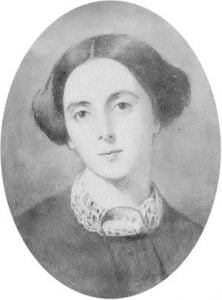
Mattie Ould, Mrs. Oliver Schoolcraft

Mattie Ould

Mattie Ould, known as Mrs. Oliver Schoolcraft, captivated Richmond society in the late 1860s with her beauty, wit, and charm. Raised in a prominent family, her talents and independence made her a celebrated figure. Famed for her repartee and magnetic presence, she dazzled crowds both socially and in spirited performances. Ould’s marriage in 1876 to Oliver Schoolcraft was met with familial tension, yet her enchanting spirit endured until her untimely death. Her funeral drew immense crowds, reflecting her lasting impact on the community and Southern culture.

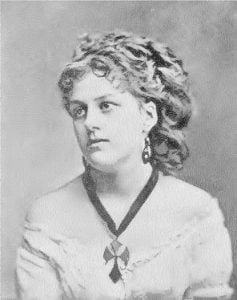
Fanny Taylor, Mrs. Thomas Harding Ellis

Fanny Taylor

Fanny Taylor, also known as Mrs. Thomas Harding Ellis, was renowned as one of the celebrated Richmond Graces in the 19th century. Educated in Richmond, she became acclaimed for her beauty and grace, often captivating society at local gatherings. Fanny married Archibald Morgan Harrison and later Colonel Thomas Harding Ellis, with whom she shared a deep bond for nearly fifty years. Her life exemplified the charm and influence of Southern women, marked by her connections to prominent figures and rich social traditions of the era.

American Baker Genealogies

The post features genealogies of various American Baker families, detailing their origins, notable individuals, and family connections across states like Massachusetts, Ohio, and Pennsylvania. Among them are Daniel Baker of Ohio, Edward Baker of Massachusetts, and Henry Baker of Pennsylvania, highlighting their migrations, marriages, and descendants. The genealogies also reflect the family’s historical significance, with some members actively participating in significant events, such as the Revolutionary War. This compilation serves as a valuable resource for understanding the lineage and contribution of the Baker families in America.

Slave Narrative of Edna Boysaw

Edna Boysaw, an ex-slave now living in Brazil, Indiana, reflects on her life from her days in Virginia to her current residence. She describes a challenging journey following emancipation, with her husband lured to Indiana for work in coal mines but facing hostility. After moving to Indiana with two children to care for him post-injury, Edna supported her family through various jobs, often relying on the kindness of white neighbors for food. Despite hardships, she remains active in her community, deeply respected for her contributions and resilience.

Slave Narrative of Rev. Silas Jackson

Rev. Silas Jackson, born around 1846 or 1847 in Virginia, recalls his life as a slave on a plantation owned by Tom Ashbie. He details harsh labor conditions, frequent abuse by overseers, and the minimal provisions given to slaves. Despite the brutality, moments of community and faith prevailed, such as secret prayer meetings and seasonal revivals. Jackson’s family history includes a grandfather who escaped with Harriet Tubman’s help. His account highlights the struggle for dignity amid oppression, the fear of being sold, and the resilience of enslaved people.

Slave Narrative of Gus Clark

Gus Clark, an 85-year-old former slave from Richmond, Virginia, recounts his life experiences in Howison, Mississippi. He shares the hardships faced during his childhood after the Civil War, including working in harsh conditions as a water boy in Louisiana. Despite the brutality of slavery, he notes that conditions were sometimes better than his current poverty-stricken life, where he and his wife depend on minimal state assistance. Reflecting on his past, Clark discusses severe punishments, lack of education, and the meager provisions provided by his former master.

Slave Narrative of Sarah Mann

Sarah Mann, born into slavery in 1861 on a Virginia plantation, recounts her life as the daughter of Frederick Green and Mandy Booker. Following emancipation, she married Beverly Mann in 1880 and moved with other ex-slaves to Silver Creek, then to Wadsworth, and finally to Akron in 1883. A dedicated church member and believer in the Bible, she shares a modest home with her family. At over seventy years old, Mrs. Mann reflects on her past with dignity, while her husband’s passing has left an imprint on her life.

Slave Narrative of Charles H. Anderson

Charles H. Anderson, born into slavery in Richmond, Virginia on December 23, 1845, reflects on his life experiences, asserting that they outweigh any education he might have gained. He recalls his time as a favored slave, trusted by his owner, and his lack of formal schooling. After the Civil War, he worked various jobs, including as a handy man, and shared insights on community life and changing values. Despite challenges, he emphasizes the importance of hard work, family, and a clear conscience.

Slave Narrative of Liza Smith

Liza Smith, a 91-year-old former slave from Muskogee, Oklahoma, recounts her family’s history, tracing her roots to her parents, Jane Mason and Frank Smith, who were brought from Africa to Virginia. She recalls life under her master, Frank Mason, who treated his slaves well, providing food, care, and a relatively comfortable existence. Smith describes the hardships during the Civil War, the eventual announcement of their freedom, and the struggles to adapt afterward. Despite the challenges, she expresses hope of reconnecting with her family’s origins.

Slave Narrative of Doc Daniel Dowdy

Doc Daniel Dowdy, born June 6, 1856, in Madison County, Georgia, recounts his life as a slave and the hardships faced by his family. With nine brothers and one twin sister, he describes the conditions of their living and working on the plantation, the pain of witnessing family members sold, and the brutal treatment of slaves. After emancipation, he moved to Oklahoma in 1906, reflecting on figures like Abraham Lincoln and Booker T. Washington, while still actively participating in his community and church.

Slave Narrative of Tom W. Woods

Tom W. Woods, an 83-year-old former slave from Alderson, Oklahoma, reflects on his life in Florence, Alabama, where he was born. He recounts the economic disparities between poor whites and enslaved individuals, emphasizing that emancipation benefited both groups. Woods describes his experiences on a plantation owned by a man shaped by alcohol, noting both the kindness and harshness he observed. He remembers his family life, education learned from his wife, and the transition to freedom post-Civil War, illustrating a complex legacy of servitude and survival.

Slave Narrative of Mary Anngady

Mary Anngady, an 80-year-old former slave, recounts her childhood experiences under Mr. and Mrs. Franklin Davis in Orange County, North Carolina. She reflects on the kindness of her enslavers, her education, and family life. After the Civil War, she traveled extensively, marrying twice, first to Aaron Stallings and later to Rev. Matthews Anngady, an Abyssinian prince. Through their lectures on African customs, she offered insights into the brutal practices within his tribe, including executions and cannibalism, before settling in Raleigh.

Biographical Sketch of Aldrich, P. Emory

P. Emory Aldrich was born in New Salem, Massachusetts, to English ancestry. He pursued his education at local schools and Shelburne Falls Academy, later gaining admission to Harvard Law School. After being admitted to the bar in Virginia, he returned to Massachusetts, practicing law in Barre and serving as district attorney. Aldrich was elected mayor of Worcester in 1862 and held various positions, including a member of the state board of health. He was married to Sarah Wood in 1850 and remained active in education and temperance causes.

Slave Narrative of Pierce Cody

Pierce Cody, interviewed by Adella S. Dixon in Georgia, recounts his experiences as a child of enslaved parents. He describes the religious life of slaves under the Hardshell Baptist faith, their roles in plantation work, and the organization of marriages under the masters’ supervision. Cody details daily life, including communal meals, medical care, and recreational activities. He also discusses the limited awareness of the Civil War among slaves and their eventual emancipation, which was met with celebration. Cody attributes his longevity to self-care practices.

Slave Narrative of Mama Duck

In her interview with Jules A. Frost in 1937, 109-year-old Mama Duck reflects on her life as a former slave in Tampa, Florida, discussing her childhood abandonment and her experiences during slavery, which she recalls as comparatively better due to consistent food and shelter. She recounts her lack of beatings from masters and describes the brutal punishments others faced. Currently, she struggles with poverty and exclusion from relief programs, emphasizing her pride and resilience despite her circumstances.

Slave Narrative of “Father” Charles Coates

Father Charles Coates, born into slavery in Richmond, Virginia, at 108 years old, reflects on his life experiences. He recalls the harsh conditions and cruelty faced on plantations under different masters, particularly the severe punishments meted out. Despite these trials, he highlights the small comfort of attending religious services. After emancipation, Coates worked and accumulated savings, experiencing love and loss with the death of his first wife. Residing in Savannah, he later married Irene and continued preaching, celebrating his long life and faith at a birthday gathering in 1936.