Providence County Rhode Island Cemeteries
A complete listing of all available online Providence County Rhode Island cemeteries, with links to transcriptions, gravestone photos, official records, etc.

A complete listing of all available online Providence County Rhode Island cemeteries, with links to transcriptions, gravestone photos, official records, etc.
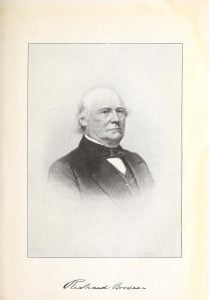
The Borden family, descended from Joseph Borden of Fall River, MA, boasts a rich lineage extending back to Richard Borden, an English soldier settled in Portsmouth, R.I., in the 17th century. The Bordens became prominent landowners and industrialists, particularly during the rise of Fall River as a textile manufacturing hub. Nathaniel Briggs Borden, a notable descendant, served in various public offices, advocating for abolitionist causes and contributing significantly to local development. His legacy continues through his descendants, who maintained the family’s influence in Fall River’s civic and business arenas.
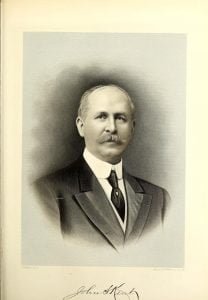
John Saxton Kent, born in 1860 in North Bridgewater (now Brockton), MA, emerged as a prominent shoe manufacturer and civic leader. After excelling in business studies, he began his career in bookkeeping, eventually co-founding the M. A. Packard Company, which became a leading shoe manufacturer. Kent served as mayor of Brockton from 1907 to 1909, showing dedication to public service and community welfare. A member of various organizations, he balanced business success with active involvement in local affairs, advocating for growth and development in his city.
The Wright family, an early Boston lineage, traces its origins to Richard Wright, who settled in Plymouth around 1644. Over generations, the family intermarried with prominent New England clans like the Adams and Wentworths. Notable descendants include Theodore Francis Wright, a significant figure in the New Jerusalem Church, and Augustus Hunt Wright, a Civil War veteran and community leader in Abington. Their legacy reflects the family’s deep roots in American history and its contributions to religion, education, and civic life in Massachusetts.
Davis Snow Packard, born June 24, 1826, in North Bridgewater, Massachusetts, became a notable manufacturer and public figure in Brockton. He co-founded a successful boot and shoe counter company, which he later expanded. Packard played a significant role in local banking and civic organizations, serving as president of the Brockton National Bank and participating actively in the Brockton Agricultural Society. His public service included roles as selectman and state representative. He passed away on July 31, 1900, leaving a legacy of enterprise and community service.
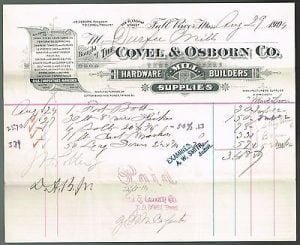
The Osborn family has played a significant role in Fall River’s industrial development since the 19th century. Prominent figures include Hon. Weaver and James Munroe Osborn, influential mill promoters and bankers, whose legacy continues with James E. Osborn, who actively oversees several manufacturing companies today. The family’s history traces back to Jeremiah and Mercy Osband in 1684, evolving through generations of civic leaders, business pioneers, and community contributors, exemplifying a steadfast commitment to the growth of Fall River’s economy and society.
In a detailed account of King Philip’s War, reports describe intense battles between English settlers and Native Americans, beginning in June 1675. The document recounts numerous assaults and atrocities, highlighting losses on both sides, including 444 Christians killed and hundreds of Native Americans. Despite the English army’s smaller numbers, they achieved victories but at great cost. The text serves as a rare historical record of the conflict, illustrating the brutality and strategic maneuvers during a dark period in New England’s history.
Samuel Cropper, born on May 12, 1831, near Manchester, England, emigrated to the United States in 1853, settling in Rhode Island where he learned photography. In 1875, he established a successful gallery in Jamesport. He married Jane Broadbent in 1853 and they had four children. Cropper was active in community organizations and identified as a Republican, known for his artistry and popularity.
John G. Haskell, born on February 5, 1832, in Vermont, distinguished himself as both a soldier and an architect. He graduated from Wesleyan Academy and Brown University before beginning his architectural career in Boston. Haskell moved to Lawrence, Kansas, in 1857, where he served valiantly during the Civil War, eventually becoming the chief quartermaster for the Army of the Frontier. Post-war, he became the state architect, notable for designing key structures including the state capitol, the State University, and various mental health facilities.
Margaret E. Dickens, born on June 5, 1861, in Raleigh, North Carolina, recounts her family history, noting her mother, Mary Ann Hews, was free-born and her father, Henry Byrd, endured hardships. Dickens shares her parents’ occupations—her grandfather as a cabinet maker and her father as a carpenter. After living briefly in the North with her first husband, a preacher, she returned to the South, where she values her home and family legacy. She expresses a deep preference for Southern life despite her time in the North.
George Paul Burleigh, an attorney from St. Louis, has specialized in trademark law for over twenty-two years. Born on June 29, 1873, in Providence, Rhode Island, he moved to St. Louis with his family in 1874. An alumnus of St. Louis University and Washington University, Burleigh served as the youngest member of the Missouri legislature in 1899 and contributed actively during World War I. Married to Mary J. Ross, he remains engaged in civic matters while enjoying hunting and athletics in his leisure time.
James Mott Aldrich, born on October 30, 1817, in Smithfield, Rhode Island, was a physician who began his practice in Fall River in 1843 after studying medicine at various institutions. He married twice, first to Mary A. Allen and later to Louisa G. Borden, with whom he had two children. Active in his community, Aldrich served as editor of the “Medical Enquirer,” president of the Children’s Home, and was involved in local education and manufacturing. A lifelong abolitionist and total abstinence advocate, he left the Society of Friends over their stance on anti-slavery meetings.
Oliver Ames, born February 4, 1831, in Easton, Massachusetts, was the son of Oakes and Eveline Ames. Educated at local academies and Brown University, he joined his family’s shovel manufacturing business and became a partner. Throughout his career, Ames engaged in public service, serving on the Easton school board, in the state Senate, as lieutenant governor, and as governor from 1887 to 1889. A leader in various industries, he remained active in civic duties and family life, raising six children with his wife Anna Coffin.
Clement Richardson, born June 23, 1878, in Virginia, is an influential educator and president of the Lincoln Institute in Jefferson City. He overcame early hardships and pursued education, studying at notable institutions like Harvard. His career includes teaching at Morehouse and Tuskegee Institutes, where he engaged students through literary activities. Recently, he has focused on rural education and contributed extensively to various publications. Under his leadership, the Lincoln Institute has seen significant growth, bolstered by community support and state funding. He is also a dedicated family man and active in Masonry.
Levi Livermore Tucker, born December 10, 1853, in Vermont, dedicated his life to educating young people in business for over forty years. A graduate of the Vermont Conference Seminary and Troy Business College, he held numerous teaching and administrative positions before becoming president of the Kansas Wesleyan Business College in Salina in 1913. A devout Methodist, he was recognized for his character and leadership both in education and community service. Tucker passed unexpectedly on March 30, 1917, leaving a legacy of devotion to his students and faith.
Richmond T. Battey, born in Rhode Island in 1849, is a notable figure in Kansas history, having moved to the state during its territorial period. A retired banker and significant community leader in Florence, he began his career in business at a young age, eventually leading the Marion County Bank. Battey’s life was marked by experiences as a freighter and later a stagecoach driver. He was active in politics, serving as mayor and a state senator. He and his wife, Mary, had one son, continuing the Battey legacy.
Frank Sigel Dietrich, born January 23, 1863, near Ottawa, Kansas, came from German immigrant parents. After his father’s death when Frank was an infant, his mother ensured his education, leading him to graduate from Brown University in 1887. In 1891, Dietrich began practicing law in Idaho, eventually leading a successful law firm and serving as attorney for the Oregon Short Line Railroad. A committed Republican, he ran for district judge in 1898. Dietrich is married to Martha Behle, and they have a daughter, Margaret Kathryn.
Peter Donnelly, born in Ireland in 1833, emigrated to the United States with his family in 1840. He settled in Rhode Island and later moved to California in 1853, engaging in placer mining. In 1862, he arrived in Oro Fino and helped supply miners with meat. By 1863, Donnelly was in Silver City, contributing to the region’s development, including opening a wagon road to Snake River. He became a successful businessman and is remembered as a generous representative of Idaho’s early settlers.