1851 Siler Roll: Eastern Cherokee

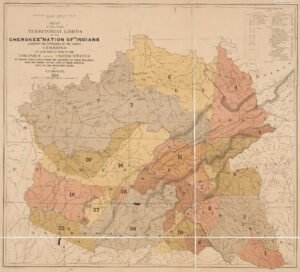
Map of Cherokee Land Cessions

The 1851 Siler Roll is a key genealogy resource for tracing Eastern Cherokee families who remained east of the Mississippi after the Trail of Tears. Compiled to identify those eligible for a federal per-capita payment, it lists households, family groupings, residences, ages, and relationships, but it is incomplete and should be used with the later Chapman Roll.
Guion Miller Application of John Hildebrand

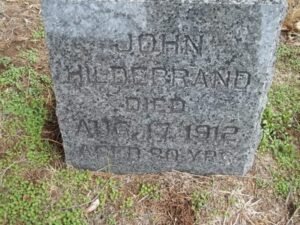
Gravestone of John Hildebrand

John Hildebrand of Bartlesville, Oklahoma was admitted to the Guion Miller Roll because he and his parents, David and Elizabeth Hildebrand, were already listed on the 1851 Drennen Roll in Tahlequah. The record traces his Cherokee ancestry through the Hildebrand family, explains the importance of the earlier roll, and includes details on his family history and application.

Biography of Andrew R. Turner

Andrew R. Turner, originally from Polk County, Tennessee, lived near Rome, Missouri, for the past twenty-three years. Raised in Georgia, he enlisted in the Ninth Tennessee Cavalry, serving the Union during the Civil War. Post-war, he farmed and later ventured into the dry goods business in Rome, achieving annual sales of approximately $10,000. A prominent Republican and postmaster, Turner is active in his community and church. He married Margaret Lietch, with whom he had three children, and remains a respected member of local society.

Biography of Dr. John S. Stephenson

Dr. John S. Stephenson, born in 1839 in Polk County, Tennessee, exemplifies the ideal physician through his medical proficiency and strong character. Raised in a pioneering family in Arkansas, he pursued medical knowledge from an early age, later serving as a doctor during the Civil War. After the war, he established a successful practice in St. Joe, Arkansas, while also engaging in public service as county clerk and a state legislator. A dedicated family man and community leader, he was married to Mary Potter and fathered five children.

Cherokee Indians

The Cherokee Indians, whose name origins are uncertain, are historically significant Native Americans predominantly residing in the southern Appalachian region. They speak an Iroquoian language and were divided into three dialect groups linked to separate settlements in Tennessee and neighboring states. The tribe has a complex history marked by early contact with European settlers, significant migrations, and cultural adaptations, such as the creation of a written language by Sequoya. Over time, they faced numerous challenges, including disease and forced removal, yet they have maintained a notable cultural and historical presence.

Yuchi Indians

The Yuchi Indians, a distinct linguistic group, were historically located in eastern Tennessee and parts of the Southeast, including Florida and Georgia. Known by various names, including Tsoyaha (People of the Sun) and Chisca, they comprised several bands and occupied various villages. Their early interactions included conflicts with European settlers, notably during the De Soto expedition. Over time, many Yuchi joined the Creek Confederacy, moving westward. Despite changes in population and location, they have maintained a unique cultural identity, particularly noted for their language.