
Seth Hastings Family of Clinton New York

Family Record of Dr Seth Hastings of Clinton, Oneida County, New York

The “Family Record of Dr. Seth Hastings, Senior” by Francis H. Hastings is a genealogical account that documents the ancestry and descendants of Dr. Seth Hastings, Sr., born in Hatfield, Massachusetts, in 1745. This work briefly traces his lineage back to Deacon Thomas Hastings, who emigrated from Ipswich, England, to New England on the ship Elizabeth in 1634. Deacon Thomas Hastings became a freeman in Watertown, Massachusetts, in 1635. The book then advances to a brief overview of the family of Dr. Seth Hastings, Sr., before delving into detailed records of his descendants. The genealogy extends to various families allied to the Hastings through marriage, incorporating a wide array of surnames.
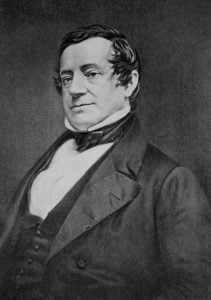
Washington Irving at Fort Gibson, 1832

Irving Washington

The McIntosh Creeks established productive farms along the Arkansas River, but their land was mistakenly included in the 1828 treaty with the Cherokee, leading to tensions and grievances. The Creeks petitioned the government for aid against attacks from other Indian bands. In response, Congress set up a commission to address these issues, appointing three commissioners, including Montford Stokes. Eventually, Washington Irving joined the commission’s journey from St. Louis to Fort Gibson, experiencing the rich tapestry of frontier life and the challenges faced by the tribes.

Origin and History of the Oneidas

Oneida Stone

The Oneida, part of the Iroquois nation, trace their origins to Onondaga, where they reportedly began as two individuals who settled by the Oneida River. They later fortified their position near Oneida Lake, cultivating their tribe. The Oneida stone, a significant rock in their history, became a symbol of their identity, representing the tribe’s connection to the land and its traditional council fire. Their history includes pivotal participation in the Revolutionary War, agriculture, and eventual migration to Wisconsin, where they continue to thrive today.

Biography of William Turnor Lewis

William Turnor Lewis, born on March 10, 1840, in Utica, New York, was a respected pioneer manufacturer in Racine, known for his integrity and commitment to community service. His career flourished as he managed the Western Union office during the Civil War and later co-founded the Mitchell Lewis Company, which became a significant player in the wagon and automobile industries. A devoted public servant, Lewis contributed to local politics and church activities, leaving behind a legacy defined by moral principles and civic engagement at the time of his death on December 30, 1915.

Biographical Sketch of Albert H. Horton, Judge

Judge Albert H. Horton played a pivotal role in Kansas’s legal and civil evolution for over fifty years, from the state’s inception in 1861 until his death in 1902. Born in New York in 1837, he pursued law at the University of Michigan before relocating to Kansas. He served as city attorney, judge of the Second Judicial District, and for nearly two decades as chief justice of the Supreme Court. Active in various political roles, he was also a significant figure in the University of Michigan alumni community, earning an honorary LL.D. degree.

Biography of Francis Merriman Barnes, Jr., M. D.

Dr. Francis Merriman Barnes, Jr. (1881- ) was a distinguished neuropsychiatrist from St. Louis. Born in Middletown, New York, he graduated from Johns Hopkins University in 1907. His career included roles as director of the clinical laboratory at Sheppard and Pratt Hospitals, clinical director at the Government Hospital for the Insane, and associate professor at Washington University Medical School. An author of several significant works on mental diseases, he also served during World War I. He married Carlotta Kimlin and has one son.

Biographical Sketch of Capt. William Newton

Captain William Newton was born on October 15, 1786, in Colchester, Connecticut. The eldest son of Asahel Newton, a Revolutionary War veteran, William took on significant family responsibilities early on. He moved to Sherburne in 1806, marrying Lois Butler in 1810. Newton established a woolen factory in 1812, though it faced multiple fires and was not rebuilt after 1827. He resided in Sherburne until his death on August 13, 1879, at 92. His legacy includes several surviving children who pursued diverse careers.

Biography of Hector Ross

Hector Ross, born in 1811 in Greenock, Scotland, immigrated to the United States in 1837. After years of perseverance in various manufacturing roles, he established a successful cotton mill in Sherburne, Chenango County, in 1861. His initiative transformed the local economy, leading to the construction of multiple buildings and the mill, which became the largest manufacturing establishment in the region. Ross passed away in 1872, leaving his thriving business to his son, Alexander, who continued his father’s legacy of enterprise and community support.

Biography of James B. Roberts

James B. Roberts, a veteran of the Civil War, was born on November 7, 1837, in New York, before moving to Ohio and eventually settling in Denton, Kansas, in 1870. He developed a farm in the region and became a prominent local figure. His wife, Almira McClellan, was actively involved in the Women’s Relief Corps, serving in various capacities, including on the State Executive Board. The couple raised seven children, contributing significantly to their community and exemplifying the values of hard work and civic duty.

Biography of Lucius Cozzens Rice

Lucius Cozzens Rice, born on June 30, 1867, in Riceville, New York, became a prominent businessman and Idaho’s state treasurer. He prepared for college at Clinton Seminary and attended Union College, where he excelled in leadership. After moving to Idaho in 1891, he established a successful general merchandise store in St. Anthony. Rice was instrumental in founding the First Bank of Fremont County and the Snake River Valley Telephone Company. Elected state treasurer in 1898, he was noted for his prudent management of public funds and was deeply involved in Democratic politics.

Biography of Alexander Duffes

Alexander Duffes, born on March 26, 1839, in Utica, New York, founded the town of Nampa, Canyon County, in 1885 after recognizing its potential during a journey west. He dedicated himself to developing the area, investing in improvements, and providing sites for churches and schools. A prosperous businessman, Duffes also built many significant structures in Nampa. He was a Republican and a member of the Ancient Order of United Workmen. Duffes married Hannah Lucinda Cummings in 1869, and they had one son, Picton Warren.

Biography of Shepard Keene Linscott

Shepard Keene Linscott, born on March 6, 1887, in Chesterville, Maine, embodied American manhood through his pioneering spirit and community contributions. After leaving home at sixteen, he became a farmer in Indiana, later marrying Myra Simmons and serving in the Civil War. He excelled in business as the president of S. K. Linscott Bank in Kansas and played a crucial role in agricultural advancements. A dedicated family man and gentleman, his legacy of love and integrity left an indelible mark on his descendants and community.

Biography of William F. Benson, Hon.

Hon. William F. Benson served as the state bank commissioner of Kansas, appointed by Governor George H. Hodges based on merit rather than politics. With extensive banking experience and a strong ethical foundation, Benson managed the vital responsibilities of the office effectively. His career included roles as county treasurer, bank cashier, and state senator. A Kansas resident for over thirty-eight years, he was actively involved in public service and community affairs. Married to Margaret Farley, they had four children. Benson was also an active member of several fraternal organizations.

Biography of John Sayre Downes

John Sayre Downes, born on a New York farm in 1855, moved to Kansas in 1878, where he became a prominent businessman. Since 1896, he has served as president of the Aetna Building and Loan Association in Topeka, the nation’s largest of its kind. Under his leadership, the association’s assets grew significantly, aided by Downes’ commitment to fair treatment of policyholders. A self-made man with a strong community interest, Downes is involved in local civic initiatives and maintains ties to the Episcopal and Methodist churches. He and his wife, Liza, have two children.

Biographical Sketch of Leon Brooks Bacon

Leon Brooks Bacon, born on July 24, 1870, in Taberg, New York, was a notable lawyer and legal professional. He graduated from Williams College in 1893 and earned his LL.B. from Syracuse University in 1899. Bacon held various roles, including editor and director in multiple organizations, and was involved in women’s suffrage and municipal law reform. He authored historical genealogies and was an active member of several professional and historical societies. Bacon married Anna Osborne Anthony in 1900 and had three children.

Biographical Sketch of Starr Cadwallader

Starr Cadwallader, born on June 11, 1869, in Howard, N.Y., was a prominent settlement worker and Presbyterian minister. He earned an A.B. from Hamilton College and an A.M. from Union Theological Seminary. Cadwallader was actively involved in YMCA work and served as head worker at Goodrich Social Settlement in Cleveland from 1896 to 1903. He held various roles, including school director and trustee of the Cleveland School of Art, while contributing to multiple local organizations and writing for magazines.

Biographical Sketch of Mattoon Monroe Curtis

Mattoon Monroe Curtis was born on October 19, 1858, in Rome, N.Y. He graduated from Hamilton College and Union Theological Seminary, later earning a Ph.D. from the University of Leipzig. Ordained in 1883, he served as a pastor before becoming a philosophy professor at Western Reserve University in 1891. Curtis held various roles, including supervising the 13th Federal Census in Cuyahoga County and serving on multiple academic societies and boards, reflecting a distinguished career in education and public service.

Biography of Sheldon Griswold Catlin

Sheldon Griswold Catlin, born on September 28, 1806, in Connecticut, was a significant figure in Leavenworth’s commercial landscape. Moving to Leavenworth in 1863, he joined the successful wholesale shoe firm, George O. Catlin Company, alongside his brother. Catlin’s entrepreneurial journey began as a store clerk, leading to establishing a store in South Carolina. A devout Methodist and Republican, he was involved in local governance and the Civil War Home Guard. His legacy continued through his son, Elbert Sheldon Catlin, who succeeded him in the business.

Biography of John Gottlieb Seewir

John Gottlieb Seewir, born in Switzerland in 1828, was a prominent pioneer physician in Kansas, practicing in Lawrence from the Civil War until his death in 1888. After immigrating to America in 1838, he trained under his father and furthered his education in Switzerland. Seewir established a successful medical practice in Lawrence, later focusing on office consultations. A man of integrity and community spirit, he valued honorable citizenship over wealth. His legacy continued through his son, Charlie C. Seewir, who became a notable figure in Lawrence as a postmaster and publisher.

Bidwell, Charles Calvin – Obituary

Charles Calvin Bidwell, born February 20, 1827, in Verona, New York, passed away in Union, Oregon, on November 25, 1915, at the age of 89. He married Mary A. Gilbert in 1858 and had five children, though only four survived him. Bidwell took up a homestead in Minnesota and served in the Civil War with the First Minnesota Heavy Artillery. He relocated to Union, Oregon, in 1887 and was a member of the G.A.R. and the M. E. Church at the time of his death.