The Massachusetts Tax Valuation List of 1771

The Massachusetts Tax Valuation List of 1771 contains the names and descriptions of taxable property of nearly 38,000 individuals who resided in 152 Massachusetts towns in 1771

The Massachusetts Tax Valuation List of 1771 contains the names and descriptions of taxable property of nearly 38,000 individuals who resided in 152 Massachusetts towns in 1771
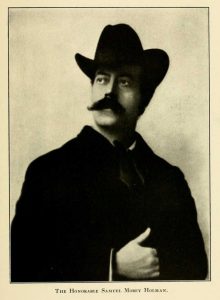
The Holman family has been a significant presence in Massachusetts for over two centuries, deeply involved in the social, religious, and educational spheres of Attleboro. Their lineage traces back to Solomon Holman, an early settler believed to have arrived from Bermuda, whose descendants include notable figures like Rev. Nathan Holman and Dr. David Emory Holman. The family has contributed richly to local and national life, with members excelling in various professions, including ministry, medicine, and the arts, particularly through Samuel Francis Holman, an acclaimed artist in Paris.
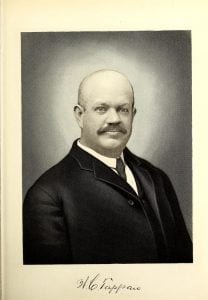
The Tappan family, descendants of Abraham Toppan who arrived in Newbury, MA, in 1637, has established itself prominently in Attleboro’s jewelry industry. Ephraim H. Tappan and his sons, Charles H. and William C., contributed significantly to its growth with innovative practices. The brothers founded Tappan Brothers, evolving into D.F. Briggs Co., renowned for producing items like the Carmen bracelet. Their legacy continues through their descendants, maintaining a strong presence in local business and community endeavors.
This is a collection of free vital records books for Massachusetts towns, most of them known as “Tan Books.” Generally, these records go up to 1850 at which, the genealogist can use the census records to assist in identifying the family connections further. They’re called “tan books” because they were bound by tan cloth. Included with this article is an account of why and how these manuscripts were published along with links to all 274 Massachusetts vital record books which can be freely read.
The Atkinson family, originally from Bury, England, emigrated to New England in 1634. Theodore Atkinson, the first of the line, settled in Boston and established a prosperous estate. His descendants include notable figures such as Hon. Theodore Atkinson of Portsmouth and various family members who became prominent in trade, religion, and community affairs across New England. The lineage continued through several generations, resulting in multiple branches in Buxton and Eaton, N.H., with individuals engaged in diverse occupations and contributing to local history.
Alfred Woodman, born on March 9, 1834, in Newburyport, Massachusetts, was a notable farmer in Plainfield, New Hampshire, and a Civil War veteran. His family background includes a lineage of tradesmen, with his father Daniel being a respected painter. After initial experiences in tailoring and sailing, Alfred enlisted in the Second Regiment, New Hampshire Volunteers, participating in major battles and suffering health issues from imprisonment. He eventually turned to farming, focusing on sheep for wool. He married Maria T. Gallup and had three children, contributing to his community while sharing tales of his adventures.
Captain John H. Couch, born on February 21, 1811, in Newburyport, Massachusetts, was a pioneering maritime figure who significantly contributed to the settlement of Oregon. After early voyages, he commanded vessels trading along the Columbia River, establishing a store in Oregon City and later serving multiple public roles, including as Multnomah County commissioner and port warden. A respected citizen, he built Couch’s Wharf, a key port in Portland. He died from typhoid pneumonia, leaving behind a legacy of integrity and community service. He is survived by his wife and four daughters.
Henry Martyn Chase, born in Philadelphia on March 28, 1831, was a descendant of early settlers and notable historical figures. He moved to Massachusetts in 1844, then sailed to California in 1849, eventually settling in Oregon. Chase engaged in various enterprises, including transportation, trading, and farming in Eastern Washington, where he faced challenges during the Indian War. He served as a captain and later transitioned into public service, holding several local government positions and contributing to railroad development. He remained active in promoting regional interests until focusing on his private affairs.