Descendants of William Sturdy of Attleboro MA and Slatersville RI

John F. Sturdy

The Sturdy family, descended from John Jenkins, who became William Sturdy after fleeing the British navy, played a significant role in the jewelry industry of southeastern Massachusetts and Rhode Island. Settling in Attleboro, William transitioned from farming to work in cotton mills during the industrial boom. His sons, notably William A. and John F., contributed to the family’s legacy in jewelry manufacturing, establishing successful businesses that thrived for generations. The family’s collective efforts reflect their industrious spirit and commitment to their community in the Attleboros.

Ancestry of Charles Oliver Emerson of Brockton and Rockland, Massachusetts

Charles Oliver Emerson, treasurer of the Emerson Shoe Company, of Rockland, Mass., one who has been prominently identified with the shoe manufacturing industry for a number of years, is a native of what at the time of his birth, July 14, 1856, was known as the town of North Bridgewater, now the city of Brockton, Mass., where he resides. He is a son of the late John Oliver Emerson and his wife, Caroline Augusta Packard, and is descended from historic old New England ancestry on both the paternal and maternal sides.

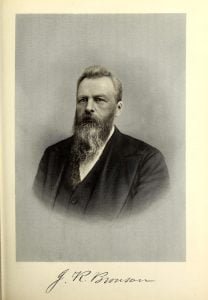
Ancestors of John Richardson Bronson of Attleboro, MA

J. R. Bronson

John Richardson Bronson, M.D., born June 5, 1829, in Middlebury, Connecticut, was a distinguished physician in southern Massachusetts and Rhode Island, residing in Attleboro for over fifty years. The Bronson lineage traces back to early New England settlers, including John Bronson, a soldier in the Pequot War. Dr. Bronson, who graduated from Berkshire Medical College in 1852, served as a field surgeon during the Civil War and remained engaged in community affairs until his death on May 9, 1900. He married Catherine Wheelock and had five children.

Staples Family of Taunton, MA

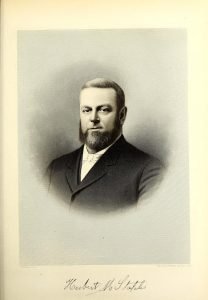
Herbert M Staples

The Staples family of Taunton, MA, boasts a rich history spanning over 270 years, descending from John Staple, who settled in Weymouth in 1636. Notable descendants include Sylvanus Staples and his son, Sylvanus Nelson, who significantly impacted local commerce and society. Sylvanus N. Staples, a seafarer turned successful businessman, established Staples Coal Company after a series of entrepreneurial ventures. His son, Herbert Mason Staples, followed suit, becoming an influential leader in the community. This lineage embodies the spirit and progressiveness of Taunton’s citizenry.

Read Family of Massachusetts

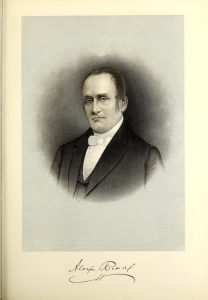
Alex. Read

John Read, born in 1598, immigrated to America in 1630 and settled in Rehoboth, Massachusetts, where he became a prominent property owner and constable. His son, Samuel, continued the lineage in Mendon, marrying Hopestill Holbrook and fathering several children. Ebenezer, Samuel’s son, furthered the family through his marriage to Sarah Chapin. The family’s legacy continued with Deacon Ebenezer Read in Milford and Dr. Alexander Read, a respected physician in New Bedford. Alexander married Sarah Willis, leaving behind a legacy of service and family.

Free Massachusetts Vital Records

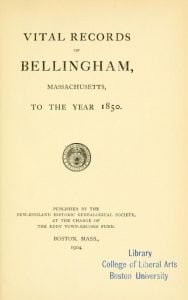
Vital Records of Bellingham Massachusetts to 1850

This is a collection of free vital records books for Massachusetts towns, most of them known as “Tan Books.” Generally, these records go up to 1850 at which, the genealogist can use the census records to assist in identifying the family connections further. They’re called “tan books” because they were bound by tan cloth. Included with this article is an account of why and how these manuscripts were published along with links to all 274 Massachusetts vital record books which can be freely read.

Narrative of the Captivity of Nehemiah How

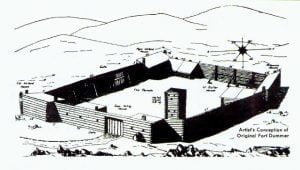
Fort Dummer

A Narrative of the captivity of Nehemiah How, who was taken by the Indians at the Great Meadow Fort above Fort Dummer, where he was an inhabitant, October 11th, 1745. Giving an account of what he met with in his traveling to Canada, and while he was in prison there. Together with an account of Mr. How’s death at Canada. Exceedingly valuable for the many items of exact intelligence therein recorded, relative to so many of the present inhabitants of New England, through those friends who endured the hardships of captivity in the mountain deserts and the damps of loathsome prisons. Had the author lived to have returned, and published his narrative himself, he doubtless would have made it far more valuable, but he was cut off while a prisoner, by the prison fever, in the fifty-fifth year of his age, after a captivity of one year, seven months, and fifteen days. He died May 25th, 1747, in the hospital at Quebec, after a sickness of about ten days. He was a husband and father, and greatly beloved by all who knew him.

Biographical Sketch of Abel C. Wilder

Abel C. Wilder, born on March 18, 1828, in Mendon, Massachusetts, was a key figure in the free-soil movement and the formation of the Republican Party in Kansas Territory. After moving to Kansas in 1857, he became active in land business and opposed the Lecompton constitution. His political engagement included a role in the Osawatomie convention and serving as chairman of the Republican central committee. Appointed by President Lincoln as a brigade commissary, he later served in the Thirty-eighth Congress. After returning to Rochester in 1865, he became the city’s mayor in 1873 before his death in San Francisco on December 22, 1875.

Biographical Sketch of George Aldrich

George Aldrich was born around 1605 in Derbyshire, England, and married Katherine Seald in 1629. They emigrated to New England in 1631, settling in Dorchester, Massachusetts, where he became a freeman in 1636. In 1663, he was among the first settlers of Mendon, Massachusetts. Aldrich passed away on March 1, 1683, with his will proving in April of that year. He had several children, including Joseph, John, and Mary, and his wife Katherine died in 1691.

Biographical Sketch of Jacob Aldrich

Jacob Aldrich, born on February 28, 1653, in Braintree, was the son of George Aldrich. He spent his life as a farmer in Mendon, where he married Huldah Thayer on November 3, 1675. Jacob passed away on October 22, 1695, and had a large family, including children Jacob, Abel, Seth, Huldah, Sarah, David, Peter, John, Moses, and Rachel. Some of his children did not survive infancy.

Biograhical Sketch of Jacob Aldrich

Jacob Aldrich (2), born May 28, 1676, in Mendon, was a Quaker who passed away around 1750. His will, dated May 5, 1748, led to a property division on August 23, 1753. He had several children: Jacob (executor), Noah, Mary (married to Israel Taft), Hannah (married to John Harwood), Experience (married to Benjamin Craging), Margery (married to Ichabod Amidon), and Bethia (married to Abraham Fletcher).

Biographical Sketch of Noah Aldrich

Noah Aldrich, born around 1720 in Mendon, was the son of Jacob Aldrich. He conveyed land in Mendon in 1772 before relocating to New Salem, Massachusetts. A soldier in the Revolutionary War in 1775, he served in Captain John King’s company of Colonel Benjamin Ruggles Woodbridge’s regiment. By the 1790 federal census, Noah resided in Adams, Berkshire County, with one son over sixteen and four females in his household. He was married to Rachel.

Biographical Sketch of Nathan Aldrich

Nathan Aldrich, born circa 1760-65 in Mendon, was a significant early settler in Victor, Ontario County, New York. In 1789, he lived with his father in Adams, where he sowed the first wheat in Victor. After preparing his home, he returned briefly to the Berkshires before relocating permanently in the spring of 1790 with his family. He constructed the first frame house in Victor and had two sons, including John, born there in 1790.

Biography of Henry W. Corbett

Henry Winslow Corbett, born in Massachusetts in 1827, played a pivotal role in Portland’s evolution into Oregon’s financial hub. Arriving in Portland in 1851, he established a successful mercantile business and later transitioned to wholesale hardware. A prominent advocate for regional development, he supported transportation improvements and was instrumental in the Northern Pacific Railroad’s formation. His political career included a notable term as a U.S. Senator, where he championed fiscal responsibility. Corbett’s contributions to both public and private enterprises reflect his commitment to Portland’s growth and welfare.