McLennan County Texas Cemeteries
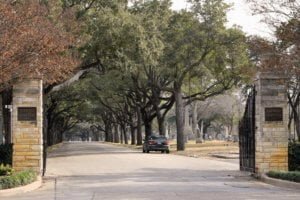
A complete listing of all available online McLennan County Texas cemeteries, with links to multiple cemetery transcriptions, gravestone photos, tombstone photos, official records, etc.

McLennan County TX, located in central Texas, was formed on January 22, 1850, and organized later that year. The county was named in honor of Neil McLennan, one of the early settlers in the region. Waco, the county seat, is not only the administrative heart of McLennan County but also a cultural and educational center, home to Baylor University and various historical sites. Geographically, the county is marked by its position along the Brazos River, which provides a fertile valley for agriculture, and the Balcones Fault, giving rise to a varied landscape that transitions from flatlands to the rolling hills characteristic of the Texas Hill Country. McLennan County’s establishment and development were significantly influenced by its strategic location, which facilitated trade, transportation, and cultural exchange, making it a focal point for economic growth and innovation in the state.
A complete listing of all available online McLennan County Texas cemeteries, with links to multiple cemetery transcriptions, gravestone photos, tombstone photos, official records, etc.
Liza Smith, a 91-year-old former slave from Muskogee, Oklahoma, recounts her family’s history, tracing her roots to her parents, Jane Mason and Frank Smith, who were brought from Africa to Virginia. She recalls life under her master, Frank Mason, who treated his slaves well, providing food, care, and a relatively comfortable existence. Smith describes the hardships during the Civil War, the eventual announcement of their freedom, and the struggles to adapt afterward. Despite the challenges, she expresses hope of reconnecting with her family’s origins.
Allen V. Manning, born into slavery in 1850 in Mississippi, reflects on his early life under a Baptist preacher. He recounts the harsh realities of slavery, emphasizing that both slaves and masters were products of their upbringing. Manning describes the family dynamics on the plantation, his master’s reluctance to fight in the Civil War, and his eventual migration to Louisiana and Texas after the war. Despite the challenges faced by freed people, he holds a pragmatic view on racial dynamics, attributing behavior to what people have been taught.
The Waco Indians, originally part of the Tawakoni, were named for their conflicts with Mexicans. Residing near present-day Waco, Texas, and originally from Oklahoma, they were also referred to as Gentlemen Indians. Their population was around 100 in 1824, dwindling to 171 by 1859, with a census showing only five survivors in 1910. The name “Waco” has since been adopted by numerous locations, but the tribe’s legacy primarily lives on through the city of Waco, Texas.
The Tawakoni Indians, whose name is believed to derive from a river bend, belonged to the Caddoan linguistic stock and shared close ties with the Wichita tribe. Originally located along the Canadian River, they later settled near the Brazos and Trinity Rivers. By the mid-19th century, Tawakoni faced pressure from northern tribes and Texas settlers, leading to their eventual relocation to southwestern Oklahoma, where they were incorporated with the Wichita. Records indicate a decline in their population, with only one member reported by 1910.
Herman Genthe, born in 1857 in Saxony, Germany, established the oldest continuously operated bakery in Topeka in 1887. A master baker, his skills were inherited from a lineage of millers. After migrating to America at age 24, he worked across various towns before settling in Topeka. Genthe is renowned for his high-quality rye bread, which gained a loyal customer base beyond the city. He married Barbara Rost and raised four children, with two actively involved in the family bakery and music.
Ruth Marie Bunnell, 91, of La Grande, Oregon, passed away on June 20. Born on November 11, 1914, in Eddy, Texas, she had two marriages, first to Thomas House and later to George Ward. Ruth worked in a California shipyard during WWII and retired in 1972. She moved to La Grande in 1976. A lover of the arts and an avid gardener, she is survived by three children, seven grandchildren, and seven great-grandchildren. Burial will take place in Santa Anna, Texas.
The Waco Tribe, a division of the Tawakoni, had a village situated near modern Waco, Texas, documented in Anglo-American accounts post-1820. Likely linked to earlier historical mentions, such as the Touacara visited by La Harpe in 1719, the Waco’s village in 1824 comprised 33 grass houses and cultivated 200 acres. The tribe participated in treaties with the United States and received land allotments in Oklahoma by 1902, gaining citizenship thereafter. Their ethnology and early history are closely tied to the Tawakoni.
William M’Kerrall was born on June 17, 1824, in Orange County, North Carolina. After attending West Point, he served as a first lieutenant in the Mexican War. Following the war, he settled in Louisiana, studied law, and practiced in Texas after 1850. M’Kerrall held judicial positions and was involved in local business ventures, including a cotton mill. In 1868, he moved to Greene County, Missouri, where he married Mary A. Danforth and established a successful farm, amassing 700 acres of land. He had four children.