
Biography of Dr. James F. Myers

Dr. James F. Myers, born on December 29, 1856, in Hebron, Ohio, became a distinguished physician in Rock Island County. He graduated from Rush Medical College in 1883 and began his practice in Farmer City before relocating to Rock Island in 1901. Known for his contributions to medicine, education, and fraternal organizations, he held various significant positions, including health commissioner and supreme medical director. A talented musician, he also led community bands and taught music. Dr. Myers married Sarah J. Johnson and has two children.
Biography of Henry Howland Chase, M. D.

Dr. Henry Howland Chase, born October 7, 1858, in Amboy, Illinois, was a distinguished surgeon and a respected figure in Rock Island, where he practiced until his death on May 22, 1906. The son of physician Albion Pierce Chase and Deborah Cushing Howland, he followed in his father’s footsteps after graduating from the Chicago Homeopathic College in 1881. Chase’s medical career included significant tenures in Geneseo and Duluth before settling in Rock Island. He was active in his community, a family man, and involved in multiple fraternal organizations.

Biographical Sketch of Herbert B. Hayden

Herbert B. Hayden, a Massachusetts native, has dedicated his career to public education since 1883. He received his early education in Massachusetts before furthering his studies at Wesleyan University. As of August 1900, he has served as the Superintendent of City Schools in Rock Island, having previously held positions as a high school principal. His experience and leadership have significantly shaped the educational landscape of the region.

History of McLean County Illinois

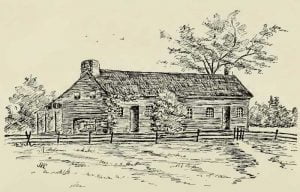
The Patton Pierson House McLean County Illinois

The *History of McLean County, Illinois* presents a comprehensive overview of the county’s notable characteristics, including its size, fertile land, and favorable climate. Located centrally in the state, McLean County boasts minimal waste land, ample timber groves, and productive soil ideal for agriculture and stock-raising. The county’s residents are recognized for their industriousness and public service, contributing to its prominence in Illinois. Noteworthy geological features include rich coal deposits, enhancing its economic potential. Overall, McLean County stands out for its agricultural wealth and community spirit.

Town Officers of Yates, Illinois

In May 1857, prior to its official organization, Yates Township established its first School Board, electing G. W. Hanks, J. C. Hanks, and E. D. Westervelt as Trustees. Over the years, they managed school lands and funds judiciously, leading to a substantial fund of $11,151 by 1876. The township became officially recognized in 1862, originally named Union before being changed to Yates. The first town meeting in 1863 saw the election of key officers, laying the groundwork for local governance and education in the area.

Early Settlers of Yates, Illinois

Before 1856, Yates, Illinois had few settlements due to a lack of timber. The first settlement occurred around 1856 with T. C. Buntin purchasing land on the Harris farm. Notable early settlers included David Vance, who became involved in education and local governance, and John Pool, who opened a store in Weston. Other early settlers contributed to the township’s development, including the Hanks brothers, Christian Ziller, and Anton Adam, who established farms and engaged in community affairs, laying the groundwork for future growth.

History of Yates, Illinois

Yates Township, originally part of Chenoa, became a separate entity in 1862 and was briefly named Union before adopting its current name in 1864, honoring Illinois Governor Yates. The township, characterized by rolling terrain and fertile soil, is primarily devoted to farming, producing crops like corn and oats. With a stable and industrious population focused on religious and educational growth, Yates has avoided economic extravagance. Key landowners include C. C. Wright and John T. Green, contributing to the area’s agricultural success and community stability.

Organization of White Oak Township, Illinois

White Oak Township, established in the spring of 1858, is the smallest township in its county yet holds significant influence. It has operated without debt and features a town hall built in 1878. Education began in 1837, eventually expanding to five districts. The community reflects a strong Republican ethos and a spirit of political tolerance, alongside a rich history of military service. Religious life thrives with several churches established since the 1850s. Overall, White Oak is recognized for its prosperous moral, social, and financial conditions.

Early Settlers of White Oak, Illinois

Early settlements in White Oak, Illinois, began later than in southern McLean County, with initial families arriving around 1829. Pioneers sought timber and prairie for resources and community living. Notable early settlers included Smith Denman and the Benson family, who contributed to building a cohesive, moral community. The area’s early inhabitants faced challenges, such as severe weather and Indian relations, yet established a reputation for integrity and social harmony. The descendants of these settlers continue to uphold their forebears’ values, fostering a close-knit and industrious society.

History of White Oak, Illinois

White Oak Township, the smallest in McLean County, encompasses just over seventeen sections of land. By 1870, its population had decreased to 532, reflecting stagnation since the 1860s. The area derives its name from White Oak Grove, a significant timber tract along the Mackinaw River, with notable historical trails used by Native Americans. Despite efforts for annexation to McLean County and discussions of a potential railroad, White Oak has seen limited growth, although the village of Oak Grove shows signs of development with essential services and commerce.

A Murder in Money Creek, Illinois

In October 1876, the body of Albert Anglen was discovered in a field near Towanda, Illinois. Initially mistaken for a sleeping tramp, he was found dead with gunshot wounds and signs of blunt force trauma. Anglen, an upstanding young man from Grafton, W. Va., had letters in his pocket from a young lady in Colorado. Evidence suggested he was murdered by Karl Klusty, a colleague who stole from him. After several arrests yielded no suspects, Klusty was eventually apprehended in Bohemia.

Money Creek, Illinois Roads

In the early days of the settlement, Indian trails served as the primary roads, notably a significant path linking the Wabash and Illinois rivers. Subsequent roads established by settlers mirrored these routes, leading to a network that often diverged from section lines, especially in timbered areas. Key thoroughfares included the Lexington and Bloomington road and a road north from Towanda village. The origin of Money Creek’s name remains uncertain, with legends suggesting it relates to hidden wealth or a piece of money discovered by local Indians.

School History of Money Creek, Illinois

The first school in Money Creek, Illinois, was housed in a log structure built approximately 45 years ago. It featured minimal light sources and poor heating, leading to discomfort for students. Lindsey Scott was the initial teacher, managing around 12 to 15 pupils. Educational materials were scarce, with only a Testament and a spelling book commonly used. Over time, this log schoolhouse has been replaced by modern facilities, reflecting significant improvements in education, with current statistics indicating a well-supported school system.

Church History of Money Creek, Illinois

Isaac Messer, a local preacher of the United Brethren in Christ, initiated the first religious meetings in Money Creek around 1827 at Valentine Spawr’s home. In 1832, a society of United Brethren was formed, led by figures like Jacob Moats and Jesse Havens, with their first church built in 1856. The Methodists, represented early by Jacob Spawr, also formed an organization, building a church before relocating. The Christian Church, led by James Robinson since 1835, constructed their church in 1857. The United Brethren remain the largest denomination in the area.

Early Settlers of Money Creek, Illinois

Old Louis Soward, a jolly frontiersman from Ohio, exemplified the spirit of early pioneer life in Money Creek, Illinois. He was a skilled hunter and bee-tree locator, beloved for his storytelling. The Soward family arrived before other settlers, possibly around 1825. Other early inhabitants included Jacob Harness, Jacob Spawr, and the Moats family, who contributed significantly to the community. Over time, more families arrived, establishing vital social and economic structures, including the first post office under William G. Bishop in 1836.

History of Money Creek, Illinois

Money Creek Township, settled early in McLean County, lacks villages and a post office today, with only remnants of Clarksville. It lies in the northern tier of the county, bordered by Gridley, Lexington, Towanda, and Hudson Townships. The land is fertile, with rich timber and some prairies, crossed by Money Creek and Mackinaw Creek. Although towns never fully developed, the community built schools and mills, supporting local agriculture. The area contributed soldiers during the Civil War, reflecting its evolving political landscape from Democratic to a balance of parties.

Township Officers of Martin, Illinois

The post details the elected officers of Martin Township, Illinois, from its inception in 1859 through the late 19th century, highlighting the roles of Supervisor, Clerk, Assessor, and Collector. It also lists Justices of the Peace and Commissioners of Highways. Additionally, it presents a 1877 report on local education, noting 7 school districts, 6 schoolhouses, and financial figures regarding school funds and teacher payments. Martin Township’s management of its school section is noted as a missed opportunity to support local education.

Early Settlers of Martin, Illinois

The early settlers of Martin, Illinois, primarily settled along the Mackinaw River, facing numerous challenges in establishing their homes. Notable families, like the Wileys and Battertons, arrived in the mid-1830s, bringing both agricultural knowledge and resilience. They endured harsh conditions, limited resources, and the absence of local infrastructure. Schools were initially scarce, and farming required creativity and hard work. Despite difficulties, the community flourished, becoming characterized by thrift, cooperation, and a strong sense of belonging. By the late 1800s, Martin had developed into a stable and contented farming community.

History of Martin, Illinois

Martin, Illinois, is a six-mile square township characterized by fertile prairie land and a northern edge marked by the Mackinaw River. Established in honor of Dr. Eleazer Martin, it features a rich mix of timber and agricultural land, with no wasteland. The community is home to three churches, including Antioch Church, constructed in 1873, and two others established in the late 19th century, reflecting the area’s early commitment to religious assembly and community growth.

Early Industry of Dry Grove, Illinois

The early settlers of Dry Grove faced significant hardships due to a lack of essential services like mills. The absence of milling facilities was particularly challenging, leading families to grind corn using homemade mortars during harsh winters. Matthew Harbard was the first to establish a corn-cracker mill, followed by a sawmill and eventually a flouring mill built by Mr. King. Early industry also included a brief blacksmith shop operated by James Gilson, highlighting the community’s reliance on ingenuity and cooperation to thrive in the wilderness.