Arkansas Funeral Home Records

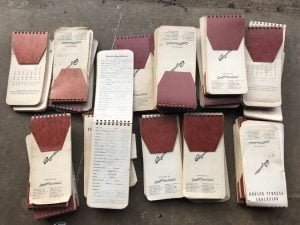
Funeral Log Books

This page links to known Arkansas Funeral Records whether they be available online or offline. Funeral records are an invaluable source of genealogical information that can provide insight into the lives and deaths of our ancestors. They offer a wealth of details on the deceased and their family, including their names, ages, dates of death, causes of death, and other key information.

Slave Narrative of Hula Williams

Hula Williams, born in Arkansas in 1857, recounts her mother Emmaline’s life as a slave on the Burns plantation in Mississippi before moving to Arkansas. She describes her father as the overseer Kelly and shares stories of cruelty, including the tragic fate of fellow slaves like Boyl Green, who chose death over submission. Williams also reflects on family, faith, and changing social norms, contrasting her upbringing with the behavior of modern youth. Her narrative highlights resilience and the impact of Christian values in her life.

Slave Narrative of Rev. Wamble

Rev. Wamble, born in 1859 in Mississippi, grew up as a slave in the Westbrook household, which owned over 200 slaves. His mother died after a brutal whipping, and he experienced both harsh treatment and some kindness as a slave. He was hidden as a child to prevent being taken by the Westbrooks. Post-Civil War, he faced educational and economic challenges but eventually became a minister and a father of numerous children. He settled in Gary, Indiana, where he continues to lead an active life.

Slave Narrative of Liza Smith

Liza Smith, a 91-year-old former slave from Muskogee, Oklahoma, recounts her family’s history, tracing her roots to her parents, Jane Mason and Frank Smith, who were brought from Africa to Virginia. She recalls life under her master, Frank Mason, who treated his slaves well, providing food, care, and a relatively comfortable existence. Smith describes the hardships during the Civil War, the eventual announcement of their freedom, and the struggles to adapt afterward. Despite the challenges, she expresses hope of reconnecting with her family’s origins.

Slave Narrative of Stephen McCray

Stephen McCray, born in 1850 in Alabama, recalls his childhood as the son of enslaved parents. He describes living in log huts and working as a child, mainly assisting with cooking and fishing. Marriage required permission from the master, and the threat of violence loomed over enslaved people, notably from patrollers and the Klu Klux Klan. Although McCray had no formal education, he reflects on his experiences and beliefs about slavery, ultimately advocating for individual freedom and faith in God following a personal conversion.

Biography of Christopher Columbus Hughes

Christopher Columbus Hughes, born in 1840 in Jefferson County, Arkansas, was a notable farmer in Crittenden County, Kentucky. He faced substantial losses during the Civil War but rebuilt his life, becoming a successful agrarian. Despite limited educational opportunities, Hughes served under General Forrest and participated in various battles. In 1867, he married Amanda Heath, with whom he had ten children. He moved to Ripley County, Missouri, in 1870, where he developed two farms and became a respected member of the community and the Democratic Party, without seeking political office.

Slave Narrative of Rose Adway

In an interview with 76-year-old Rose Adway, she reflects on her early life in Smith County, Mississippi, before the Civil War. Her parents worked on a farm, with her father serving as a water carrier, and her mother cooking for the mistress. After gaining freedom, her family returned to the area. Rose married and farmed, raising 14 children, but only five survive. She shares her limited education, struggles with blindness, and finds solace in memories and songs from her youth, emphasizing gratitude for her current circumstances.

Slave Narrative of Sarah Anderson

In an interview with Bernice Bowden, Sarah Anderson, aged 78, recounts her early memories of the Civil War and her life as a former slave. Born in Bibb County, Georgia, she moved to Arkansas at age fourteen shortly after the war. She reminisces about the arrival of Union soldiers, describing how children hid in fear. Sarah discusses her family life, including her mother and father’s treatment and her experience as a mother of fourteen, with most of her children now deceased, except for one son.

Slave Narrative of Katie Arbery

Katie Arbery, at 80 years old, recounts her life from her childhood in slavery under Paul McCall in Union County, Arkansas. She describes her affectionate upbringing, referring to her master as “pappy,” and her close-knit family, noting the absence of mistreatment. After emancipation, her family remained on the McCall property. Despite limited formal education, she fondly remembers her experiences, including hunting and cooking, and reflects on the changes in child-rearing practices. As her memory falters with age, she remains grateful for her past.

Slave Narrative of Jeff Bailey

Jeff Bailey, a 76 or 77-year-old hostler, recounts his life experiences during an interview with Samuel S. Taylor. Born and raised in Monticello, he later lived in Pine Bluff and Little Rock. Bailey reflects on his long career at the post office, his late wife Josie, and familial connections, revealing the challenges faced by former slaves. He discusses his father’s experience with slavery and the impact of the Ku Klux Klan. Despite receiving only ten dollars a month, he remains hopeful for the future and expresses a desire for better assistance for old slaves.

Slave Narrative of Joseph Samuel Badgett

Joseph Samuel Badgett, born in 1864 in Dallas County, Arkansas, recounts his experiences and observations as a former slave. He describes his mother’s pride, her struggles with the pateroles, and the scars she bore from being whipped for not having a pass. Badgett remembers the social dynamics of post-Civil War society and the limited educational opportunities available to him. He emphasizes the distinctions between groups like the Ku Klux Klan and Jayhawkers, reflecting on the importance of understanding the past for younger generations.

Slave Narrative of Matilda Bass

Matilda Bass, interviewed at 80 years old, recounts her life from her childhood in Greenville, Mississippi, during the Civil War. At eight, she was separated from her parents, who were taken to Texas, and later remembers being taken to Vicksburg with other children. After the war, her family returned to work on a plantation owned by three brothers. Matilda has lived in Arkansas for two decades, married, farmed, and now sees herself as a prophet, having distanced herself from the church due to its focus on money.

Slave Narrative of J. H. Beckwith

J. H. Beckwith, born in 1870 in North Carolina, recounts his family’s history, emphasizing his father’s determination and skills despite his background as a mulatto. Beckwith, educated through the church and with a successful trade in carpentry, reflects on his efforts to uplift his community through ministry. He stresses the importance of self-esteem and leadership for African Americans and criticizes the younger generation’s lack of direction. The interviewer notes Beckwith’s extensive knowledge, evident in his well-furnished home with books and personal achievements.

Slave Narrative of James Bertrand

James Bertrand, aged 68, recalls his family history and experiences related to slavery in Arkansas. He was born in 1870, shortly after the Civil War. His father, Mack Bertrand, worked on a farm owned by the Bertrands and faced minimal punishment from overseers and pateroles. His mother, Lucretia, was a house worker who bore thirteen children, many during slavery. While he did not experience severe oppression firsthand, he acknowledges the presence of the Ku Klux Klan in their lives. Bertrand himself became a shoemaker and has lived in Little Rock for thirty years.

Slave Narrative of Kato Benton

In an interview with 78-year-old Kato Benton, he recounts his life experiences, including his upbringing in South Carolina and subsequent relocation to Arkansas. He discusses the kindness of his former white owners and his difficult experiences after gaining freedom, particularly with an abusive colored man to whom he was given. Benton describes his work as a domestic laborer and reflects on never having been married or educated. He expresses a sense of resignation toward the younger generation and his reliance on welfare for support.

Slave Narrative of George Benson

George Benson, an 80-year-old cotton farmer from Pine Bluff, Arkansas, reflects on his life during slavery and the years that followed. He notes his lack of awareness of his age, as records were kept by his enslaver, Dr. Waters. Benson remembers interactions with Union soldiers and the hardships of farming. Despite voting for various presidents, he feels disenfranchised and suggests that African Americans still face systemic barriers. He expresses concern for his future and his wife’s well-being as he ages.

Slave Narrative of Bob Benford

In an interview with Bernice Bowden, Bob Benford, a 79-year-old, recounts his life as a former slave, originally from Perry County, Alabama, and later residing in Arkansas. He describes his experiences of kindness from his masters and fond childhood memories, including Christmas celebrations and farm life. After emancipation, he and his mother worked on shares, eventually becoming a successful farmer. Reflecting on racial dynamics, he notes his lack of troubles with white individuals and recalls voting and community engagement. Benford’s narrative highlights a blend of hardship and resilience.

Slave Narrative of Boston Blackwell

Boston Blackwell, a 98-year-old former slave, recounts his experiences from being born on a Georgia plantation to gaining freedom during the Civil War. He describes his escape to join Union forces and the challenges he faced afterward, including the struggle for a pension and the hardships of sharecropping. Blackwell reflects on the changes in post-war society, including the disenfranchisement of Black citizens and the oppressive actions of the Ku Klux Klan. Despite the trials, he emphasizes his pride in having served his country and his resilience in adversity.

Slave Narrative of Mandy Billings

Mandy Billings, born in 1854 in Louisiana, shares her experiences of slavery and family separation. Her last owner was Bill Otts, but her father, Charles McLaughlin, was her former master. She recounts her mother’s sale and her grandfather’s effort to rescue her. Billings describes the harsh realities of slavery, including encounters with the Ku Klux Klan and patrollers. After marriage, she worked primarily as a washerwoman. Despite the hardships, she reflects on her treatment, noting some kindness from white families.

Villages of the Quapaw Tribe

The article discusses the history and settlement patterns of the Quapaw Tribe, a Siouan group that migrated from the Ohio Valley to the Arkansas River’s mouth. Early French explorers noted their four main villages and distinctive lifestyle, including bark-covered cabins and pottery craftsmanship. The tribe faced gradual decline, with archaeological evidence indicating their presence in the Mississippi Valley. By the 19th century, remnants of the Quapaw had moved westward, with their traditions and customs persisting despite their shrinking population.