
North America Indian Names of Places in Mississippi, Alabama, Georgia, Florida, and Louisiana

The post examines the significance and origins of North American Indian place names in Mississippi, Alabama, Georgia, Florida, and Louisiana, particularly those derived from the Choctaw and Chickasaw languages. It highlights how these names reflect the rich cultural and linguistic heritage of the Native American tribes, while noting that many translations have become corrupted over time. The text provides numerous examples of place names alongside their original meanings, illustrating the deep historical connections embedded in the geography of the region.
Choctaw Traditions

The Papago tribe prophesied the return of their Messiah, Moctezuma, who would rescue them from suffering, a belief echoed in their open-door custom. The Choctaws shared unique traditions surrounding eclipses, believing them caused by a mischievous black squirrel. During eclipses, they would create loud disturbances to scare it away. Their historical mound, Nunih Waiyah, is venerated as a significant ancestral symbol, reflecting their migration story, while the Choctaws consistently asserted their origins as stemming from a distant land to the west.

Memoirs of the LeFlore Family

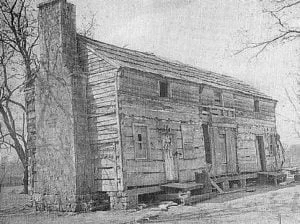
The Old Farm House: The Pioneer Home of a Choctaw Chief, Leflore, and of the Oak Hill School

The Cravat and LeFlore families are significant figures among the Choctaws. John Cravat, a Frenchman, integrated into the community through marriage, fathering notable descendants. Major Louis LeFlore and his brother Michael, also of French descent, played crucial roles in the Choctaw Nation, with Louis becoming a respected chief. Their lineage boasts influential figures, including Basil LeFlore, renowned for his moral integrity and public service. The families contributed to the cultural and historical landscape of the Choctaws, persisting as prominent citizens within the nation.

Biographical Sketch of Paul Pinckney

Paul Pinckney, born on March 24, 1869, in South Carolina, is a distinguished newspaper figure and the editor-proprietor of the San Mateo Times. After the early loss of his parents, he chose to explore the world instead of pursuing higher education. His career spans roles as editor of the Southern Home Journal, a reporter for the San Francisco Chronicle, and service in the Spanish-American War. In 1903, he became a key figure at the San Mateo Times and has contributed to local commerce initiatives, serving as secretary of the San Mateo Board of Trade since 1905.