1851 Siler Roll: Eastern Cherokee

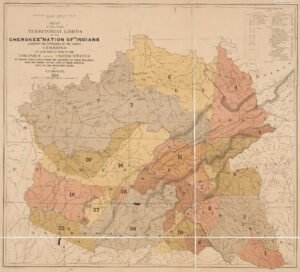
Map of Cherokee Land Cessions

The 1851 Siler Roll is a key genealogy resource for tracing Eastern Cherokee families who remained east of the Mississippi after the Trail of Tears. Compiled to identify those eligible for a federal per-capita payment, it lists households, family groupings, residences, ages, and relationships, but it is incomplete and should be used with the later Chapman Roll.
Alabama Mortality Census Records

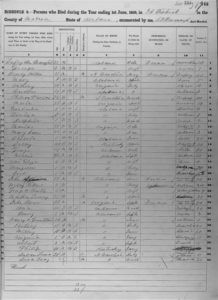
1850 Madison County Alabama Mortality Schedule optimized

The 1850, 1860, 1870, 1880, and 1885 censuses included inquiries about persons who had died in the twelve months immediately preceding the enumeration. The 1850, 1960, 1870, and 1880 mortality census for Alabama all survived. Mortality schedules list deaths from 1 June through 31 May of 1849–50, 1859–60, 1869–70, 1879–80, and 1884–85. They provide nationwide, state-by-state death registers that predate the recording of vital statistics in most states. While deaths are under-reported, the mortality schedules remain an invaluable source of information.

The Spaniards in Alabama and Mississippi

History of Alabama and incidentally of Georgia and Mississippi, from the earliest period

Following the American Revolution, England ceded territories in the south to Spain, including West Florida, while the U.S. was granted rights to navigate the Mississippi River. However, Spain occupied lands included in the new American boundaries, fostering tension. Amidst escalating conflicts over land and treaties, particularly involving Colonel McGillivray and the Creek Nation, the Georgians attempted to secure these territories, which led to significant disputes. The Creeks sought protection from Spain and engaged in diplomacy to safeguard their hunting grounds against encroachments by settlers.

Jackson County Alabama Marriage Records

The Jackson County Alabama Marriage Records, accessible online at Alabama GenWeb Archives, encompass marriage documents from 1809 to 1920. This extensive collection includes records from various periods, specifically highlighting marriages from 1851 to 1876 across different surname categories. Researchers can locate names of both brides and grooms along with their marriage dates. Additionally, records from 1800 to 1969 are available, drawn from county courthouse documents and original records preserved in various formats.

Alabama Land Cessions Map

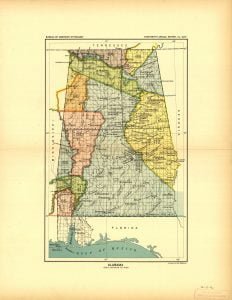
Alabama Land Cessions Map

The Alabama Land Cessions map, created by A. Hoen Company in 1896, documents 16 specific land cessions made through treaties and agreements between the United States and various Native American tribes prior to that year. It serves as a reference for Charles C. Royce’s compilation of Indian land cessions across the U.S., providing insights into historical land negotiations involving the Choctaws, Cherokees, and Chickasaws. Each cession is linked to treaties, detailing boundaries and land relinquishments throughout Alabama.

Biography of John R. McCormick

John R. McCormick, a long-time resident of Boone County, Arkansas, is known for his public spirit and agricultural success. Born in 1836 in Alabama, he began farming while young. In 1859, he married Ruth E. Rose, and together they had ten children. McCormick has cultivated 500 acres and is a prominent farmer and stockman. Although he remained politically neutral, he identifies as a Republican and has upheld strong moral values throughout his life, emphasizing honesty and respect for others.

Koasati Indians

The Koasati Tribe, also known as Coosawda and Coushatta, is part of the southern Muskhogean linguistic group and historically inhabited areas near the Coosa and Tallapoosa Rivers. They are believed to have lived along the Tennessee River from around 1500 to the late 17th century and later migrated to southern regions, establishing villages like Wetumpka. Their population fluctuated over time, with significant numbers reported in various regions, including Louisiana and Texas. Today, they maintain connections to their historic roots in Alabama, Louisiana, and Oklahoma.

Biography of John T. Cooper

John T. Cooper, born on August 7, 1881, in Scottsboro, Alabama, moved to Indian Territory in 1894. He pursued education, graduating from Harrell Institute and engaging in teaching before studying law, gaining admission to the bar in 1915. A prominent attorney in Checotah, Cooper also contributed to the Premier Oil & Gas Company and was involved in organized labor movements, initially supporting the Socialist Party before transitioning to the Democratic Party. He is married to Laura G. Robinson and they have five children.

Biography of James M. Drake

James M. Drake, born April 12, 1837, in Louisville, Kentucky, is a distinguished businessman and treasurer of Riverside, California. After serving commendably as a lieutenant in the Confederate army during the Civil War, he rebuilt his life by becoming a bookseller and stationer in Riverside, establishing the city’s first bookstore. A proactive community member, Drake also engaged in agriculture. Elected city treasurer in 1886, his honest administration earned him reelection. He married Maria A. Jones and had one surviving child, John R. Drake, who continues the family legacy in ranching.

Koasati Tribe

The Koasati are an Upper Creek tribe with a dialect similar to Alibamu. In the 18th century, they primarily resided near the Alabama River, later relocating to the Tombigbee River after the British acquisition of west Florida. Over time, some settled in eastern Texas, while others returned to Alabama. Historical accounts indicate fluctuating population numbers, with the Koasati remaining known for their industrious and peaceful nature. Presently, descendants inhabit various areas in Oklahoma within the Creek Nation, including towns named in their honor.

Koasati Indian Tribe

The Koasati Indian Tribe, related to the Alabama, historically existed in two branches—one near Alabama and another by the Tennessee River. Their name appears in early chronicles, possibly linked to De Soto’s expeditions. By the late 17th century, a Koasati village was recorded along the Tennessee River, while in the 18th century, they faced shifting alliances and migrations due to colonial pressures. Presently, a small population exists in Louisiana, retaining their cultural identity while many have assimilated into surrounding communities.

Jackson County, Alabama Census Records

This page provides links to online census resources for Jackson County, Alabama, during the years of 1830-1930. Available records may include federal, state, or special censuses, with transcriptions, indexes, or images depending on source. External sites supply the data for each census year.

Jackson County, Alabama Cemetery Records

This page lists known online cemetery transcriptions, burial records, and gravestone images for Jackson county in Alabama. Resources vary by cemetery and may include full surveys, partial records, mapping, or photographs. Links lead to external sites providing the available data.

Henderson Roll: 1835 Cherokee East of the Mississippi Census

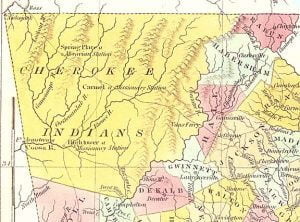
1830 Map of Cherokee Territory in Georgia

An extract from the 1835 Cherokee East of the Mississippi Census, also known as the Henderson Roll, this database lists Cherokee households remaining east of the Mississippi before removal. It includes heads of households, family members, enslaved people, and whites connected by marriage, along with residence. The roll was later used in Cherokee ancestry claims.