
Choctaw Traditions – The Council Fire, The Nahullo

The Choctaw and Chickasaw tribes traditionally exhibited smooth faces, lacking beards, a trait that indicated full Native ancestry. Their council meetings, known as “The Council Fire,” emphasized order and respect, with elders recounting the tribe’s history and traditions. Central to their lore are the mammoths and the Nahullo, a race of giants believed to have once inhabited Mississippi. Despite skepticism from outsiders regarding their traditions, archaeological findings have validated aspects of their rich oral history, reinforcing the accuracy of their ancestral accounts.
The Discovery Of This Continent: It’s Results To The Natives

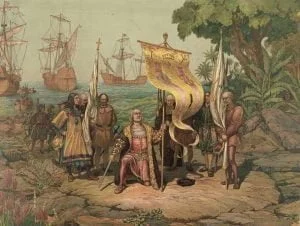
Columbus Landing on Hispaniola

In 1470, Christopher Columbus married Dona Felipa, daughter of a renowned navigator, and settled in Porto Santo, where they shared dreams of discovering lands to the West. Their ambitions fueled Columbus’s determination, leading to his 1492 voyage that resulted in the European discovery of the Americas. However, this event marked the beginning of devastation for native peoples, introducing warfare, disease, and colonization that would decimate their populations and cultures, ultimately transforming their rich, diverse societies into shadows of their former selves.

Eskimos

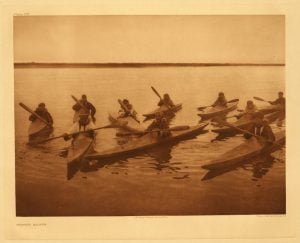
Noatak kaiaks

The Eskimos, primarily inhabiting the harsh coastal regions stretching from Greenland to Bering Strait, exhibit a distinct culture marked by common language and physical traits, though they often appear uncouth to outsiders. Early European accounts reveal a violent history of encounters with these “savages,” who, despite their initial hostility, often displayed warmth and gentleness upon overcoming suspicion. Their dwellings, primarily snow huts, are ingeniously constructed, while their diet consists mainly of sea and land animals. They rely heavily on dogs for transportation and hunting, reflecting a life of adaptability amid extreme conditions.