History of Benton New Hampshire

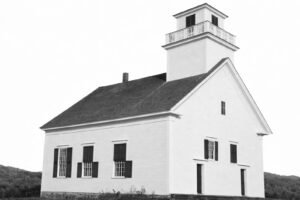
Benton New Hampshire Meeting House

Some Things about Coventry-Benton, New Hampshire was published in 1905 as a modest attempt to preserve historical information about one of New Hampshire’s smallest towns. Rather than a comprehensive town history, it presents a compiled set of facts, recollections, and traditions relating to Coventry-Benton from its founding through the late nineteenth century. The author noted that the work was assembled at intervals and printed in limited quantity, and that it was intended chiefly for those with personal ties to the town.
Biographical Sketch of General Lewis S. Partridge

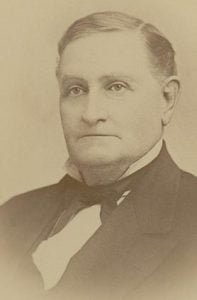
Lewis S. Partridge

General Lewis S. Partridge, born in 1818 in Norwich, Vermont, engaged in mercantile business early in life, including running the Union Hotel. He attended Norwich University from 1833 to 1836. Partridge was active in politics, serving as Adjutant General of Vermont and representing Norwich in the General Assembly. He held the postmaster role at various times and was a delegate to the Democratic National Convention. He married twice, fathering nine children, and passed away in Norwich on May 22, 1885.

Olcott Family of Norwich Vermont

Hon. Peter Olcott, born on April 25, 1733, in Bolton, Connecticut, moved to Norwich, Vermont, in the 1770s. He was a prominent community leader, serving in various public offices including first justice of the peace and Lieutenant Governor. His influence helped establish the town’s first meeting house and burying ground. Olcott was also active in military affairs during the American Revolution. He died on September 12, 1808, leaving a legacy through his numerous children and significant contributions to Norwich’s early governance and development.

Loveland Family of Norwich Vermont

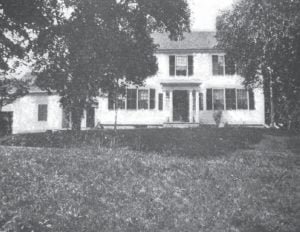
Loveland Homestead, built by Joseph Loveland in 1792

The Loveland family, descendants of original settlers, has maintained a farm in Norwich, Vermont since 1778. Joseph Loveland, born in Connecticut in 1747, established the homestead after serving in the Continental Army. His children, particularly Aaron and David, contributed significantly to the community, with Aaron serving in the legislature and as Chief Judge. Subsequent generations continued the family’s agricultural legacy and civic engagement. Today, the Loveland name reflects a rich heritage tied to local governance, education, and community service, though only a few remain in Norwich.

Hutchinson Family of Norwich Vermont

The Hutchinson family, one of the early settlers in Norwich, Vermont, traces its roots back to Massachusetts in the late 1620s. Abijah Hutchinson, a descendant, settled in Windham before moving to Norwich in 1765 with his son Samuel. They cleared land for farming and eventually made a permanent settlement. Samuel and his wife Jemina had several children, continuing the lineage. John Hutchinson, a soldier in the Continental Army, and his descendants include notable figures and various branches in New York and beyond.

Biographical Sketch of Moses Davis

Moses Davis married Sarah Sawyer in Dracut, Massachusetts, on April 6, 1785. He moved to Hanover, New Hampshire, around 1806 and later to Norwich by 1814. Davis fought in the Revolutionary War, participating in the Battle of Lexington, and possibly the Battle of Bunker Hill. He served at Fishkill in 1777 and at Valley Forge in 1778, and was among the guards for Major Andre prior to his execution. His total military service exceeded two years.

Cushman Family of Norwich Vermont

The Cushman family, tracing its origins to Robert Cushman in 1621, played a significant role in early New England history. Solomon Cushman, a sixth-generation descendant, moved to Norwich, Vermont, in 1768. A renowned marksman and Revolutionary War veteran, he later settled in Tunbridge, where he died in 1799. Another Solomon Cushman arrived in Norwich shortly after, bringing his family. Joseph Cushman, Solomon’s brother, also settled in Norwich and served in the Revolutionary War before passing away at age eighty-nine in 1848.

The Bush Family of Norwich Vermont

Captain Timothy Bush, an early settler of Norwich, Vermont, arrived in the town during its formative years, marrying Deborah House and fathering ten children. He played a significant role in local governance, serving as a selectman and landowner in the Pompanoosuc section. Active in military service during the Revolutionary War, he commanded a company in Colonel Marsh’s regiment. Although he reportedly moved to New York around 1809, there is speculation about his final resting place in Norwich. His legacy includes contributions to both town affairs and military endeavors.

Biography of Prof. George Bush

George Bush, born on June 12, 1796, in Norwich, Vermont, became a prominent Biblical scholar and Orientalist in America. He demonstrated exceptional intelligence from a young age, graduating as valedictorian from Dartmouth College in 1818. After studying at Princeton Seminary and serving as a Presbyterian pastor, he settled in New York City, where he devoted himself to authorship and lecturing. A professor of Hebrew and Oriental Literature, Bush published influential works, including commentaries and theological treatises. He later embraced Swedenborgian doctrines, which alienated him from many former colleagues. Bush passed away on September 19, 1859.

Biography of Honorable Daniel Buck

Daniel Buck, born on November 9, 1753, in Hebron, Connecticut, opened Norwich’s first law office in the mid-1780s after serving in the Revolutionary War. He became a respected attorney and public servant, representing Norwich at the 1791 convention considering Vermont’s admission to the Union. Buck served in the Vermont legislature and one term in the U.S. Congress. Despite his early success, his later years were marked by financial difficulties and personal struggles, leading to his death in Chelsea on August 16, 1816.

Baxter Family of Norwich Vermont

The Baxter family, originally from Norwich, Connecticut, settled in Norwich, Vermont, in 1777. Elihu Baxter and his wife, Tryphena Taylor, had fifteen children, with twelve surviving to adulthood. Their descendants spread across Vermont and beyond, with several establishing prominent careers. Notable figures include William Baxter, a distinguished lawyer, and James Baxter, a member of the Provincial Parliament in Canada. The family’s influence extended through various trades and professions, with connections maintained in the region into the 19th century.

Free Masonry in Norwich Vermont

Norwich, Vermont, has no recorded Masonic Lodge, though many residents joined lodges in neighboring towns, notably the Franklin Lodge in Hanover, established in 1796. Several Norwich men were members, with names documented from 1798 to 1810. The lodge relocated to Lebanon in 1821. Amidst the 1830 Anti-Masonic movement, tensions arose within the North Congregational Church, leading to a contentious debate over Masonic participation. Ultimately, a compromise allowed for a temporary cessation of conflicts between Masons and the Anti-Masonic faction.

Migration of Families out of Norwich VT

In the late 18th and early 19th centuries, Norwich, Vermont, experienced significant emigration, leading to a notable decline in its population. Initially home to 40 families in 1771, the town saw many residents relocate to newer settlements, such as Royalton and Randolph, during and after the Revolutionary War. Prominent families, including the Hibbards and Carpenters, contributed to the establishment of towns in northern Vermont and beyond. By the 1800s, the trend of outmigration intensified, marking a long-term shift in the region’s demographic landscape.

History of the Bridges Between Hanover NH and Norwich VT

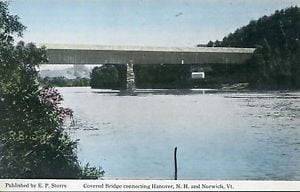
Norwich-Hanover covered bridge

The first recorded crossing of the Connecticut River between Norwich, VT, and Hanover, NH, was in 1765 using a canoe. Following this, ferry services began around 1778, with disputes over ferry rights between the two towns and Dartmouth College. By 1796, the first bridges were established, with significant community efforts aimed at creating a free bridge. Ultimately, following discussions and public support, the Ledyard Free Bridge was constructed in 1859, marking the first free bridge over the river between the two states.

Norwich Vermont and Dartmouth College

Norwich, Vermont, and Dartmouth College share a significant historical bond. Founded around the same time, both institutions benefited from mutual support, with Norwich contributing land and donations for the college’s establishment in Hanover. The founders of Norwich had personal ties with Dartmouth’s founder, Rev. Dr. Wheelock, who nearly chose Norwich as the college’s location. Over the years, Norwich supplied a substantial number of students to Dartmouth, highlighting a close relationship that fostered mutual growth and education amidst the challenges of their early settlements.

The Founding of Dartmouth College

The establishment of Dartmouth College in Hanover in 1769 marked a significant milestone for nearby Norwich settlers, who recognized the benefits of higher education and contributed generously to its founding. Doctor Wheelock, motivated to educate both settlers and Indigenous peoples, raised substantial funds in Europe. The college’s location evolved from Norwich to Hanover due to jurisdictional issues. Early challenges included securing food supplies and labor, but by 1773, the college had transformed from wilderness to a thriving settlement, supported by local community efforts.

First Settlements in Norwich Vermont

The early settlement of Norwich, Vermont, began in 1762 when Samuel Slafter’s son, John, explored the area, reporting its fertile land and water sources. In 1763, after receiving his father’s rights, he commenced clearing lots but faced challenges, as his initial choice proved unsuitable. By 1765-66, a few families settled permanently, including the Hutchinsons and Manns, establishing homes and farms. Pioneers endured various hardships, yet they built foundations for a thriving community, characterized by a homogeneous population primarily from Connecticut.

Biography of Amos Richardson

Amos Richardson, born on November 27, 1817, in Cornish, was deeply rooted in a notable lineage, descending from Dr. Amos Richardson, a respected physician. Educated in local schools and at Dartmouth’s medical department, he pivoted from medicine to teaching and later ventured into mercantile pursuits in Florida. Returning to Cornish, he became active in civic matters, serving as Town Treasurer and engaging in numerous community organizations. A dedicated family man, he married twice and had five children, contributing significantly to the social fabric of his town.

Biographical Sketch of Robert H. Rolfe

Robert H. Rolfe, born in Concord, N.H., on October 16, 1863, is a prominent figure as the cashier and advertising manager of the Republican Press Association. A Dartmouth College graduate of 1884, he initially pursued law before shifting to a business career, working as an accountant for several railroads. Rolfe served in the New Hampshire National Guard, rising to the rank of Colonel. His courteous demeanor and efficiency have earned him respect and popularity in both his professional role and local community.

Biography of John P. Rounsevel

John P. Rounsevel, born January 2, 1815, in Unity, N.H., was a notable wool buyer in Claremont. The youngest son of Royal and Betsey Rounsevel, he excelled in education but faced health challenges that limited his academic pursuits. Rounsevel’s diverse career included teaching, trading, and successful wool-buying during the Civil War. He served as Vice-President of the Sullivan Savings Bank for decades and participated in local governance. He married Sarah Jane Bailey and had one son, Charles W. Rounsevel passed away on May 1, 1897.