
Genealogy of the Yeargan Family 1730-1890
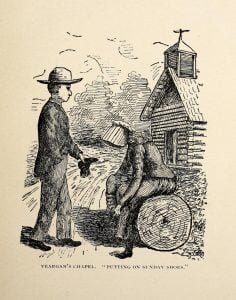
Yeargan's Chapel

“The Origin and Genealogy of the Yeargan Family: As Far As Heard From Up to This Date, 1890” is an early genealogy by Leonidas Hilary Yeargan and Hilary H. L. Yeargan. Published in Nashville, Tennessee, by the Publishing House of the M. E. Church, South, in 1891, this manuscript offers an account of the Yeargan family lineage as best the authors could research at the time. The primary aim of this manuscript was to document and connect the descendants of Rev. Andrew’s ten sons, grouping them into family units as they dispersed. Although some descendants remained unknown at the time of publication, the manuscript remains a valuable resource for understanding the Yeargan family’s roots and legacy.

Biography of Capt. James Berrien Harper

Capt. James Berrien Harper, born on November 17, 1833, in Franklin County, Georgia, was a notable farmer in Barren Creek Township, Arkansas. After his father’s death in 1851, he supported his family and enlisted in the Confederate Army in 1862, rising to first lieutenant. Captured twice yet unscathed, he returned home post-war to rebuild his life through cotton hauling. He settled in Arkansas, developing his 240-acre farm. Married to May C. Little, they had seven children and were active in the Methodist Church and Democratic politics.

Biography of Joseph M. Henley

Joseph M. Henley, born in 1847 in Franklin County, Georgia, is a notable farmer in Buckhorn Township. The son of John S. Henley, a Methodist minister and Union supporter, Joseph joined the Confederate Army at fifteen but was later discharged due to disability. After moving to Arkansas in 1868, he acquired and improved a 140-acre tract in Gobler Flat. Married to Elizabeth Hawkins, they had five children and are respected members of the Christian Church and the local community.

Slave Narrative of Boston Blackwell

Boston Blackwell, a 98-year-old former slave, recounts his experiences from being born on a Georgia plantation to gaining freedom during the Civil War. He describes his escape to join Union forces and the challenges he faced afterward, including the struggle for a pension and the hardships of sharecropping. Blackwell reflects on the changes in post-war society, including the disenfranchisement of Black citizens and the oppressive actions of the Ku Klux Klan. Despite the trials, he emphasizes his pride in having served his country and his resilience in adversity.

Cherokee Indians

The Cherokee Indians, whose name origins are uncertain, are historically significant Native Americans predominantly residing in the southern Appalachian region. They speak an Iroquoian language and were divided into three dialect groups linked to separate settlements in Tennessee and neighboring states. The tribe has a complex history marked by early contact with European settlers, significant migrations, and cultural adaptations, such as the creation of a written language by Sequoya. Over time, they faced numerous challenges, including disease and forced removal, yet they have maintained a notable cultural and historical presence.

Biography of F.C. Bramlet

F.C. Bramlet, born in 1827 in Georgia, was a pioneering figure in Wallowa County, Oregon, known for his significant contributions to the community and steadfast support for good governance over three decades. After enduring the hardships of his family’s journey west, Bramlet established a homestead in Wallowa County in 1871, where he introduced the first sheep to the area and served as its inaugural postmaster. Married to Martha Tower, they raised several children, and throughout his life, Bramlet maintained a respected reputation for courage and dedication to his fellow citizens.