Important Men of the Choctaw Indians

The Choctaw Nation has produced numerous significant figures throughout its history, notably Tush-ka Lu-sa, who valiantly defended his people against Spanish forces. While early documentation is scarce, many leaders have emerged from the 18th century onward, whose contributions to their community deserve recognition. This account aims to honor both the living and deceased Choctaw and Chickasaw men, emphasizing their dedication to improving their people’s welfare and the importance of preserving their legacies as examples for future generations.

Life and travels of Colonel James Smith – Indian Captivities

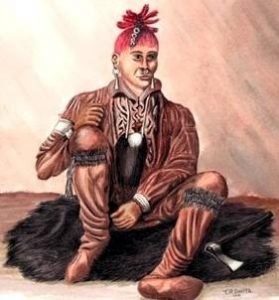
An Artists rendition of James Smith

James Smith, pioneer, was born in Franklin county, Pennsylvania, in 1737. When he was eighteen years of age he was captured by the Indians, was adopted into one of their tribes, and lived with them as one of themselves until his escape in 1759. He became a lieutenant under General Bouquet during the expedition against the Ohio Indians in 1764, and was captain of a company of rangers in Lord Dunmore’s War. In 1775 he was promoted to major of militia. He served in the Pennsylvania convention in 1776, and in the assembly in 1776-77. In the latter year he was commissioned colonel in command on the frontiers, and performed distinguished services. Smith moved to Kentucky in 1788. He was a member of the Danville convention, and represented Bourbon county for many years in the legislature. He died in Washington county, Kentucky, in 1812. The following narrative of his experience as member of an Indian tribe is from his own book entitled “Remarkable Adventures in the Life and Travels of Colonel James Smith,” printed at Lexington, Kentucky, in 1799. It affords a striking contrast to the terrible experiences of the other captives whose stories are republished in this book; for he was well treated, and stayed so long with his red captors that he acquired expert knowledge of their arts and customs, and deep insight into their character.

The Fort Loudon Skeletons

The Shenandoah Valley, located in northwestern Virginia, was a significant site during the French and Indian War. In 1755, Colonel George Washington proposed the construction of Fort Loudon to protect the frontier against Native American attacks. During its construction, a Native American cemetery was discovered, containing unusually large skeletons, some measuring seven feet tall, suggesting a population potentially taller than contemporary Europeans. This find, along with similar discoveries in the region, raises intriguing questions about the pre-European history of the Shenandoah Valley.

Cherokee Indians

The Cherokee Indians, whose name origins are uncertain, are historically significant Native Americans predominantly residing in the southern Appalachian region. They speak an Iroquoian language and were divided into three dialect groups linked to separate settlements in Tennessee and neighboring states. The tribe has a complex history marked by early contact with European settlers, significant migrations, and cultural adaptations, such as the creation of a written language by Sequoya. Over time, they faced numerous challenges, including disease and forced removal, yet they have maintained a notable cultural and historical presence.