
Floyd County GA
Slave Narrative of George W. Arnold
George W. Arnold, born April 7, 1861, in Bedford County, Tennessee, recounts his life as a slave on Oliver P. Arnold’s plantation and the Civil War’s impact on his family. After emancipation, he faced challenges, including the loss of familial bonds and friendships. Arnold’s later experiences as a roust-about on riverboats were marked by camaraderie but also harsh treatment. He settled in Evansville in 1880, working as a porter for 37 years. Despite personal tragedies, including the haunting memory of a dear friend, he reflected on forgiveness and the perils of strong drink.
Slave Narrative of Morris Hillyer
Morris Hillyer, an 84-year-old from Alderson, Oklahoma, reflects on his life as a slave in Rose, Georgia, under Judge Hillyer, a former U.S. senator. Orphaned at birth, he was raised by the Judge’s wife, Miss Jane. Hillyer details his childhood experiences, including mischief with other boys, the Judge’s kindness, and the absence of mistreatment on the plantation. He recounts the challenges of transitioning to a life of freedom post-Civil War, his struggles in various jobs, and his eventual marriage in Oklahoma.
Native American History of Floyd County, Georgia
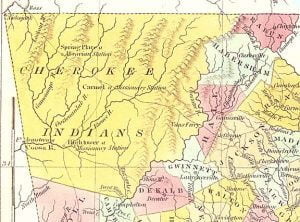
Floyd County, Georgia, named after Congressman John Floyd, has a rich Native American history, with evidence of habitation dating back over 12,000 years. Originally occupied by the Kusa and later the Creek, Cherokee presence emerged in the late 1700s, culminating in the establishment of the Cherokee Nation there. Key events included the Battle of Etowah Cliffs in 1793 and the forced removal of Cherokees following the Treaty of New Echota in 1838. The area features notable Cherokee sites, including the homes of leaders Major and John Ridge.
Slave Narrative of Callie Elder
Callie Elder, interviewed by Sadie B. Hornsby in Athens, Georgia, reflects on her life as a slave on Marse Billy Neal’s plantation in Floyd County. Born into a family of six, she recalls childhood games, meager living conditions, and the hard labor expected of slaves. Elders often faced harsh punishments, and while some slaves attended church, education was nonexistent. Post-Civil War, she continued working for Marse Billy, receiving rations and pay. Elder emphasizes her happiness in faith and the simplicity of past meals compared to present times.
Slave Narrative of Easter Brown
Easter Brown, at 78, recounts her life as a slave in Floyd County, Georgia. Sold at a young age, she was raised in her owner’s house, where conditions varied from those in slave quarters. She describes both the abundance of food and the harsh treatment from her master, who was known to be cruel. After the Civil War, she recalls her master’s announcement of freedom, noting that some slaves chose to stay. Brown reflects on her life experiences, including her marriages and church membership, emphasizing her resilience.
Henderson Roll: 1835 Cherokee East of the Mississippi Census
An extract from the 1835 Cherokee East of the Mississippi Census, also known as the Henderson Roll, this database lists Cherokee households remaining east of the Mississippi before removal. It includes heads of households, family members, enslaved people, and whites connected by marriage, along with residence. The roll was later used in Cherokee ancestry claims.