The Massachusetts Tax Valuation List of 1771

The Massachusetts Tax Valuation List of 1771 contains the names and descriptions of taxable property of nearly 38,000 individuals who resided in 152 Massachusetts towns in 1771

The Massachusetts Tax Valuation List of 1771 contains the names and descriptions of taxable property of nearly 38,000 individuals who resided in 152 Massachusetts towns in 1771
Loyed Ellis Chamberlain, a distinguished lawyer from Brockton, Massachusetts, has forged an impressive career marked by talent, diligence, and a commitment to justice. Descended from notable New England ancestry, including Mayflower Pilgrims, Chamberlain has held various esteemed positions, such as judge and state senator, while actively engaging in community affairs and temperance movements. His professional journey reflects his dedication to law and public service, alongside a balanced approach to family and civic duties, exemplifying the ethos of a prominent figure in southeastern Massachusetts.
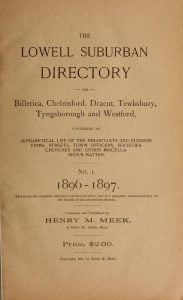
This post provides information about eight free digitized directories for the Massachusetts towns of Billerica, Chelmsford, Dracut, Tewksbury, Tyngsboro, and Westford, covering the years 1896 to 1926. These directories include alphabetical listings of residents and businesses, as well as details on streets, town offices, and local societies and churches. They serve as valuable resources for understanding individual employment, addresses, and housing situations during those years. The post also mentions various Lowell suburban directory editions from 1896 to 1933.
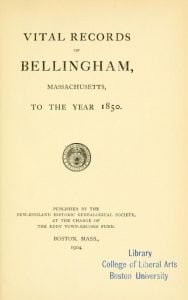
This is a collection of free vital records books for Massachusetts towns, most of them known as “Tan Books.” Generally, these records go up to 1850 at which, the genealogist can use the census records to assist in identifying the family connections further. They’re called “tan books” because they were bound by tan cloth. Included with this article is an account of why and how these manuscripts were published along with links to all 274 Massachusetts vital record books which can be freely read.
Doctor Ira Davis, born around 1797 in Dracut, Massachusetts, began his medical practice in Norwich Plain in 1830, serving the community until his death in 1873. In addition to his medical career, he was active in local journalism, co-editing the Vermont Enquirer, and was instrumental in establishing the Episcopal church and Norwich University. A politically engaged figure, he served as town clerk and postmaster. He married three times, fathering several children, including Doctor George Davis, a physician in Manchester, New Hampshire.
Moses Davis married Sarah Sawyer in Dracut, Massachusetts, on April 6, 1785. He moved to Hanover, New Hampshire, around 1806 and later to Norwich by 1814. Davis fought in the Revolutionary War, participating in the Battle of Lexington, and possibly the Battle of Bunker Hill. He served at Fishkill in 1777 and at Valley Forge in 1778, and was among the guards for Major Andre prior to his execution. His total military service exceeded two years.