Washburn Genealogy of Bridgewater Massachusetts

Old Families of Southeastern Massachusetts

The Washburn family, among the earliest settlers of Bridgewater, Massachusetts, traces its roots to John Washburn, who arrived in New England by 1632. His lineage includes notable descendants such as Capt. Abraham Washburne, a Revolutionary War soldier, and his son Seth, who became a successful entrepreneur in cotton gins. The family continued to thrive, with later generations like George and Lucy Eaton, who contributed to the community’s legacy. The Washburns remain a significant part of Bridgewater’s history, exemplifying the town’s early growth and development.
Genealogy of the Whitney Family of New Bedford, Massachusetts

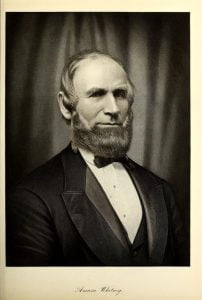
amasa whitney

The Whitney family of New Bedford, Massachusetts, is one of America’s oldest and most esteemed families, tracing its roots to John Whitney, who emigrated from England in 1635. Amasa Whitney, a prominent figure in New Bedford, exemplified the family’s legacy of intellect and civic involvement. Notable descendants include Eli Whitney, inventor of the cotton gin, and William Collins Whitney, a New York politician. The family’s ancestral ties to England and their significant contributions to American society reflect a rich heritage of achievement and influence.

Bolton Massachusetts Warnings 1737-1788

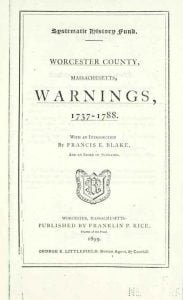
Worcester County MA Warnings

The document outlines the warnings issued in Bolton, Massachusetts, from 1737 to 1788, detailing individuals, families, and children who were advised to leave the town to avoid becoming permanent residents. This practice was rooted in a 1692 act that aimed to protect towns from the financial burden of supporting newcomers deemed unfit. The names and circumstances of those warned are presented chronologically, demonstrating the diverse backgrounds of the warned individuals, many of whom were not necessarily impoverished.

Free Massachusetts Vital Records

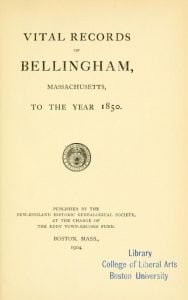
Vital Records of Bellingham Massachusetts to 1850

This is a collection of free vital records books for Massachusetts towns, most of them known as “Tan Books.” Generally, these records go up to 1850 at which, the genealogist can use the census records to assist in identifying the family connections further. They’re called “tan books” because they were bound by tan cloth. Included with this article is an account of why and how these manuscripts were published along with links to all 274 Massachusetts vital record books which can be freely read.