
The Discovery Of This Continent: It’s Results To The Natives
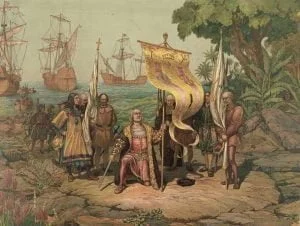
Columbus Landing on Hispaniola

In 1470, Christopher Columbus married Dona Felipa, daughter of a renowned navigator, and settled in Porto Santo, where they shared dreams of discovering lands to the West. Their ambitions fueled Columbus’s determination, leading to his 1492 voyage that resulted in the European discovery of the Americas. However, this event marked the beginning of devastation for native peoples, introducing warfare, disease, and colonization that would decimate their populations and cultures, ultimately transforming their rich, diverse societies into shadows of their former selves.

Slave Narrative of Daphney Wright

Daphney Wright, a 106-year-old former slave, shares her memories of life before and during the Civil War in South Carolina. She recalls her experiences as a refugee and the arrival of Union soldiers who offered freedom but also caused significant destruction. Daphney reflects on her life on the plantation, her relationships with her owners, and the simplicity of life along the river. Despite hardships, she expresses gratitude for the peace in her old age, reminiscing about cherished moments of community and nature.

Slave Narrative of Rev. Eli Boyd

Rev. Eli Boyd, born on May 29, 1864, in South Carolina, grew up on a plantation where he worked after emancipation, earning a small wage. Although he did not experience slavery, he reflected on life on the plantation, including a childhood mishap involving food meant for hogs. He learned to read at 26 from a discarded textbook and became a preacher after working in a turpentine still. Rev. Boyd has served as assistant pastor at Bethel African Methodist Church in Miami for a decade. He is a member of the Geechee community, with African heritage.

Slave Narrative of Samuel Simeon Andrews

Samuel Simeon Andrews, born in 1850 in Macon, Georgia, reflects on his life as a former slave, moving through various plantations before emancipation. He describes his experiences, particularly on the A.J. Lane plantation, where he recalls kind treatment and familial ties among slaves. Andrews shares memories of plantation life, Civil War incidents, and post-emancipation education challenges. Despite a difficult past, he emphasizes community resilience, his active involvement in the African Methodist Episcopal Church, and a longevity attributed to a positive outlook on life and health practices.

Slave Narrative of William Sherman

William Sherman, born on June 12, 1842, in South Carolina, was the son of a free blacksmith who sought to buy his family’s freedom. Raised on the plantation of Jack Davis, a nephew of Jefferson Davis, Sherman recounts his experiences as a slave, including witnessing the Civil War’s impact on his life. He escaped with a group of slaves to Union forces and later celebrated emancipation. Throughout his life, Sherman faced numerous challenges but remained resilient, eventually settling in Chaseville, Florida. At ninety-four, he reflects on his storied past.