
Addison County VT
Addison County, Vermont is a county in western Vermont, established by act of the legislature on October 18, 1785, from a portion of Rutland County during the period of the independent Vermont Republic (prior to Vermont’s statehood in 1791), with its shire town (county seat) at Middlebury, making county court and land records available there from the late 1780s onward—vital for genealogical research. The area lies in the Champlain Valley and is drained primarily by Otter Creek; Native American presence by Iroquoian and other tribes along Lake Champlain predates European exploration by Samuel de Champlain in 1609 and later French and British colonial activity at sites such as Chimney Point. Early towns within the county, many chartered in the 1780s and 1790s, drew settlers largely from New England states after the American Revolution, with township land records, early census returns, and town meeting minutes beginning in this period; resources for genealogy include county town clerk records, Probate and Deed offices in Middlebury, local historical societies, libraries, and numerous cemetery transcriptions.
Biography of Charles Deere
Charles Deere, son of plow inventor John Deere, played a crucial role in the agricultural industry. Born in 1837, he joined Deere Plow Works in 1853, quickly mastering sales and production. By 1868, he became vice-president of Deere & Company, leading its expansion and innovation. Under his guidance, the company flourished, establishing branch houses nationwide. A committed community leader, Deere’s investments bolstered Moline’s growth, and he supported national policies. His legacy, marked by practical genius and dedication to service, extended far beyond his death in 1907.
Biography of Luke E. Hemenway
Luke E. Hemenway was born on August 7, 1816, in Shoreham, Vermont. He worked in a store before moving to Grand de Tour, Illinois, where he married Jane E. Marsh in 1842. Hemenway held various prominent roles, including Captain in the Civil War and postmaster in Moline. He contributed to local governance as Trustee, Alderman, and City Clerk. A man of quiet intellect, he was devoted to literature and history. Hemenway passed away on April 27, 1903, and was active in the Universalist and Congregational Churches.
Biography of John Deere
John Deere, born in Vermont in 1804, became a pivotal figure in American agriculture by inventing the steel plow. After apprenticing as a blacksmith, he moved west seeking better opportunities. In Moline, Illinois, he developed a plow that excelled in the challenging prairie soil, leading to the establishment of Deere & Company. His innovative spirit and determination resulted in the production of thousands of plows, earning him recognition worldwide. A dedicated philanthropist and community leader, Deere’s legacy continues through his impactful contributions to farming and society.
Biography of Hon. Albert Briggs
Hon. Albert Briggs, born on August 26, 1813, in Vermont, exemplified the pioneering spirit of the Pacific coast. After moving through several states, he and his family journeyed to Oregon in 1847, eventually settling in what is now Port Townsend, Washington. A skilled carpenter, Briggs thrived in farming and held various public offices, including county superintendent of schools and probate judge. Married to Isabel Cook for over fifty years, Briggs faced personal loss when she passed away in 1888. He left a lasting legacy in the region.
Biography of William Billings
William Billings, born in Ripton, Vermont in 1827, embarked on a diverse career that included sailing, mining, and logging. After moving to Washington Territory in 1849, he became involved in various enterprises, including a failed gold prospecting expedition. During the 1855 war, he served as a soldier. Billings entered politics in 1860 as the first Republican sheriff of Thurston County and continued to serve in various capacities, including positions on Indian reservations, demonstrating his adaptability and commitment to public service while raising a family of five.
Biography of Aaron White
Aaron White, born October 8, 1798, in Boylston, Massachusetts, passed away on April 15, 1886. A Harvard graduate of the class of 1817, he practiced law in Rhode Island and later became involved in banking. An advocate for Governor Dorr, he relocated to Connecticut in 1842. A teetotaler, White was also an avid numismatist, amassing a significant coin collection. His will, detailing his burial wishes, reflects his commitment to human rights. He was survived by his son, who resides in Grafton, Massachusetts.
Biography of Almon P. Tupper
Almon P. Tupper was born on April 24, 1825, in Middlebury, Vermont, the only son of Norman and Mary Tupper. His grandfather, Darius Tupper, operated a tavern in Middlebury after moving from Connecticut. Almon received his early education in local schools and worked in jewelry and machinery before pursuing law with Ozias Seymour. Admitted to the bar in 1857, he established a successful legal practice in Middlebury. He married Mary P. Richardson in 1848 and was known for his strong character, legal expertise, and commitment to public welfare.
Biography of Col. Lyman E. Knapp
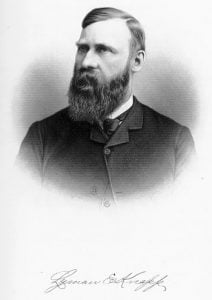
Col. Lyman E. Knapp, born in Vermont in 1837, was a distinguished military officer and public servant. After graduating from Middlebury College in 1862, he enlisted in the Civil War, rapidly rising from private to captain and later serving as lieutenant colonel. He participated in pivotal battles including Gettysburg and Petersburg. Following the war, he became a prominent editor and lawyer, holding various local offices, including judge of probate. Knapp was active in his community and a member of the Congregational Church, where he played a significant leadership role. He married Martha A. Severance in 1865.
Biography of John Wolcott Stewart
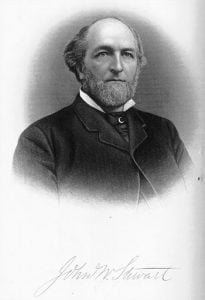
John Wolcott Stewart, born in Middlebury, Vermont, on November 24, 1825, served as the ex-governor of Vermont and a member of Congress. His lineage traces back to Robert Stuart of Scotland. Stewart was a distinguished lawyer, politician, and former captain in military engagements. He held various legislative positions, including a speaker role in the Vermont House. As governor from 1870 to 1872, he advocated for public education reforms and efficient fiscal policies. Stewart married Emma Battell in 1860 and had five children.
Biography of Judge Henry Lane
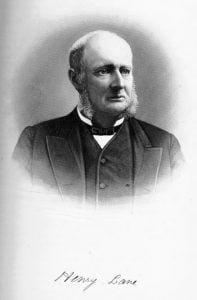
Judge Henry Lane, born on February 14, 1824, in Cornwall, Vermont, inherited his family’s homestead and pursued a career in agriculture, particularly sheep breeding. He was instrumental in raising Lanes imperial sugar beet and maintained an extensive library. Active in local politics, he served as selectman, a member of the State Legislature, and as a judge of the Addison County Court. Judge Lane was committed to his community and church, and he and his wife Mary Antoinette had three sons.
Biography of Hon. Edward S. Dana
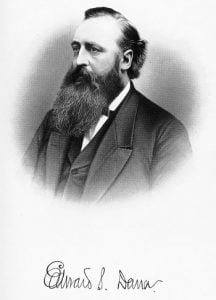
Edward S. Dana, descendant of Richard Dana who emigrated from England in 1640, was born on April 27, 1834. An early passion for education led him to various teaching roles before he pursued government service in Washington, D.C. He contributed significantly to soldiers’ welfare during the Civil War and served in the Vermont Legislature, advocating for educational advancement. A dedicated family man, Dana’s later years saw him engage in literary pursuits and community leadership until his passing on February 24, 1886, marked by resilience and faith.
Biography of Rufus Hazard
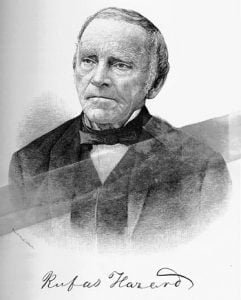
The Hazard family, of Norman descent, originated their name from locations in Devon, England. They settled in Rhode Island in the 12th century, with Thomas Hassard arriving in 1639. Rufus Hazard, born in 1808, grew up in Ferrisburgh, Vermont. He managed his family’s land, overcoming financial challenges to improve the homestead. A member of the Society of Friends, he was active in local politics and estate settlement. Rufus was married twice, with no biological children but adopted his first wife’s niece. He passed away after a notable life of community involvement.
Biography of Herrick Stevens

Herrick Stevens was born on October 18, 1820, in Westport, New York. His family moved to Vergennes, Vermont, where his father ran a hotel until his death in 1835. Herrick worked at the Stevens House with his brothers before partnering with J. P. Willard to manage the Matteson House in Chicago from 1853 to 1858. After returning to Vergennes, he focused on city improvements and became involved with the Water Power Company. A lifelong Republican and Congregationalist, he married Electa J. Willard in 1855, and they had four children.
Biography of Cyrus Washburn Wicker
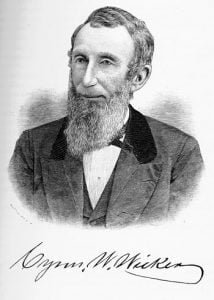
Cyrus Washburn Wicker, born on August 12, 1814, in Hardwick, Massachusetts, moved to Orwell, Vermont, at age two. After his father’s death, he worked on farms and learned business as a clerk. In 1836, Wicker opened a store in North Ferrisburgh, achieving significant success. A staunch anti-slavery advocate and Republican, he held numerous local offices and was active in community affairs. He married Maria D. Halladay in 1838, and they had three sons. Wicker passed away on March 30, 1857, in Middlebury, Vermont.
Biography of Nathan Smith Bennett
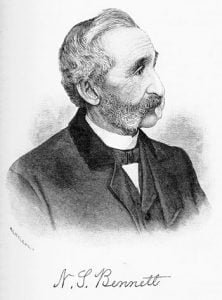
Nathan Smith Bennett, born December 5, 1812, in New Haven, Vermont, was the son of Benjamin G. Bennett. He received a modest education before working as a clerk in various stores, gaining experience in mercantile business. In 1840, he opened his own store but faced health issues that shifted his focus to farming. An esteemed public servant, Bennett held multiple town offices, including justice of the peace and town clerk. Married to Polly E. Miner, they had three children, with D. Herman becoming a prominent merchant in Bridport.
Biography of Russell Walker
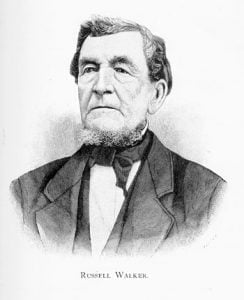
Russell Walker, Jr., born on October 30, 1805, in Bridport, Vermont, to Russell and Anna Walker, received limited education but became a teacher. After various clerking positions, he started a mercantile business before returning to farming, purchasing his brother’s interest in their family farm. He contributed to local governance as a justice of the peace and selectman and served in the Legislature during the Civil War. Active in the Methodist Church, he was recognized for his integrity and charitable nature. He married Charlotte M. Skiff in 1830 and had two daughters.
Biography of Simon Zelotes Walker
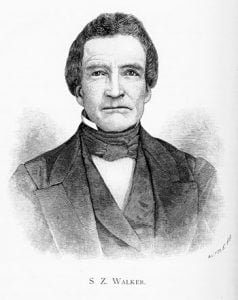
Simon Zelotes Walker was born on November 3, 1796, in Shoreham, Vermont, as the eldest son of Russell and Anna Walker. He received his education locally and served as a drummer in a company during the Battle of Plattsburgh. He became a successful farmer and stock-grower, notable for breeding Saxony sheep. Elected to various local offices, he also served in the State Legislature. Walker married twice, and his legacy continued through his three sons, notably Albert, who died in the Civil War. He died respected in his community for his integrity and contributions.
Biography of M. D. Smith
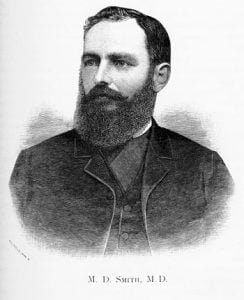
M. D. Smith, born on April 27, 1848, in Addison, Vermont, hails from a French lineage. He pursued medicine, graduating from several institutions, including the Eclectic Medical College of Pennsylvania and Hannemann Medical College in Chicago. After practicing in various locations, he settled in Middlebury, Vermont. Smith married Nellie F. Hanks in 1868, and they had one child, Hermon E. Smith. His family background includes prominent local figures, demonstrating a legacy of public service and commitment to education.