
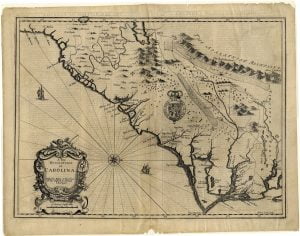
The Rickohockens

A New Description of Carolina

The Rickohockens were prominently featured on 17th-century British maps as the sole inhabitants of the Virginia and northwestern North Carolina mountains. Despite this, little academic attention has been given to them since John Swanton’s misidentification of their name as an alternative for the Yuchi. The term Rickohocken first appeared in Virginia colonial records in 1644 and was associated with territorial claims extending into Kentucky and Tennessee. By the early 1700s, references shifted to the Charaqui, with subsequent confusion linking the Rickohockens to the Creek and Cherokee communities.

Allophylic Languages Among Southern Tribes

The southern tribes suspected of speaking allophylic languages include the Bidai, Koroa, Westo, and Stono Indians. The Bidai resided by the Trinity River in Texas, with a small population documented in the mid-19th century. The Koroa, known for their military prowess, were noted by early explorers for their distinct language. The Westo and Stono Indians, located near Charleston, South Carolina, engaged in conflicts with colonial forces and were associated with the Kataba confederacy, though their linguistic affiliations remain uncertain.

Yuchi Indians

The Yuchi Indians, a distinct linguistic group, were historically located in eastern Tennessee and parts of the Southeast, including Florida and Georgia. Known by various names, including Tsoyaha (People of the Sun) and Chisca, they comprised several bands and occupied various villages. Their early interactions included conflicts with European settlers, notably during the De Soto expedition. Over time, many Yuchi joined the Creek Confederacy, moving westward. Despite changes in population and location, they have maintained a unique cultural identity, particularly noted for their language.