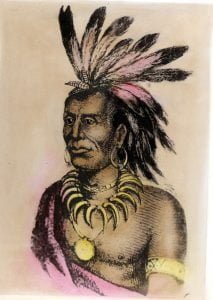
Indian Confederacy Of 1781

Michikinikwa, LIttle Turtle

The spring of 1781 was a terrible season for the white settlements in Kentucky and the whole border country. The natives who surrounded them had never shown so constant and systematic a determination for murder and mischief. Early in the summer, a great meeting of Indian deputies from the Shawanees, Delawares, Cherokees, Wyandot, Tawas, Pottawatomie, and diverse other tribes from the north-western lakes, met in grand council of war at Old Chilicothe. The persuasions and influence of two infamous whites, one McKee, and the notorious Simon Girty, “inflamed their savage minds to mischief, and led them to execute every diabolical scheme.”

Tawasa Indians

The Tawasa, a tribe whose meaning remains unknown, spoke a dialect in the Timucuan division of the Muskhogean family. They were located in west Florida, near the confluence of the Chattahoochee and Flint Rivers, and later around Montgomery, Alabama. Documented by De Soto in 1540, the Tawasa experienced displacement due to attacks and treaties, ultimately migrating westward. Their population was noted in various censuses, reflecting a shift in identity over time. They are remembered for their historical contributions, particularly through the captive Lamhatty.

Tawasa Tribe

The Tawasa Indians, a Muskhogean tribe, were first documented by De Soto’s chroniclers in the mid-16th century near the Tallapoosa River. They later relocated southeast and were known to the Spaniards as part of the Apalachicola. Due to conflicts with the Alibamu and Creeks around 1705, they sought refuge near Mobile. Following a brief conflict with the Pascagoula in 1707, peace was achieved. By the century’s end, the Tawasa were noted as one of the Alibamu towns, suggesting a re-alliance with the Alibamu tribe.

Tawasa Tribe and Pawokti Tribe

The Tawasa Tribe, first noted by Ranjel and the Fidalgo of Elvas during the De Soto expedition, was situated between Ulibahali and Talisi. They relocated southeast by 1706, facing destruction from neighboring tribes. Seeking refuge with the French in Mobile by 1705, they were granted land but eventually disappeared from records around 1715. They are believed to have migrated upstream along the Alabama River, aligning with the Alabama tribe’s fortunes. Their name persisted through census records, indicating their lasting presence in the region.