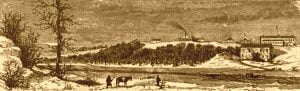
Establishment of Fort Gibson in 1824

Fort Gibson in 1875

The Arkansas Territory was established by Congress in 1819, encompassing parts of present-day Arkansas and Oklahoma, with governance limited to the eastern section. James Miller became its first governor in 1819, tasked with overseeing relations with Native tribes. Efforts to broker peace between the Osage and Cherokee tribes were largely unsuccessful, leading to military reinforcements at Fort Smith. In 1824, troops were moved to a new post, Cantonment Gibson, established to enhance security and regulate tensions, which would eventually evolve into Fort Gibson, founded in 1824.
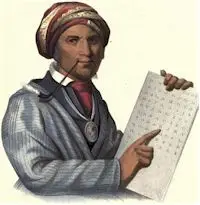
Will the Real Sequoya Please Stand Up?

Sequoyah

Sequoya, born George Guess or Gist, was a prominent Cherokee figure and inventor of the Cherokee syllabary. His upbringing in eastern Tennessee and later life in Wills Town shaped his identity, which he embraced after becoming disillusioned with white settlers. Despite lacking formal education, he developed a writing system to enhance literacy among the Cherokees. His life story is often clouded by conflicting accounts, leading to debates about his heritage and contributions, particularly the origins of his syllabary and its acceptance within Native communities.

Genealogy of the Cherokee Sequoyah Family

The post provides genealogical information about the Sequoyah family, detailing key individuals and their relationships. It outlines the lineage of Sequoyah, including names like Teesee Guess, Rebecca Bowles, and various descendants, with birth and death dates for some members. Notably, Teesee Guess was born in 1789, and his second wife, Rebecca Bowles, lived from 1816 to 1866. The document lists multiple generations, illustrating the family’s connections to prominent figures within the Cherokee community.