
Powhatan Pottery

Recent Pamunkey pipes.

The exploration of Powhatan pottery reveals significant findings in eastern Virginia, particularly on reservations like Pamunkey and Mattaponi. Two primary pottery types emerge: Coarse Ware, characterized by heavy, reddish ceramics with net-mark patterns, and Smooth Ware, noted for its fine texture and lack of decoration, likely influenced by European contact. The transition from traditional to modern pottery reflects shifts in cultural practices. Pottery remains serve as vital artifacts, highlighting the historical continuity and changes within Indigenous ceramic traditions in the region.

Yuchi Pottery

Fig. 9. Outlines of Gourds

The Yuchi pottery tradition reflects a sedentary lifestyle, with women primarily responsible for creating functional vessels using a coiling technique. Although still practiced, modern pottery appears crude and unfinished, likely due to cultural deterioration over time. The pots serve diverse domestic purposes, ranging in shape and size, with minimal decoration mostly around the rims. Ceremonial vessels are notable for their ornamentation symbolizing celestial bodies. Despite its historical significance, the craft has declined sharply since European contact, affecting both quality and usage patterns.

Choctaw Pottery

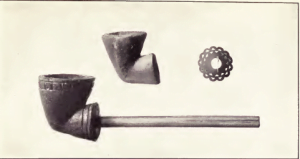
Pipes made by Ahojeobe; small silver ornament

The Choctaw people hold a superstition regarding pottery-making that forbids anyone but the creator from seeing the object before it is fired, as it may crack otherwise. While pottery bowls are no longer made, pipes continue to be crafted, notably by Ahojeobe, using locally sourced white clay. The process involves shaping the clay, drying, decorating, and then firing it in hot ashes before immersing it in grease to create a distinctive black finish. This tradition connects to the historical use of similar materials by other Indigenous groups.