Indian Wars of New England

Indian Wars of New England

This post discusses the historiography of early Indian conflicts in New England, highlighting the contributions of William Hubbard, Church, Belknap, and Palfrey. It critiques Hubbard’s narrative as tedious and emphasizes Palfrey’s general overview, noting the limited focus on Indian-hostilities. The text outlines the periods of peace and subsequent violence, particularly referencing the impact of French and Indian alliances on English settlers from 1688 onward. It suggests the narrative is intended to offer a comprehensive account of these tumultuous interactions, from the Pequod Wars through French incursions.
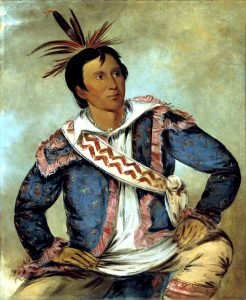
The Meeting in 1811 of Tecumseh and Apushamatahah

Peter Perkins Pitchlynn was the Choctaw Principal Chief from 1864-1866

In 1811, Tecumseh, the Shawnee leader, met with Apushamatahah, a prominent Choctaw chief, to rally southern tribes against American encroachment amidst looming war between the U.S. and England. Tecumseh passionately urged unity against their common foe, warning of the dire consequences of inaction. Apushamatahah countered with a call for prudence, advocating for peaceful measures. Ultimately, the council resulted in favoring American alliance, thwarting Tecumseh’s ambitions. This pivotal meeting highlighted the contrasting strategies of the two influential leaders, shaping tribal responses during a critical historical period.

Early Indian Wars in New England

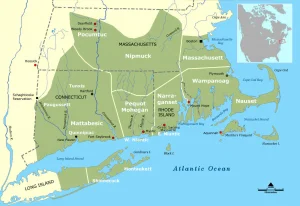
Early New England Tribes Map

The early Indian wars in New England, starting with Pilgrims landing in Plymouth in 1620, marked a turbulent period of settler-Indian relations. Initial friendly interactions, exemplified by Samoset’s visit and a lasting treaty with Massasoit, soon gave way to conflict, particularly with the Pequots. Tensions escalated into the Pequot War, culminating in their near annihilation after several battles in 1636. The defeat of the Pequots significantly altered power dynamics, instilling fear among other tribes and ensuring a temporary peace for settlers until future conflicts arose.

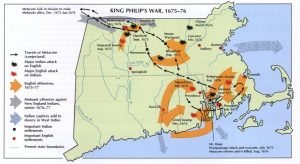
King Philip’s War – Indian Wars

King Philips War Map

After the death of Massasoit, his son Alexander, despite maintaining peaceful relations with the English, was captured under suspicion of conspiracy and died shortly thereafter. His brother, Philip, succeeded him and initially continued to uphold treaties while secretly uniting New England tribes against English encroachment. Tensions escalated after the murder of an informant, leading to widespread conflict. Philip’s leadership during King Philip’s War culminated in significant losses for both sides, ultimately resulting in his death and the disbandment of resistance among Native tribes in New England.