
Indians of the Great Western Prairies

Crow Indian

The post reflects on the tribes of the Great Western Prairies, particularly the Crows and Blackfeet, who inhabit the regions around the Yellowstone and Missouri Rivers. The Blackfeet, once over thirty thousand, faced a devastating smallpox outbreak, reducing their numbers significantly. These tribes exhibit strength and resilience, living primarily off buffalo and horses. They maintain rich cultural practices, such as the significant medicine-bag tradition. The text also highlights their continual conflicts with neighboring tribes, along with notable tales of love and rivalry within their communities.
Treaty of October 17, 1855

On October 17, 1855, representatives of the Blackfoot, Flathead, Nez Percé, and other tribes signed a treaty with U.S. commissioners A. Cumming and Isaac I. Stevens near the Judith River in Nebraska. The treaty established perpetual peace among the tribes and with the U.S., delineating a shared hunting ground for 99 years and granting exclusive territory to the Blackfoot Nation. It outlined mutual responsibilities, the protection of Indian lands, and provisions for annual financial support and education, while promoting civility and forbidding hostilities.

Treaty of July 16, 1855

On July 16, 1855, a treaty was signed at Hell Gate between Isaac I. Stevens, representing the U.S. government, and leaders of the Flathead, Kootenay, and Upper Pend d Oreilles tribes, establishing the Flathead Nation. The tribes ceded their lands to the U.S. in exchange for a designated reservation, financial support, and the establishment of schools and industry. They pledged to maintain peace with settlers, avoid alcohol use, and resolve disputes through U.S. authorities. The treaty required ratification by the President and Senate.

Jocko Reservation

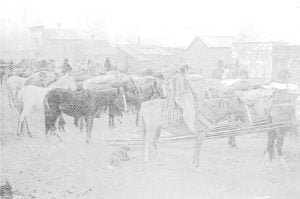
Charlot's band on the March

In December 1890 and January 1891, Special Agent Horatio Seward reported on the Jocko Reservation’s Indian tribes, including the Flatheads, Pend d’Oreilles, and Kalispels. The reservation spans 1,433,600 acres and is largely self-sufficient, with most Indians engaging in farming. Despite some dependency on government aid, the community displays signs of progress in agriculture, education, and housing. The report highlights issues such as alcohol-related crime and a heavy death rate among the population, influenced by external societal factors.

Condition of the Idaho Indians in 1890

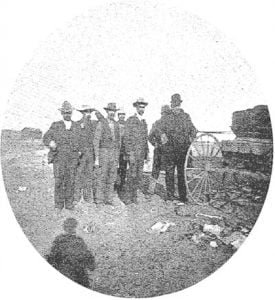
U.S. Indian Agent and Party on Fort Hall Reservation

In 1890, the Indian population in Idaho was summarized across various reservations, reflecting a complex mix of tribes and their current living conditions. The Bannocks and Shoshones, primarily at Fort Hall, were intermarried and faced challenges in adapting to farming and ranching. The Nez Percé, largely Presbyterian, cultivated their lands but contended with white cattle intrusions. The Coeur d’Alene tribes were more assimilated, living in frame houses and attending church. Each group exhibited varying degrees of adaptation and socio-economic stability amidst ongoing struggles with cultural preservation and external pressures.

Tribal Signs – Lipan to Sheepeater – Sign Language

fig294

The post outlines various sign languages used by different Native American tribes, including the Lipan, Mandan, and Sheepeater. Each tribe has unique gestures representing their identity, culture, and environment. For instance, the Lipan gesture involves specific finger movements that mimic actions associated with their surroundings, while the Mandan sign represents their distinct attire. The Sheepeater sign illustrates sheep behavior, reflecting their connection to this animal. Overall, these signs serve as essential elements of communication and cultural expression among the tribes.