
Jeaga Indians

The Jeaga tribe, whose name’s meaning is unknown, inhabited the area near Jupiter Inlet on Florida’s east coast. Associated with the Muskhogean tribes, they shared various settlement names with the nearby Tequesta tribe. Documented by early Spanish writers, the Jeaga held minor significance and likely merged with the Ais and Tequesta in the 18th century, eventually relocating to Cuba. Estimated to number around 1,000 in the 1650s, the Jeaga’s distinct identity faded over time amidst the larger tribal populations.
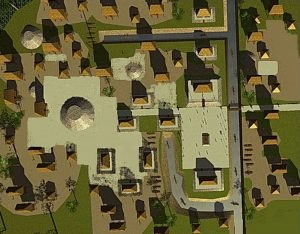
Guacata

Wakata Town Plan

Guacata, a village of the Calusa tribe, was situated near Lake Okeechobee in South Florida around 1570. Described by Fontaneda, it may also represent a tribal group with political ties to nearby areas like the Ais and Tekesta. Evidence suggests that Guacata was distinct yet subordinate, identifiable with the Belle Glade site where significant European grave goods have been found. The village likely served as a critical point of interaction between indigenous populations and Spanish explorers. However, by the late 1600s, its people seemed to have merged with other east coast tribes.