
An Historical Sketch of the Tionontates or Dinondadies, now called Wyandots
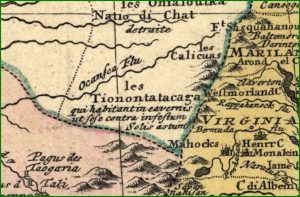
les Tionontatacaga

The tribe which, from the time of Washington’s visit to the Ohio, in 1753, down to their removal to the West, played so important a part under the name of Wyandots, but who were previously known by a name which French write Tionontates; and Dutch, Dinondadies, have a history not uneventful, and worthy of being traced clearly to distinguish them from the Hurons or Wyandots proper, of whom they absorbed one remnant, leaving what were later only a few families near Quebec, to represent the more powerful nation.
The Discovery Of This Continent: It’s Results To The Natives

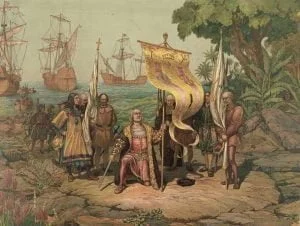
Columbus Landing on Hispaniola

In 1470, Christopher Columbus married Dona Felipa, daughter of a renowned navigator, and settled in Porto Santo, where they shared dreams of discovering lands to the West. Their ambitions fueled Columbus’s determination, leading to his 1492 voyage that resulted in the European discovery of the Americas. However, this event marked the beginning of devastation for native peoples, introducing warfare, disease, and colonization that would decimate their populations and cultures, ultimately transforming their rich, diverse societies into shadows of their former selves.

Blackfeet Tribe in War

The Blackfeet were originally a peaceful tribe, engaging in limited conflicts until the introduction of horses transformed their way of life. With horses enhancing their capacity to acquire and transport goods, raiding neighboring tribes for horses became a predominant aspect of Blackfoot warfare. This led to about seventy-five years of systematic horse theft expeditions, alongside the occasional battles resulting in casualties. The emergence of horse culture fostered a mindset valuing property and bravery, particularly through the act of “counting coup,” which highlighted individual valor in combat.

Blackfeet Religion

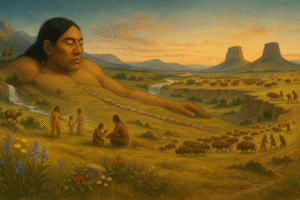
The Blackfoot Genesis - AI Generated

The Blackfeet religion embodies a rich tapestry of beliefs centered around their chief deity, Napi (Old Man), who is intricately linked to concepts of light and creation. Depicted with contrasting traits—wisdom and folly—Old Man is viewed as a real figure in their cosmology. While the Sun has become the primary god, Napi remains revered. Daily prayers and significant rituals, such as the Medicine Lodge, illustrate their spiritual practices, emphasizing life, nature, and communal welfare. Their beliefs reflect a deep connection to the land and the animals that sustain them.

Chippewa Widow

The Chippewa widow’s custom involves mourning her deceased husband by carrying a bundle of his best clothes, which she treats with respect as a symbol of his presence. Despite the harsh conditions of their environment, this practice reflects a deep emotional connection and reverence. The mourning lasts for a year, during which she cannot remarry. If she remains unmarried after this period, her husband’s relatives may intervene to relieve her of this burden, allowing her to move on while honoring his memory.