History of Bedford, New Hampshire

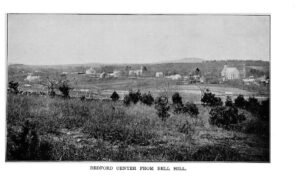
Bedford Center from Bell Hill

This volume, titled History of Bedford, New Hampshire, from 1737, was compiled by Peter P. Woodbury, Thomas Savage, and William Patten. It was published in Concord, N.H., by The Rumford Printing Co. in 1903. The primary objective of this edition was to incorporate all facts from the predecessor’s work, along with additional details and events that occurred since its publication, documenting the town’s history up to the occasion of the one hundred and fiftieth anniversary of its incorporation on May 15, 1900. A significant portion of the work is dedicated to Genealogies of 157 families, furnished largely by family representatives and compiled by Miss Mary E. Manning. The book also includes Biographies of notable figures associated with Bedford and a chapter on Vital Statistics (births, deaths, and marriages) compiled from town records, with recognized limitations due to the incompleteness of earlier record-keeping.
Cheever Genealogy of Blue Hill, Maine

Historical Sketches of Bluehill Maine

John Cheever settled in Blue Hill, Maine, around 1835, establishing a store and a fishing fleet, including the schooner Marion. He married Betsey Gardner and had seven children. Cheever was an industrious businessman until his death in 1851. He built several vessels and engaged in extensive fishing and trade, even exporting dry fish to the West Indies. After his family moved to Andover, Massachusetts, the property changed hands multiple times, ultimately falling into disrepair before being acquired by Irving S. Candage.

Biography of James Seavy

James Seavy, born on January 11, 1825, in Thomaston, Maine, made significant contributions to Washington’s early development. After moving to the Pacific coast in 1854, he settled in Port Ludlow, working as a bookkeeper and taking on various public roles, including county commissioner and representative for Jefferson County. In Port Townsend, he engaged in mercantile business and served as postmaster from 1862 to 1879. Seavy also held the position of clerk of the district court until 1887 and acted as county auditor, reflecting a longstanding commitment to public service and Republican values.