Cushman Family of Acushnet, MA

The Cushman family, a branch of the historic clan from the Old Colony, has been integral to the industrial development of Acushnet, MA, for over fifty years. Founded by Emery Cushman, who began a wooden box manufacturing business in 1840, the lineage traces back to Robert Cushman, a key figure in the Pilgrim movement. The family’s narrative spans generations, showcasing contributions to local industry and community, with Emery’s descendants continuing his work after his death in 1884, thus preserving the legacy in Acushnet’s business landscape.
Knowles Family of New Bedford, MA

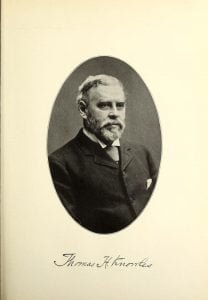
thomas knowles

The Knowles family, established in New Bedford for nearly a century, descends from the ancient lineage in Eastham, Massachusetts. Key figures include Thomas and James H. Knowles, whose firm was pivotal in the whaling industry. The family name was upheld by later generations engaged in diverse business and civic roles, greatly impacting local commerce and community welfare. Noteworthy individuals include Capt. John P. Knowles, a prominent whaling captain, and Joseph Knowles, influential in cotton manufacturing. The family’s legacy intertwines with New Bedford’s rich maritime history.

Clifford Family of New Bedford, MA

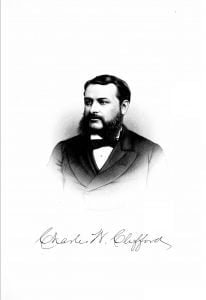
Charles Warren Clifford

The Clifford family of New Bedford, MA, has played a significant role in southern Massachusetts law for nearly a century. Beginning with Timothy Gardner Coffin and John H. Clifford, who became influential figures in the Commonwealth, the firm evolved through various partnerships, reflecting generations of legal expertise. John H. Clifford, deeply involved in public service, served as attorney general and governor, while his descendants continued the family legacy in law and civic duty. This rich lineage traces back to George Clifford, an early settler from England, linking the family’s esteemed heritage to significant historical figures.

Descendants of Rev. George Shove of Fall River, MA

Rev. George Shove, ordained in 1665, served as the third minister of Taunton and contributed significantly to local secular matters, particularly as a landowner. He married Hopestill Newman, followed by two additional marriages, and fathered several children, including Edward, who continued the family legacy. The Shove family became influential in Fall River, with descendants like Charles O. Shove excelling in the textile industry and community service. Charles O. was known for his leadership at the Granite Mills, while his brother Edward pursued a successful career as a cotton broker.

Descendants of Hon. Horatio Leonard Cushman of Taunton, MA

The Cushman family of Taunton, MA, traces its lineage back to Robert Cushman, a key figure in the Mayflower Pilgrims’ voyage. His son, Thomas, emerged as an important church elder in Plymouth. The family continued to thrive, with Horatio Leonard Cushman serving as mayor and a dedicated public servant. His son, Seth Leonard Cushman, succeeded him in local commerce, leading the Bristol County National Bank. The Cushman lineage reflects a rich heritage of civic duty and economic contribution in New England.

Archer Family of Fall River, MA

The Archer family of Fall River, MA, gained prominence in the 19th century through Dr. Jason H. Archer and his son John Jason Archer, an esteemed lawyer. Their lineage traces back to Samuel Archer, an early settler in Massachusetts. Dr. Archer practiced medicine and became president of the Massasoit Bank. His son, John, after graduating from Brown University, became a respected attorney, known for his integrity and contributions to education. The Archer legacy reflects a commitment to public service and community values in Fall River.

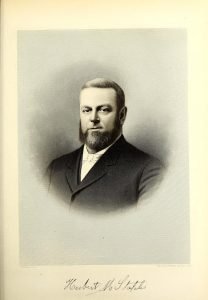
Staples Family of Taunton, MA

Herbert M Staples

The Staples family of Taunton, MA, boasts a rich history spanning over 270 years, descending from John Staple, who settled in Weymouth in 1636. Notable descendants include Sylvanus Staples and his son, Sylvanus Nelson, who significantly impacted local commerce and society. Sylvanus N. Staples, a seafarer turned successful businessman, established Staples Coal Company after a series of entrepreneurial ventures. His son, Herbert Mason Staples, followed suit, becoming an influential leader in the community. This lineage embodies the spirit and progressiveness of Taunton’s citizenry.

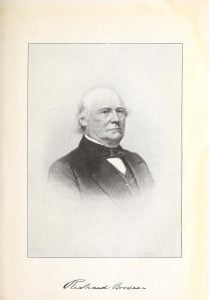
Descendants of Joseph Borden of Fall River MA

Richard Borden

The Borden family, descended from Joseph Borden of Fall River, MA, boasts a rich lineage extending back to Richard Borden, an English soldier settled in Portsmouth, R.I., in the 17th century. The Bordens became prominent landowners and industrialists, particularly during the rise of Fall River as a textile manufacturing hub. Nathaniel Briggs Borden, a notable descendant, served in various public offices, advocating for abolitionist causes and contributing significantly to local development. His legacy continues through his descendants, who maintained the family’s influence in Fall River’s civic and business arenas.

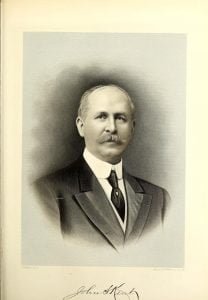
Descendants of John Saxton Kent of North Bridgewater, MA

John S. Kent

John Saxton Kent, born in 1860 in North Bridgewater (now Brockton), MA, emerged as a prominent shoe manufacturer and civic leader. After excelling in business studies, he began his career in bookkeeping, eventually co-founding the M. A. Packard Company, which became a leading shoe manufacturer. Kent served as mayor of Brockton from 1907 to 1909, showing dedication to public service and community welfare. A member of various organizations, he balanced business success with active involvement in local affairs, advocating for growth and development in his city.

Wright Family of Boston, MA

The Wright family, an early Boston lineage, traces its origins to Richard Wright, who settled in Plymouth around 1644. Over generations, the family intermarried with prominent New England clans like the Adams and Wentworths. Notable descendants include Theodore Francis Wright, a significant figure in the New Jerusalem Church, and Augustus Hunt Wright, a Civil War veteran and community leader in Abington. Their legacy reflects the family’s deep roots in American history and its contributions to religion, education, and civic life in Massachusetts.

Osborn Family of Fall River Massachusetts

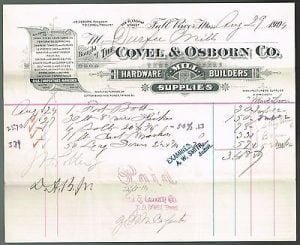
Covel & Osborn Company Letterhead Invoice, 1904

The Osborn family has played a significant role in Fall River’s industrial development since the 19th century. Prominent figures include Hon. Weaver and James Munroe Osborn, influential mill promoters and bankers, whose legacy continues with James E. Osborn, who actively oversees several manufacturing companies today. The family’s history traces back to Jeremiah and Mercy Osband in 1684, evolving through generations of civic leaders, business pioneers, and community contributors, exemplifying a steadfast commitment to the growth of Fall River’s economy and society.

News from New England – King Phillip’s War

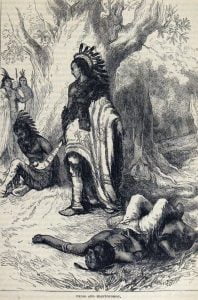
In a detailed account of King Philip’s War, reports describe intense battles between English settlers and Native Americans, beginning in June 1675. The document recounts numerous assaults and atrocities, highlighting losses on both sides, including 444 Christians killed and hundreds of Native Americans. Despite the English army’s smaller numbers, they achieved victories but at great cost. The text serves as a rare historical record of the conflict, illustrating the brutality and strategic maneuvers during a dark period in New England’s history.

Biography of John G. Haskell

John G. Haskell, born on February 5, 1832, in Vermont, distinguished himself as both a soldier and an architect. He graduated from Wesleyan Academy and Brown University before beginning his architectural career in Boston. Haskell moved to Lawrence, Kansas, in 1857, where he served valiantly during the Civil War, eventually becoming the chief quartermaster for the Army of the Frontier. Post-war, he became the state architect, notable for designing key structures including the state capitol, the State University, and various mental health facilities.

Slave Narrative of Margaret E. Dickens

Margaret E. Dickens, born on June 5, 1861, in Raleigh, North Carolina, recounts her family history, noting her mother, Mary Ann Hews, was free-born and her father, Henry Byrd, endured hardships. Dickens shares her parents’ occupations—her grandfather as a cabinet maker and her father as a carpenter. After living briefly in the North with her first husband, a preacher, she returned to the South, where she values her home and family legacy. She expresses a deep preference for Southern life despite her time in the North.

Biography of George Paul Burleigh

George Paul Burleigh, an attorney from St. Louis, has specialized in trademark law for over twenty-two years. Born on June 29, 1873, in Providence, Rhode Island, he moved to St. Louis with his family in 1874. An alumnus of St. Louis University and Washington University, Burleigh served as the youngest member of the Missouri legislature in 1899 and contributed actively during World War I. Married to Mary J. Ross, he remains engaged in civic matters while enjoying hunting and athletics in his leisure time.

Biographical Sketch of Ames, Oliver

Oliver Ames, born February 4, 1831, in Easton, Massachusetts, was the son of Oakes and Eveline Ames. Educated at local academies and Brown University, he joined his family’s shovel manufacturing business and became a partner. Throughout his career, Ames engaged in public service, serving on the Easton school board, in the state Senate, as lieutenant governor, and as governor from 1887 to 1889. A leader in various industries, he remained active in civic duties and family life, raising six children with his wife Anna Coffin.

Biography of Clement Richardson

Clement Richardson, born June 23, 1878, in Virginia, is an influential educator and president of the Lincoln Institute in Jefferson City. He overcame early hardships and pursued education, studying at notable institutions like Harvard. His career includes teaching at Morehouse and Tuskegee Institutes, where he engaged students through literary activities. Recently, he has focused on rural education and contributed extensively to various publications. Under his leadership, the Lincoln Institute has seen significant growth, bolstered by community support and state funding. He is also a dedicated family man and active in Masonry.