The Conner Family of Prairie du Rocher Illinois
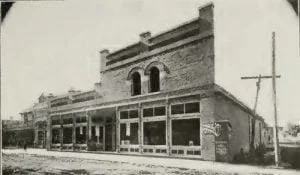
Conner's General Merchandise Store, Prairie du Rocher

William S. Conner, born in 1815 in Randolph County, Illinois, is a descendant of the influential Conner family, originally of Irish descent. His father, Henry Conner, a prominent figure in local politics, served as sheriff for seven years and was active in public affairs. After experimenting with business in St. Louis and mining in Wisconsin, William returned to Randolph County in 1858, settling near his birthplace. He left a legacy through his six children, three of whom are still living.
Early Migration to Fort de Chartres

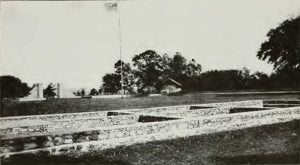
The ruins of Fort de Chartres with powder magazine intact

The history of Prairie du Rocher is intricately linked to Fort de Chartres and the Catholic Church, dating back to 1682 when La Salle claimed the territory for France. In 1717, the Illinois Country transitioned from Quebec to Louisiana’s jurisdiction. Commandant Pierre Duque Boisbriant established Fort de Chartres in 1720 to protect settlers and maintain French control. Despite its strategic location and role in French colonial governance, the fort faced neglect and flooding, leading to its eventual abandonment post-1763. Restoration efforts continue at the site today.

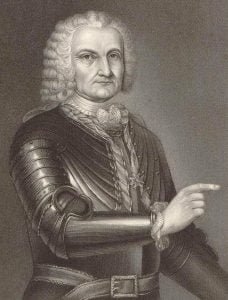
Gov. Perier and Bienville

Bienville

The English colonists, wary of French expansion along the Mississippi, fostered conflicts between French and Native American tribes, particularly igniting animosity with the Chickasaws after a failed French escort led to their warriors’ deaths. Bienville, the French governor, attempted to use the Choctaws against the Chickasaws but faced significant resistance. Subsequent military expeditions by both Bienville and d’Artaguette ended in disastrous defeats against Chickasaw defenses. Ultimately, the Chickasaws showcased their resilience, marking critical victories that hindered French ambitions in the region.

Early Exploration and Native Americans

Ferdinand de Soto’s interactions with Native American tribes, specifically the Choctaws and Chickasaws, exemplify early European attempts to impose their ideologies of civilization and Christianity upon Indigenous populations. This approach set a precedent for further exploitation and oppression of Native Americans, as European settlers sought to acquire land and resources. Throughout history, tribes like the Chickasaws, known for their valor, remained steadfast allies rather than adversaries. This enduring alliance contrasts sharply with the overarching narrative of dispossession and extermination faced by Indigenous nations in North America.

The Discovery Of This Continent: It’s Results To The Natives

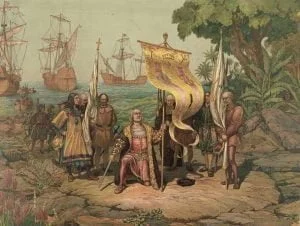
Columbus Landing on Hispaniola

In 1470, Christopher Columbus married Dona Felipa, daughter of a renowned navigator, and settled in Porto Santo, where they shared dreams of discovering lands to the West. Their ambitions fueled Columbus’s determination, leading to his 1492 voyage that resulted in the European discovery of the Americas. However, this event marked the beginning of devastation for native peoples, introducing warfare, disease, and colonization that would decimate their populations and cultures, ultimately transforming their rich, diverse societies into shadows of their former selves.

Escape From The Robber Band

On November 8, 1819, the author and companions faced a night of dread while staying with strangers who displayed suspicious behavior. Armed and apprehensive, they prepared for a possible attack, realizing the danger posed by their hosts. After surviving the night, they departed the premises, eventually joining other travelers on the road to safety. Their journey continued through Illinois, revealing a landscape of both fertile land and dangerous inhabitants, leading the author to reflect on the challenges and characters of this new frontier.

Kaskaskia Tribe

The Kaskaskia Indians were a prominent tribe within the Illinois confederacy, known for their village near present-day Utica, Illinois. Early European contact began in the 1670s, with Father Marquette establishing a mission there in 1674. The tribe later migrated to the lower Mississippi region, seeking connection with French interests. By the early 19th century, their population declined significantly, leading to treaties that ceded their lands and consolidated them with other tribes. By 1905, their numbers dwindled to 195, with mixed heritage among members.

Biography of James A Richardson, M.D.

James A. Richardson, M.D., born on November 15, 1840, in Adams County, Illinois, is a notable figure due to his family’s rich heritage in American history. His grandfather was a Revolutionary War veteran, while his father, John G. Richardson, participated in the War of 1812 and later migrated to Oregon in 1851. Dr. Richardson earned his medical degrees in San Francisco and New York, respectively, and established a medical practice in Salem, Oregon. He held various esteemed medical positions, served in the state senate, and was married to Fannie Boyd, with whom he had two children.

George Rogers Clarke’s Campaign

George Rogers Clarke’s campaign aimed to secure Kentucky from British-supported attacks during the Revolutionary War. By June 1778, he led 153 men to successfully capture Kaskaskia and Cahokia without resistance, later recapturing Vincennes in February 1779. Despite this, Indian hostilities persisted, culminating in various skirmishes until the treaty of peace was finalized in 1782. Clarke’s decisive 1780 expedition into Indian territory effectively ended the significant threats to Kentucky, paving the way for safer settlement in the region.