
Biography of Francis Xavier Paquet

Francis Xavier Paquet, born on January 15, 1811, in Quebec, was the sixteenth child of Joseph and Marie Madaline Paquet. Apprenticed in shipbuilding, he emigrated to the U.S. at seventeen, working for the American Fur Company. He later joined the lead mining industry and served in the Black Hawk War, earning commendation from General Scott. Married to Marie Louise Lannadier de Langdeau in 1836, the couple moved to Oregon in 1852, where they became prominent figures with a large family, contributing to their community’s development.
Illinois Indian Land

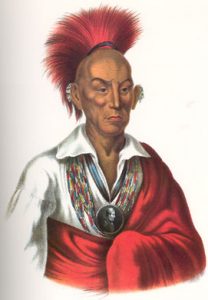
Black Hawk

Black Hawk, also known as Makataimeshekiakiah, was a prominent Sac chief during a tumultuous period of conflict between Native Americans and settlers in the early 19th century. As white settlers encroached on their lands in Illinois, Black Hawk resisted forced removal despite a treaty signed by rival chiefs. His efforts culminated in the Black Hawk War, marked by skirmishes and a tragic final battle. After his eventual surrender and a period of captivity, he lived peacefully until his death in 1838, culminating in a notorious burial and the subsequent theft of his remains.

Biographical Sketch of T. B. Johns

T. B. Johns, born on April 8, 1841, in Galena, Illinois, embarked on extensive travels across the United States and beyond before settling in Jewell County, Kansas, in October 1871. Over the years, he owned 240 acres of land and served as Township Trustee. Married in 1872 to Claire Farren, they raised four children: Thomas C., Richard S., Carrie, and Franklin. Johns appreciated Kansas’s productive soil after years of movement, establishing a stable life in the community.

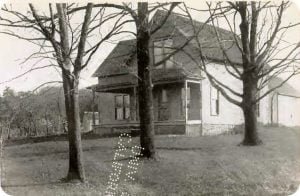
Ely S. Parker Homestead, Tonawanda Reservation

Ely S. Parker Homestead

Ely S. Parker, born in 1832 on the Tonawanda Seneca Reservation, was a distinguished Seneca leader and Brigadier General in the U.S. Civil War. A close associate of Ulysses S. Grant, he served on Grant’s staff and documented Lee’s surrender. Parker also held significant roles, including Commissioner of Indian Affairs, and contributed to Lewis H. Morgan’s work on Iroquois culture. He valued the democratic traditions of the Six Nations and passed away on August 31, 1905, buried in Forest Lawn Cemetery, Buffalo.

Battle of Pecatonica

On June 14th, a scouting party of Sacs killed five men at Spafford farm, prompting General Atkinson to dispatch Colonel Henry Dodge to lead Posey’s brigade. As Dodge pursued a group of twenty-five warriors across the Pecatonica River, he engaged them in a fierce battle. Despite the Indians’ initial advantage, their wet powder hindered their efforts. The fight concluded with the death of the last Indian, showcasing the desperation and bravery from both sides, marking a significant and bloody encounter in the conflict.

Biography of Sylvester Washington McMaster

Sylvester Washington McMaster, born October 8, 1811, in New York, was a pivotal figure in Rock Island County, arriving in 1833 when it was merely a village. Engaged in mercantile enterprises, he was also an educator and later served as an assessor. He married Jannette Brooks in 1840, and they had three children. A significant contributor to local education and community life, McMaster served on the library and school boards. His memoir, *Sixty Years on the Upper Mississippi*, reflects his extensive experiences during the region’s development. He passed away on January 22, 1908.

Biography of Isaac Negus

Isaac Negus, born on December 31, 1799, in New York, was a prominent businessman in Rock Island, known for his impactful contributions to the city’s development. After moving to Illinois, he engaged in various mercantile ventures and co-founded the Rock Island Bank. He played a vital role in establishing the first horse car system in the area and invested in local industries. Negus was also a philanthropist, supported the Presbyterian Church, and had a keen interest in politics, running for mayor once. He passed away on November 27, 1883, leaving a legacy of community commitment.

Biography of A. M. Brookes

A. M. Brookes, born on September 2, 1843, in Galena, Illinois, became an influential figure in Seattle as its postmaster. He enlisted in the Twenty-fourth Wisconsin Infantry during the Civil War and served for three years, participating in numerous battles. After moving to California and gaining postal experience in San Francisco, he relocated to Seattle in 1877, engaging in various business ventures. Brookes was elected postmaster in 1889 and has contributed significantly to the community’s development, being recognized as a leading figure in the city.

Biography of Rev. John F. Devore, D. D.

Rev. John F. Devore, D.D., born in Kentucky on December 7, 1817, dedicated his life to ministry after being inspired by his religious upbringing and the writings of Bramwell. He joined the Rock River Conference in 1842 and later served extensively in the Oregon and Puget Sound conferences, contributing significantly to the establishment of churches, schools, and community services across Washington. Devore’s devotion, energy, and leadership left a lasting impact on the communities he served until his passing on July 28, 1889.

Biography of Gen. Morton Mathew McCarver

General Morton Mathew McCarver, born in 1807 in Kentucky, was a pivotal figure in the founding of Burlington, Iowa; Sacramento, California; and Tacoma, Washington. A veteran of the Black Hawk War, he ventured westward to establish settlements, notably becoming a leader in Burlington’s development and the Iowa state constitution. Later, he moved to Oregon, participated in the California gold rush, and ultimately founded Tacoma, securing its role as the Northern Pacific Railroad’s terminus. McCarver’s life was marked by determination and significant contributions to the growth of several American cities. He passed away in 1875.

Biographical Sketch of George W. Swagart

George W. Swagart, born on May 1, 1848, in Illinois, has been a significant figure in Eastern Oregon’s cattle industry since 1853. After moving to Oregon with his family, he gained experience in pioneer life and farming. In 1865, he began his venture in the stock business by driving sheep across the Cascades. After time spent in Nevada’s mining camps, he returned to Umatilla County in 1878 to continue his cattle and horse raising efforts. He resides in Heppner, Oregon, with his wife and five children.