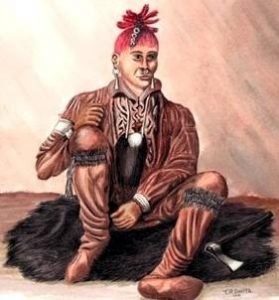
Moravian Massacre at Gnadenbrutten

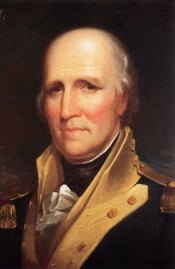
George Rogers Clark

In 1763, Moravian missionaries established missions among the Tuscarawa Indians. Despite maintaining neutrality during the Revolutionary War, they were perceived as threats by both American settlers and British allied Indians. In March 1772, a group of American frontiersmen, led by David Williamson, deceived and massacred 96 Moravian Indians—men, women, and children—at Gnadenbrutten. This brutal act was marked by a lack of empathy among the assailants, highlighting the brutal interactions between white settlers and Native Americans during this period of conflict.

Early Exploration and Native Americans

Ferdinand de Soto’s interactions with Native American tribes, specifically the Choctaws and Chickasaws, exemplify early European attempts to impose their ideologies of civilization and Christianity upon Indigenous populations. This approach set a precedent for further exploitation and oppression of Native Americans, as European settlers sought to acquire land and resources. Throughout history, tribes like the Chickasaws, known for their valor, remained steadfast allies rather than adversaries. This enduring alliance contrasts sharply with the overarching narrative of dispossession and extermination faced by Indigenous nations in North America.

Life and travels of Colonel James Smith – Indian Captivities

An Artists rendition of James Smith

James Smith, pioneer, was born in Franklin county, Pennsylvania, in 1737. When he was eighteen years of age he was captured by the Indians, was adopted into one of their tribes, and lived with them as one of themselves until his escape in 1759. He became a lieutenant under General Bouquet during the expedition against the Ohio Indians in 1764, and was captain of a company of rangers in Lord Dunmore’s War. In 1775 he was promoted to major of militia. He served in the Pennsylvania convention in 1776, and in the assembly in 1776-77. In the latter year he was commissioned colonel in command on the frontiers, and performed distinguished services. Smith moved to Kentucky in 1788. He was a member of the Danville convention, and represented Bourbon county for many years in the legislature. He died in Washington county, Kentucky, in 1812. The following narrative of his experience as member of an Indian tribe is from his own book entitled “Remarkable Adventures in the Life and Travels of Colonel James Smith,” printed at Lexington, Kentucky, in 1799. It affords a striking contrast to the terrible experiences of the other captives whose stories are republished in this book; for he was well treated, and stayed so long with his red captors that he acquired expert knowledge of their arts and customs, and deep insight into their character.

The Treaties At Forts Carlton And Pitt – 17th of August

On August 17, as treaty negotiations began, a chief insisted meetings could only occur at Duck Lake, yet the Carlton Indians expressed readiness to convene the next day. Provisions were withheld from Duck Lake due to their lack of cooperation. The council site was chosen for its scenic beauty, where the Indians assembled with traditional ceremonies. Despite their apprehensions about the treaty’s implications, officials addressed their concerns, urging adaptation to farming. The following days saw further deliberations, with chiefs seeking time to consider the proposals amidst internal divisions and external pressures.

The Treaties At Forts Carlton And Pitt – 10th of August

On August 10, Rev. Mr. McKay led a service for attendees at Fort Pitt, followed by Rev. Mr. McDougall’s Cree service and others for the Cree and Chippewayan communities. The following day, Mr. Christie finalized provisions and payments as the police prepared to depart for Battle River. Key discussions arose with Cree Chief Great Bear about treaty terms and the protection of buffalo. Ultimately, Great Bear expressed intent to accept the treaty next year, while Red Pheasant sought assistance for his community’s needs before relocating.

The Treaties At Forts Carlton And Pitt – Narrative of the Proceedings

In August 1876, the expedition for Treaty Number Six arrived at the South Saskatchewan River, welcomed by Cree Indians and a representative from Carlton House. The Commissioners were escorted to Fort Carlton by Mounted Police and encountered a significant Cree encampment. The Cree requested an additional day for their deliberations before meeting the Governor and Commissioners on August 18 to discuss the treaty. This narrative by A. G. Jackes, Secretary to the Commission, details the interactions and preparations leading to the treaty discussions.

The Treaties At Forts Carlton And Pitt – Government House

On December 4, 1876, an official from Government House in Manitoba detailed his journey to negotiate treaties with the Plain Cree, fulfilling a promise made by the late Rev. George McDougall. After departing Fort Garry, he faced challenges, including a storm and interactions with Sioux and Cree groups along the way. He successfully crossed the South Saskatchewan River and was welcomed by Cree leaders at Duck Lake, while ensuring the treaty negotiations would take place at Fort Carlton. The locals expressed strong support for his mission.

The Treaties At Forts Carlton And Pitt – 23rd of August

On August 23rd, negotiations began between the Governor and the Indigenous leaders, interrupted by a Chippewa’s address. The Governor insisted discussions happen respectfully. The Indigenous representatives presented requests for tools, livestock, education, and healthcare, emphasizing the need for support in their transition to agriculture. The Governor offered limited assistance, stressing self-sufficiency after three years. Following extensive dialogue, the treaty was agreed upon, with some chiefs backing the Governor’s proposals, while others voiced concerns over unmet needs. The treaty concluded with the signing of documents, solidifying the terms discussed.

The Treaties At Forts Carlton And Pitt – 18th of August

On August 18th, Lieutenant-Governor Morris, along with Commissioners Christie and McKay, arrived at a Cree Indian camp near Fort Carlton. The vibrant ceremony began with traditional dances and music, showcasing the Cree’s rich cultural heritage. Morris addressed the gathered tribes, emphasizing their shared connection as subjects of the Queen and the importance of friendship. He expressed his commitment to their welfare and the promise of ongoing cooperation. The Indians requested to meet in council the next day, concluding the first session of the treaty negotiations.

The Treaties At Forts Carlton And Pitt – 19th of August

On August 19th, the Lieutenant-Governor and Commissioners met with Indigenous leaders at their camp to discuss the terms of a treaty. The Governor emphasized the importance of securing land for the tribes, proposing reserves for each band to ensure stability and promote agriculture. He assured that the rights of Indigenous peoples would be upheld and offered support in settling and cultivating the land. The Chiefs were encouraged to consider the Governor’s proposals and reconvene for further discussion. Subsequently, on August 20th, a religious service was held, while the Indians requested additional time to deliberate.

The Treaties At Forts Carlton And Pitt – 13th of September

On September 13, at Fort Pitt, Indian Chiefs expressed their gratitude and concerns to the Governor, highlighting their hopes for peace and the preservation of their way of life. Big Bear, representing absent bands, requested compassion regarding the death penalty and emphasized the importance of protecting the buffalo for future generations. The Governor assured them that they would be protected and invited them to select reserves safe from settlers. The discussions ended with a commitment to revisit these issues, promising support and a focus on their prosperity.

The Treaties At Forts Carlton And Pitt – 24th of August

On August 24, the treaty negotiations continued at Fort Carlton, where the Commissioners met with various Indian groups, presenting medals, uniforms, and engaging in discussions. Some Saulteaux attempted to disrupt proceedings, but the Cree Chiefs and other bands expressed their willingness to accept treaty terms. The following days included payments, farewell visits, and further discussions on treaty terms at Duck Lake with the Willow Indians. Ultimately, the treaty was signed, promoting collaboration and acknowledging the importance of preserving buffalo populations, before the party moved on to Fort Pitt.

The Treaties At Forts Carlton And Pitt – 17th of September

On the 17th of September, Lieutenant Governor Alexander Morris concluded a lengthy journey, reflecting on the successful negotiations with Indigenous peoples regarding treaties at Forts Carlton and Pitt. He noted the eagerness of the Cree and other tribes to adopt agriculture and education. Morris emphasized the need for immediate support in farming tools, land, and buffalo preservation regulations. He acknowledged the contributions of local leaders and officials, recommending continued efforts to integrate the Indian and Half-breed populations into a more settled lifestyle while recognizing their cultural needs.

The Treaties At Forts Carlton And Pitt – 31st of August

On September 5th, Mr. Christie and his party arrived at Fort Pitt to finalize treaties with indigenous leaders, who had gathered in large numbers. After a cordial reception, the discussions commenced, with Sweet Grass and other chiefs expressing their gratitude for the treaty offers. The commissioners detailed the terms thoroughly, and on September 9th, the chiefs accepted the conditions, voicing hopes for cooperation and prosperity. The ceremony concluded with the signing of the treaty and the distribution of medals and flags, marking a significant diplomatic engagement.

The Treaties At Forts Carlton And Pitt – 7th of September

On September 7th, the Governor and Commissioners convened a treaty ceremony near Fort Carlton, attended by various Indigenous tribes. The gathering featured traditional displays and an address emphasizing goodwill and cooperation. The Governor encouraged the Cree and others to embrace opportunities for prosperity while maintaining their traditional ways. After discussions and consultations, Chief Sweet Grass expressed affirmation of the treaty, leading to its acceptance by the leaders present. The event concluded with the signing of the treaty, distribution of gifts, and the presentation of medals from the Queen.

The Treaties At Forts Carlton And Pitt – Commissioners crossed the Saskatchewan

The Commissioners, after crossing the Saskatchewan, were escorted to Fort Pitt, where they met with Indigenous leaders, including Chief Sweet Grass. A formal conference took place, and the terms from the Carlton treaty were accepted, effectively extinguishing Indian title in the Plains, aside from a small area inhabited by the Black Feet. The Indigenous leaders expressed a desire for agricultural education, and the Commissioners assured them of missionary support. Following the treaty, they returned to Winnipeg, having fostered goodwill with the Cree Nation and laid a foundation for order in the Saskatchewan Valley.

The Treaties At Forts Carlton And Pitt – Memoranda

W. J. Christie, Chief Factor in charge of the Saskatchewan District, expressed concerns regarding the impending starvation of Indigenous tribes due to the decimation of buffalo populations and the risk of conflict stemming from their desperation. He emphasized the urgent need for treaties to establish law and order in the region. Messages from Cree Chiefs highlighted their grievances about land sales and the necessity for agricultural assistance. Reverend George McDougall played a critical role by reassuring the tribes of the government’s intention to negotiate treaties, alleviating tensions among the tribes.

The Treaties At Forts Carlton And Pitt – Your Honor’s message

In the summer of 1876, Commissioners faced challenging negotiations with the Cree tribes near Fort Carlton and Fort Pitt. Despite initial resistance from the Willow Cree, led by Chief Beardy, they eventually reached an agreement with the Plain and Wood Cree on August 23 and 28. The Cree, anxious about their future food supply and affected by past diseases, sought assurance from the Crown. After careful discussions, the treaty was signed, and even the Willow Cree later joined the agreement following additional outreach. The estimated number of visiting Indians was approximately 3,976.

The Treaties At Forts Carlton And Pitt

The treaties at Forts Carlton and Pitt in 1876 were crucial for the Cree nation, covering approximately 120,000 square miles of fertile land. The Cree sought a formal alliance with the Canadian government as early as 1871, driven by concerns over increasing white settlement and diminishing resources. Indian Commissioner Mr. Simpson emphasized the necessity of a treaty to maintain peace in the region. Prospective treaties were anticipated to follow a pattern of previous agreements, advocating for a cooperative relationship between the Cree and the government.

The Treaties At Forts Carlton And Pitt – 22nd of August

On August 22, Commissioners met with Indigenous leaders to discuss treaty terms. They expressed a desire for assistance as they transitioned to agriculture. The Pond Maker sought government support in farming, while others asked for provisions during hardships. The Commissioners clarified they wouldn’t provide daily sustenance but offered limited aid for three years. Chiefs discussed demands for livestock, agricultural tools, and educational support, emphasizing their readiness to settle. Ultimately, the Chiefs accepted the modified proposals, leading to the treaty’s signing, representing key bands in the Carlton region.