
History of Arapaho and Cheyenne Treaties

Land Cession 477, 426-3

These treaties were instrumental in establishing and defining the relationship between the United States and the Arapaho and Cheyenne Confederation. They also impacted the history of the tribe after it signed the initial treaty of 1825. Each succeeding treaty will show the historian a shrinking land mass controlled by the Arapaho and Cheyenne. Includes land cession maps detailing the land ceded by the Arapaho and Cheyenne.
Treaty of May 7, 1868

On May 7, 1868, at Fort Laramie, the United States and representatives of the Crow Indians signed a treaty establishing enduring peace and outlining provisions for land use, agricultural support, education, and individual land rights for the tribes. The treaty commits the federal government to provide buildings, educational resources, and agricultural assistance while mandating the Indians to uphold peace and pursue farming. Crucially, it emphasizes cooperation between parties to resolve conflicts and ensures that land and resources are preserved for the Crow’s use alone.

Treaty of May 10, 1868

The Treaty of May 10, 1868, established a framework for peace between the United States and the Northern Cheyenne and Northern Arapahoe tribes. It included commitments to maintain peace, the establishment of reservations for the tribes, and provisions for land selection for farming. The treaty also promised annual supplies, education, and support for agriculture, aiming to facilitate the tribes’ transition to a settled lifestyle. Furthermore, it stipulated that any cession of tribal land require a majority approval from adult male members, ensuring their rights were protected.

Fort Laramie

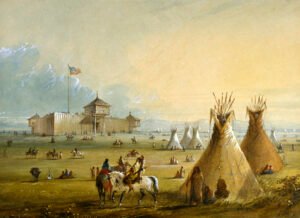
1840 Fort Laramie

Fort Laramie, established initially as a picket fort by trappers in 1834, became a significant trading post for the American Fur Company. Located on the Laramie River, it transformed into a pivotal hub for interactions between Native American tribes and traders. By 1849, ownership shifted to the United States government, which began fortifying the post. The area, once a hunting ground for various tribes, witnessed critical events, including conflicts with the Sioux and interactions with emigrants, highlighting its historical importance in the westward expansion.