1851 Siler Roll: Eastern Cherokee

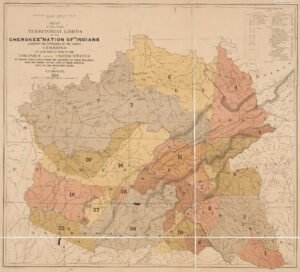
Map of Cherokee Land Cessions

The 1851 Siler Roll is a key genealogy resource for tracing Eastern Cherokee families who remained east of the Mississippi after the Trail of Tears. Compiled to identify those eligible for a federal per-capita payment, it lists households, family groupings, residences, ages, and relationships, but it is incomplete and should be used with the later Chapman Roll.
Native American History of Forsyth County, Georgia

Forsyth County, Georgia, has a complex Native American history shaped by various tribes, including the Apalachicola, Upper Creeks, and later, Cherokees. Initially occupied by the Apalachicola until 1764, the area saw a significant influx of Cherokees in the 1780s. Archaeological evidence indicates extensive Native American habitation over 12,000 years, showcasing diverse cultural periods. Following treaties in the 18th and early 19th centuries, the Cherokee faced forced removal during the Cherokee Indian Removal Period (1832-1838), significantly altering the county’s demographic and social landscape.

Cherokee Indians

The Cherokee Indians, whose name origins are uncertain, are historically significant Native Americans predominantly residing in the southern Appalachian region. They speak an Iroquoian language and were divided into three dialect groups linked to separate settlements in Tennessee and neighboring states. The tribe has a complex history marked by early contact with European settlers, significant migrations, and cultural adaptations, such as the creation of a written language by Sequoya. Over time, they faced numerous challenges, including disease and forced removal, yet they have maintained a notable cultural and historical presence.

Henderson Roll: 1835 Cherokee East of the Mississippi Census

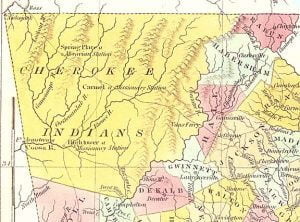
1830 Map of Cherokee Territory in Georgia

An extract from the 1835 Cherokee East of the Mississippi Census, also known as the Henderson Roll, this database lists Cherokee households remaining east of the Mississippi before removal. It includes heads of households, family members, enslaved people, and whites connected by marriage, along with residence. The roll was later used in Cherokee ancestry claims.