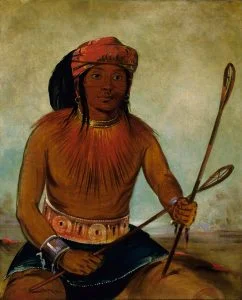
Ball Play amongst the Choctaws

Tul-lock-chísh-ko, Choctaw Ball Player. George Catlin, 1834

The Choctaw people were exceptional marksmen, preferring rifles over shotguns, showcasing their keen hunting skills and acute awareness in the forests of their homeland. Their ball games, particularly the Choctaw Ball Play, were crucial for social engagement, filled with excitement and strategic maneuvers, akin to the intensity of ancient Olympic competitions. These games held significant cultural importance, often leading to fierce rivalries between tribes and occasionally devolving into violent conflicts, as illustrated by historical accounts detailing chaotic matches and their aftermath.
Choctaws and their Beliefs about the Great Flood

The Choctaws held a significant understanding of the Great Flood, known as Oka Falama, passed down through generations. An encounter between Rev. Cyrus Byington and an elderly Choctaw hunter illustrates this connection. The hunter, although respectful of Byington’s teachings, felt it was too late for him to change his beliefs, turning to his children for guidance instead. Their discussion highlighted a blend of cultural wisdom and reverence for tradition, as the hunter recognized parallels between the biblical flood and his ancestral stories, maintaining a strong faith in his heritage.

Memoirs of Nathaniel Folsom

The memoirs of Nathaniel Folsom recount his life, beginning in North Carolina in 1756 and his family’s journey to the Choctaw Nation. Folsom details his early education, family struggles, and life as a trader among the Choctaws for thirty years. He describes significant cultural practices, community dynamics, and his eventual conversion to Christianity. Folsom, who had two wives and fathered twenty-four children, emphasizes his moral values and enduring ties to the Choctaw people until his death in 1833.

Choctaws views on God and Murder

The Choctaws, like many North American tribes, held a profound belief in a Supreme Being known as the Great Spirit, attributing the creation of all to this divine force. They viewed nature as a manifestation of the Great Spirit, expressing their reverence through songs and dances. When it came to justice, the Choctaws executed murderers through a process that emphasized honor and accountability, with the condemned typically accepting their fate with composure. This approach highlighted their commitment to truth and moral integrity, distinguishing their practices from those of white society.

History of the Shakchi Humma Tribe

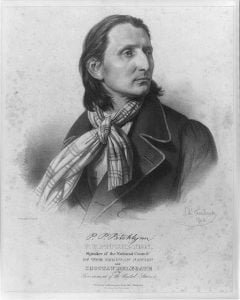
P.P. Pitchlynn, Speaker of the National Council of the Choctaw Nation and Choctaw delegate to the government of the United States

Oktibbeha County, Mississippi, witnessed fierce conflicts among various tribes, notably the Shakchi Humma, who were ultimately exterminated by the allied Choctaws and Chickasaws around 1721. The Shakchi Hummas, initially a powerful tribe led by Chief Shakchi Humma, engaged in violent skirmishes following their aggressive expansion into neighboring territories. Despite their initial successes, they faced a brutal three-year war characterized by strategic ambushes and desperate defenses. Ultimately, they were obliterated, leaving only one survivor, a girl who was adopted by the Choctaws and lived to see the arrival of missionaries.