Albany County New York Cemeteries

A complete listing of all available online Albany County New York cemeteries, with links to multiple cemetery transcriptions, gravestone photos, tombstone photos, official records, etc.

Albany County, New York, one of the original twelve counties established by the Province of New York in 1683, encompasses part of the historic Hudson River Valley and is among the oldest jurisdictions in the state, with continuous governmental records—land, probate, tax, and vital—available from the late 17th century, making it a key location for early colonial genealogical research. Originally much larger, it was gradually reduced in size as new counties were formed; it includes the state capital, Albany, which was first settled by the Dutch as Fort Orange in 1624 and chartered as a city in 1686 under the Dongan Charter. The region was historically inhabited by Mohican (Mahican) peoples before European colonization and saw significant Dutch, English, and later immigrant settlement. The Hudson River, Mohawk River, and early turnpikes and canals made Albany County a transportation hub, further increasing the richness and accessibility of genealogical records.
A complete listing of all available online Albany County New York cemeteries, with links to multiple cemetery transcriptions, gravestone photos, tombstone photos, official records, etc.
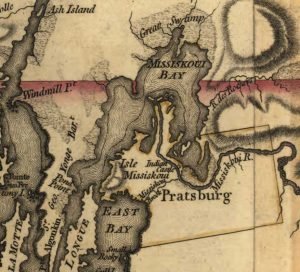
The account chronicles the capture and eventual redemption of Mrs. Jemima Howe after her abduction by Native Americans in 1765 during an ambush in Hinsdale, New Hampshire. Following traumatic events, including the death of her husband and the loss of two children, she endured a harrowing journey through the wilderness, eventually being sold to a French man after nearly a year with the Indians. Through the assistance of notable individuals like Colonel Schuyler, she was ultimately ransomed and reunited with some of her children, revealing both her suffering and resilience.
A brief description of the years of captivity of one Mary Fowler, nee Corbett, nee Woodwell, who along with her family and the Burbank family were taken prisoners in Hopkinton, NH.
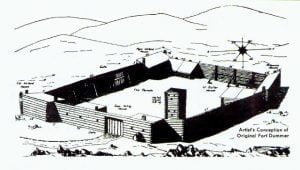
A Narrative of the captivity of Nehemiah How, who was taken by the Indians at the Great Meadow Fort above Fort Dummer, where he was an inhabitant, October 11th, 1745. Giving an account of what he met with in his traveling to Canada, and while he was in prison there. Together with an account of Mr. How’s death at Canada. Exceedingly valuable for the many items of exact intelligence therein recorded, relative to so many of the present inhabitants of New England, through those friends who endured the hardships of captivity in the mountain deserts and the damps of loathsome prisons. Had the author lived to have returned, and published his narrative himself, he doubtless would have made it far more valuable, but he was cut off while a prisoner, by the prison fever, in the fifty-fifth year of his age, after a captivity of one year, seven months, and fifteen days. He died May 25th, 1747, in the hospital at Quebec, after a sickness of about ten days. He was a husband and father, and greatly beloved by all who knew him.
DeWitt Clinton, born in 1769 in Orange County, New York, was a prominent political figure and advocate for various social reforms, including the abolition of slavery. Educated at Columbia College, he held multiple government positions, including Mayor of New York and U.S. Senator. Most notably, Clinton was instrumental in the construction of the Erie Canal, overcoming widespread skepticism. Despite political setbacks, he served as Governor of New York multiple times until his death in 1828 while on official duty. His contributions extend to historical writings and speeches.
Thomas Page, a key commercial figure in Kansas for over fifty years, was born in Scotland in 1843 and immigrated to the United States in 1866. He began his milling career in Albany, New York, before moving to Topeka in 1871. There, he played a pivotal role in establishing the city as a milling center, founding several mills, including the Interocean and Mid-Continent Mills. A respected businessman and community leader, Page remains active at over seventy years old, while balancing his family life with his wife Jessie and three children.
Colonel and Judge Oscar E. Learnard, born in Vermont in 1832, was a significant figure in early Kansas history. After graduating from Albany Law School, he moved to Lawrence in 1855, where he led free-state forces during border conflicts and co-founded Burlington in 1857. He played a pivotal role in organizing the Republican Party in Kansas, served as a judge, and fought in the Civil War. He also held positions in the State Senate and the Haskell Institute, and published the Lawrence Daily Journal until his death in 1911.
Charles J. Price, a prominent mining engineer from Topeka, had an extraordinary career. Born in England in 1857, he migrated to the U.S. at an early age. After gaining practical experience in the Black Hills, he transitioned to mining engineering, later moving to South Africa where he managed major mines and served as captain during the Boer War. Returning to Topeka in 1908, Price continued his work as a mining consultant. He married Ella Cindel in 1881 and had four children.
John Pattison was born in Albany, New York, in 1859, the son of a Union soldier. He moved to Silverton, Colorado, at age 14, where he worked in mining for six years. After exploring Arizona and New Mexico, he settled in Colfax, Washington, in 1882, working on the Palouse branch of the Oregon Railway. Pattison co-owned the Colfax Hotel before transitioning to real estate, loans, and insurance. Elected as coroner of Whitman County in 1884, he gained a reputation for securing reliable investments.
Levi Livermore Tucker, born December 10, 1853, in Vermont, dedicated his life to educating young people in business for over forty years. A graduate of the Vermont Conference Seminary and Troy Business College, he held numerous teaching and administrative positions before becoming president of the Kansas Wesleyan Business College in Salina in 1913. A devout Methodist, he was recognized for his character and leadership both in education and community service. Tucker passed unexpectedly on March 30, 1917, leaving a legacy of devotion to his students and faith.
Miller M. Van Denberg, a prominent figure in El Dorado for thirty-nine years, is well-known for his extensive involvement in the lumber business across Kansas and Oklahoma, having owned up to twenty-three lumber yards. Born in Albany County, New York, in 1852, he moved to Wisconsin before settling in Kansas. A practical farmer at heart, he now manages a successful 230-acre farm near El Dorado. Married to Addie C. Umsted, they have four children. Van Denberg’s legacy reflects a blend of entrepreneurial spirit and agricultural passion.
D. Maynard Dibble, born June 11, 1874, in New York, moved to Topeka as a child and has become a notable figure in local business. He serves as vice president of the Citizens State Bank while primarily focusing on developing a chain of grocery stores, the Economy Cash Markets. Following his father’s passing, he and his brother Ivan continued the family business. An active member of the Masonic community and a churchgoer, Dibble is respected both socially and professionally in Topeka.
John Hallenbeck, born on October 24, 1830, in Albany, New York, moved to Silver City, Idaho, in March 1864, where he significantly contributed to its development until his death in 1899. His background included a lineage of early American settlers and Revolutionary War heroes. After various occupations in canal construction, he pursued gold mining in Colorado and subsequently in Idaho. Hallenbeck eventually established a successful grain and feed business, becoming a respected figure in the community and a dedicated member of the Republican Party and Masonic Lodge.
George W. Reede, born on January 28, 1857, in Madison County, New York, pursued an academic education before graduating from Albany Law School. After practicing law briefly in New York, he relocated to Salem, Kansas, in 1880. In 1882, he partnered with Mr. Moore to co-publish the Chronicle, marking his significant contribution to the local journalism landscape.
William E. Ambler, born in 1845 in Medina, Ohio, was a distinguished figure in Michigan’s legal and political landscape. He received his education from multiple institutions, including Albion Law School. Ambler served as a Judge of the Probate Court in Oceana County and held a state Senate seat for eight years, including a role as President Pro Tempore. He practiced law for over two decades and was active in real estate, presiding over several companies. Ambler was also involved in the governance of Hillsdale College and local civic organizations.
Michall F. Donovan was born in Corning, New York, in 1863 to John and Mary Leary Donovan. He received his education locally and married Margaret Holmes in 1905. Beginning his career at age 14, he trained as a printer and worked in various New York cities. In 1885, he shifted focus to typewriting machines and founded a company in Cleveland in 1892, producing typewriter ribbons and carbon papers. He served as secretary and treasurer of the Buckeye Ribbon and Carbon Company and was a member of the Cleveland Credit Men’s Association.
William F. Eirick was born in Albany, New York, on May 12, 1872, and received his education in local public schools. After working in an export commission house on Wall Street, he moved to Cleveland in 1890 and entered the livestock business. In 1903, he became the youngest commissioner of Cuyahoga County. Eirick was a Republican, active in various organizations including the Union and League of P.B.O.E. No. 18 and served as treasurer for F.O.E. No. 125. He was also a member of the Lutheran Church.
General Dudley Emerson Cornell, born in 1837 in New York, had a diverse and impactful career marked by military service, public office, and business acumen. A civil engineer by training, he served in the Civil War, eventually becoming a major-general in the Kansas State Militia. After relocating to Kansas in 1866, he excelled in the railroad industry and held various civic roles, including mayor of Kansas City. A dedicated family man, he married Annic M. Speck and had six children, leaving a legacy of service and community involvement.